 By

The political battle for the 2027 Uttar Pradesh Assembly elections has begun taking shape, with the Samajwadi Party (SP) announcing its first list of five candidates even as seat-sharing negotiations with its INDIA bloc ally, the Congress, remain underway. The announcement is significant not only because it signals the party's early election preparations but also because two of the constituencies feature prominently in the Congress's seat-sharing demands.
With the Uttar Pradesh Assembly having 403 seats, the early announcement has triggered questions about the future of the SP-Congress alliance, the distribution of constituencies and the opposition's broader strategy to challenge the BJP in the country's most politically significant state.
The five candidates announced by the Samajwadi Party include sitting MLAs, an experienced political leader and a party organisational figure. The selection also reflects the party's continued emphasis on its PDA (Pichhda, Dalit, Alpsankhyak) political strategy, which seeks to consolidate backward classes, Dalits and minority communities.
Five candidates announced: Full list and constituencies
The Samajwadi Party's first candidate list for the 2027 UP Assembly elections features the following names:
|
Candidate |
Assembly constituency |
District |
|---|---|---|
|
Umar Ali Khan |
Behat |
Saharanpur |
|
Ashu Malik |
Saharanpur |
Saharanpur |
|
Nahid Hasan |
Kairana |
Shamli |
|
Mehboob Ali |
Amroha |
Amroha |
|
Jyoti Lodhi |
Lalitpur |
Lalitpur |
The selection brings together four sitting MLAs and one prominent party organisational figure. By announcing candidates well ahead of the elections, the SP appears keen to give its nominees sufficient time to strengthen their local presence, connect with voters and begin constituency-level preparations.
1. Umar Ali Khan – Behat, Saharanpur
Umar Ali Khan has been renominated from the Behat Assembly constituency in Saharanpur district. He is among the sitting SP MLAs who won their seats in the 2022 Uttar Pradesh Assembly elections.
His candidature is particularly noteworthy because Behat is one of the constituencies that the Congress reportedly wanted as part of its proposed seat-sharing arrangement. The SP's decision to announce Khan's name could therefore become an important point of discussion in the ongoing negotiations between the two parties.
2. Ashu Malik – Saharanpur
Ashu Malik has been selected to contest from the Saharanpur Assembly constituency. Like Umar Ali Khan, Malik is a sitting MLA who secured victory in the 2022 state elections.
Saharanpur is another constituency that the Congress had reportedly included in its demands during preliminary discussions. The announcement of Malik's candidature has consequently added another layer of complexity to the alliance negotiations, particularly as Congress leaders have indicated that they may consider fielding their own candidates in the region.
3. Nahid Hasan – Kairana, Shamli
The SP has once again placed its confidence in Nahid Hasan for the Kairana Assembly seat in Shamli district.
Hasan is an established political figure in the constituency and has won the seat three times – in the 2014 by-election and the 2017 and 2022 Assembly elections. He is also the brother of Samajwadi Party MP Iqra Choudhary.
His repeated electoral victories make him one of the more experienced candidates in the party's first list. His selection reflects the SP's preference for retaining leaders with an established electoral presence in their respective constituencies.
4. Mehboob Ali – Amroha
Another prominent name on the list is veteran Samajwadi Party leader Mehboob Ali, who has been nominated from Amroha.
Ali has a long political career and has won the Amroha Assembly seat five times. His victories include the 2002 election, when he contested as a Rashtriya Parivartan Dal candidate, followed by wins in 2007, 2012, 2017 and 2022 on the Samajwadi Party ticket.
His inclusion strengthens the experienced leadership component of the SP's candidate selection, particularly in western Uttar Pradesh.
5. Jyoti Lodhi – Lalitpur
The fifth candidate, Jyoti Lodhi, has been nominated from Lalitpur. Unlike the other four candidates, Lodhi's political profile is primarily associated with the party organisation.
She was appointed the Samajwadi Party's Lalitpur district president in January 2022 and had also been among the contenders for the party ticket from the constituency during the 2022 Assembly elections. However, the SP eventually fielded Ramesh Prasad Kushwaha, who lost to BJP candidate Ramratan Kushwaha.
Her selection for 2027 signals the party's decision to give an opportunity to an established organisational figure in the Bundelkhand region.
SP-Congress seat-sharing talks hit a roadblock
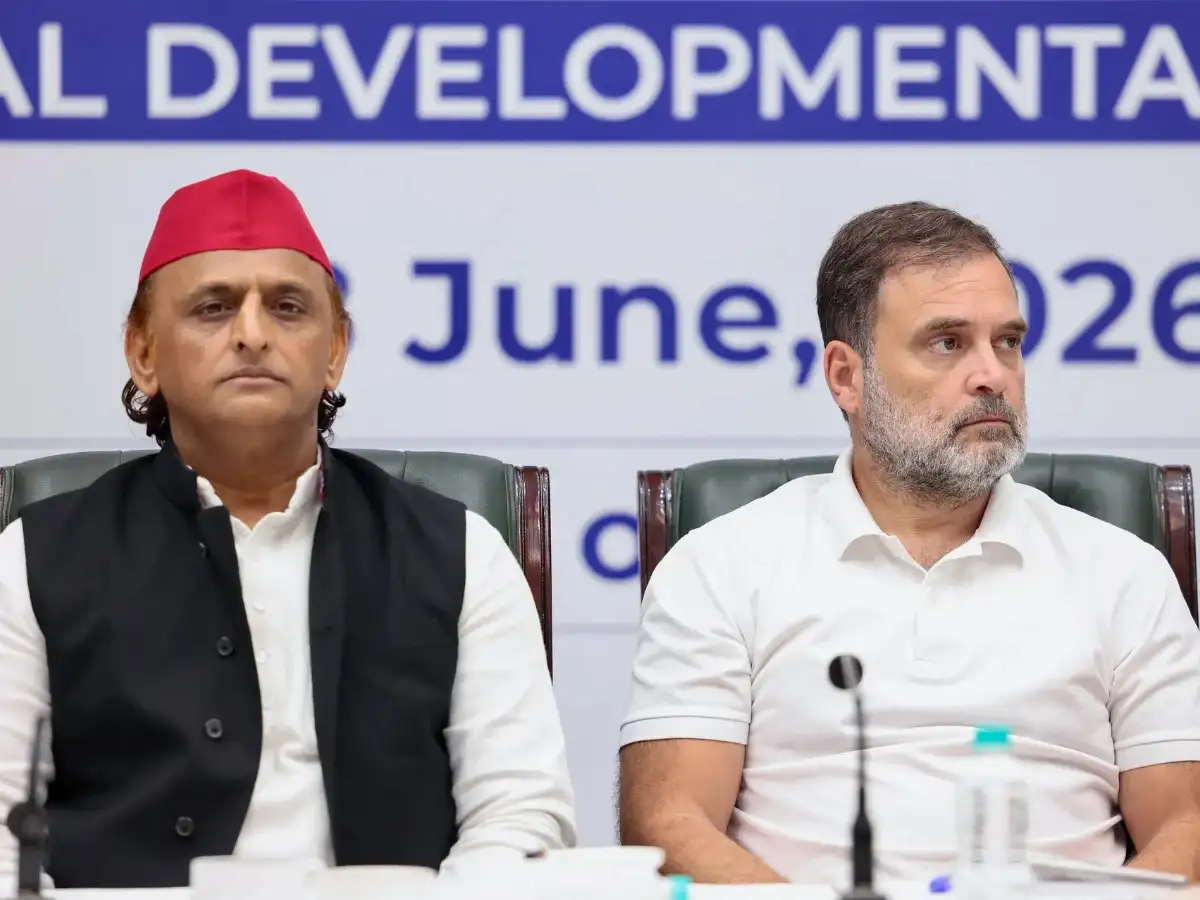
While the announcement of five candidates is an important development for the Samajwadi Party, the timing has attracted even greater attention because the party is still negotiating seat-sharing arrangements with Congress for the 2027 Uttar Pradesh Assembly elections.
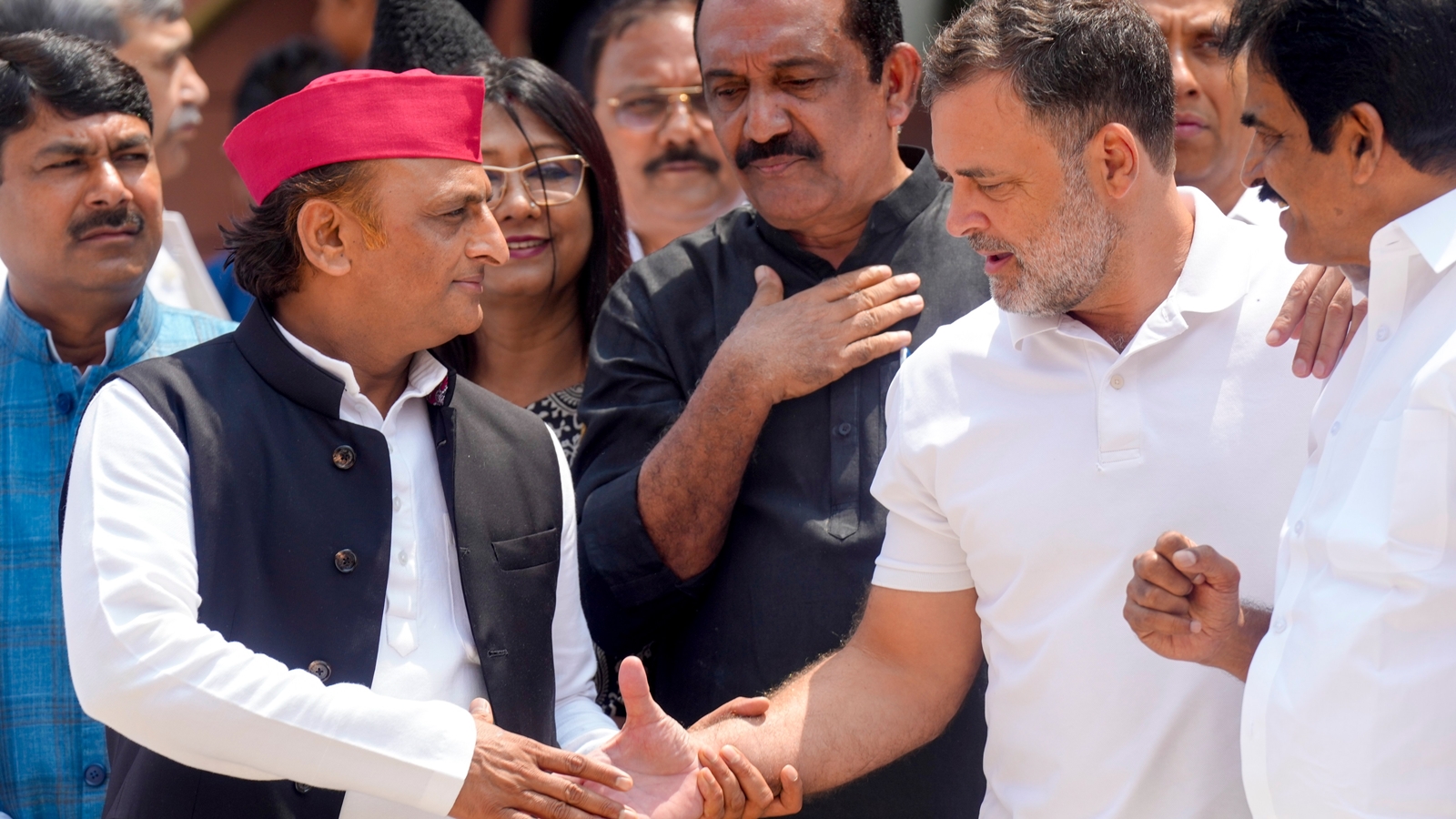
Both parties are important constituents of the INDIA bloc and have expressed their intention to contest the upcoming state elections together. However, differences over the number of seats each party should receive have emerged as a major hurdle.
The Samajwadi Party, led by Akhilesh Yadav, has reportedly proposed 26 seats for Congress in the 403-member Uttar Pradesh Assembly. The proposal is based largely on the parties' previous Assembly election performances and the SP's assessment of the electoral strength of individual constituencies.
Congress, on the other hand, is seeking a significantly larger share. During the initial discussions, the party reportedly submitted a list of approximately 130 constituencies where it wants to contest. It had earlier indicated an even higher demand of 181 seats.
Congress is also understood to be seeking at least 60 favourable, or A-category, constituencies and has indicated that it wants a minimum of 100 seats. The gap between the two parties' expectations highlights the difficult negotiations ahead.
Why are Behat and Saharanpur important in the dispute?
The announcement of candidates for Behat and Saharanpur has made the seat-sharing disagreement particularly sensitive.
According to reports, Congress had sought both constituencies during the initial negotiations. However, the Samajwadi Party has already announced sitting MLAs Umar Ali Khan and Ashu Malik as its candidates from these seats.
The development has prompted questions about whether the Congress will accept the SP's decisions or push for its preferred constituencies.
There are also indications that Congress leaders in the region are unwilling to surrender their claims. Sources close to Congress leader Imran Masood have indicated that the party may field candidates against the SP in Saharanpur.
If both parties eventually contest these constituencies against each other, it could create an electoral advantage for their political opponents by dividing opposition votes.
For the INDIA bloc, therefore, the challenge is not simply to divide seats but to ensure that both parties can work together without creating unnecessary competition at the constituency level.
What is Akhilesh Yadav's strategy behind the early candidate announcement?
The early announcement of five candidates suggests that the Samajwadi Party wants to accelerate its preparations for the 2027 Uttar Pradesh Assembly elections rather than wait for the finalisation of the alliance arrangement.
By announcing candidates in advance, the party can give its nominees more time to establish their campaign strategies, strengthen their relationships with local voters and begin addressing constituency-level issues.
The selection also indicates that the SP is placing considerable importance on candidates with established political networks and previous electoral experience. Four of the five nominees have already won Assembly elections, while Jyoti Lodhi brings organisational experience.
Another important aspect of the announcement is the party's emphasis on its PDA strategy.
PDA strategy remains central to SP's electoral calculations
PDA stands for Pichhda (backward classes), Dalit and Alpsankhyak (minorities). The strategy has become a central part of Akhilesh Yadav's political messaging as the Samajwadi Party attempts to expand its support base beyond its traditional voter groups.
The party believes that bringing together backward communities, Dalits and minority voters can create a broader electoral coalition capable of challenging the BJP in Uttar Pradesh.
The selection of candidates from different political and social backgrounds is consistent with this wider outreach.
The SP has also promoted the message of united voting under the PDA banner, indicating that social coalition-building will remain an important component of its 2027 election campaign.
However, converting this political messaging into actual votes will depend on the party's ability to maintain community support, address local concerns and build a strong organisational network across the state.
Why the 2024 Lok Sabha elections matter for the SP-Congress alliance
Despite the current disagreements, the Samajwadi Party and Congress have strong reasons to maintain their alliance ahead of the 2027 Uttar Pradesh Assembly elections.
Their performance in the 2024 Lok Sabha elections demonstrated the potential electoral strength of their partnership.
Congress contested 17 Lok Sabha seats in Uttar Pradesh and won six, while the Samajwadi Party secured victory in 37 constituencies. Together, the two parties won 43 of the state's 80 parliamentary seats, delivering a significant boost to the INDIA bloc's position in Uttar Pradesh.
This performance has encouraged both parties to continue their alliance for the next Assembly elections.
However, the Congress is also using its improved performance in the 2024 general elections to justify its demand for a larger share of Assembly constituencies.
The Samajwadi Party, meanwhile, appears to be relying more heavily on previous Assembly election results when evaluating the Congress's electoral strength.
The difference in these calculations is one of the biggest reasons behind the ongoing disagreement.
A look at previous Assembly election performances
The electoral history of both parties explains why seat-sharing negotiations are proving difficult.
In the 2022 Uttar Pradesh Assembly elections, the Samajwadi Party won 111 seats, while Congress managed to secure just two seats. The parties contested separately in that election.
In the 2017 Assembly elections, when the two parties contested together, the SP won 47 seats, while Congress secured seven.
These figures provide the Samajwadi Party with an argument for allocating fewer constituencies to Congress. However, Congress is looking at its improved performance in the 2024 Lok Sabha elections as evidence of its growing political relevance in the state.
The two parties must reconcile these different assessments if they want to avoid an alliance dispute becoming an electoral disadvantage.
Can the Samajwadi Party and Congress finalise a seat-sharing agreement?
The first round of formal seat-sharing discussions between the two parties took place in New Delhi at the residence of senior Congress leader and Rajya Sabha MP Pramod Tiwari.
The initial meeting was described as cordial, with leaders from both sides expressing optimism about reaching an agreement. Representatives indicated that the discussions were moving in a positive direction and that a final arrangement could potentially be reached within a few days.
However, the second round of negotiations, held on Tuesday, November 24, remained inconclusive.
During the discussions, the two sides reportedly examined individual constituencies and attempted to assess their respective electoral prospects.
Akhilesh Yadav also shared his position through a post on X, asking Congress to identify additional constituencies it wanted to contest so that both parties could jointly evaluate the winnability of candidates.
SP leaders have maintained that candidate strength and the likelihood of winning individual seats should be more important than simply deciding the number of constituencies allocated to each alliance partner.
Congress leaders, meanwhile, have continued to seek a larger share, citing their performance in the 2024 Lok Sabha elections.
Samajwadi Party general secretary Ram Gopal Yadav has described the discussions as positive, while SP leader Ramji Lal Suman has appealed to Congress to adopt a flexible approach, stressing the importance of reaching an agreement in the current political circumstances.
Although both sides have expressed their willingness to contest together, the final seat-sharing formula remains undecided.
What does the announcement mean for the 2027 UP Assembly elections?
The Samajwadi Party's first list of five candidates is an early indication of how the political contest for Uttar Pradesh is beginning to develop.
For the SP, the immediate priority appears to be strengthening its electoral preparations while retaining control over constituencies where it already has established leaders and sitting MLAs.
For Congress, the announcement creates a difficult situation, particularly regarding Behat and Saharanpur, where it had reportedly expressed interest in contesting.
The bigger question is whether both parties can resolve their differences without damaging their alliance before the election campaign gathers momentum.
Uttar Pradesh remains one of the most important battlegrounds in Indian politics. With 403 Assembly constituencies, the state plays a crucial role in shaping national political calculations. The BJP has remained in power since 2017, and the opposition parties will need a coordinated strategy if they want to mount a serious challenge in 2027.
The Samajwadi Party is looking to build on its performance in the 2024 Lok Sabha elections, while Congress wants to translate its parliamentary gains into a stronger presence in the state Assembly.
The early candidate announcement may help the SP gain an organisational head start, but it also highlights the complications of managing an alliance with competing electoral ambitions.
For now, the five nominations have put the spotlight on the SP's election strategy, the Congress's seat-sharing demands and the future of the INDIA bloc partnership in Uttar Pradesh.
Whether the two parties can reach a mutually acceptable agreement will be one of the most closely watched developments in the run-up to the 2027 UP Assembly elections.
© Copyright 2026. All Rights Reserved. Powered by Vygr Media.