 By
By 
The stunning rise of actor-turned-politician Vijay has pushed Tamil Nadu into its most dramatic political moment in decades. What began as a historic electoral breakthrough for his party, Tamilaga Vettri Kazhagam (TVK), has now turned into a high-stakes battle for government formation, coalition arithmetic, and constitutional legitimacy. The 2026 Tamil Nadu Assembly election has not only broken the state’s long-standing DMK-AIADMK duopoly but also triggered intense negotiations, shifting loyalties, and unprecedented political uncertainty.
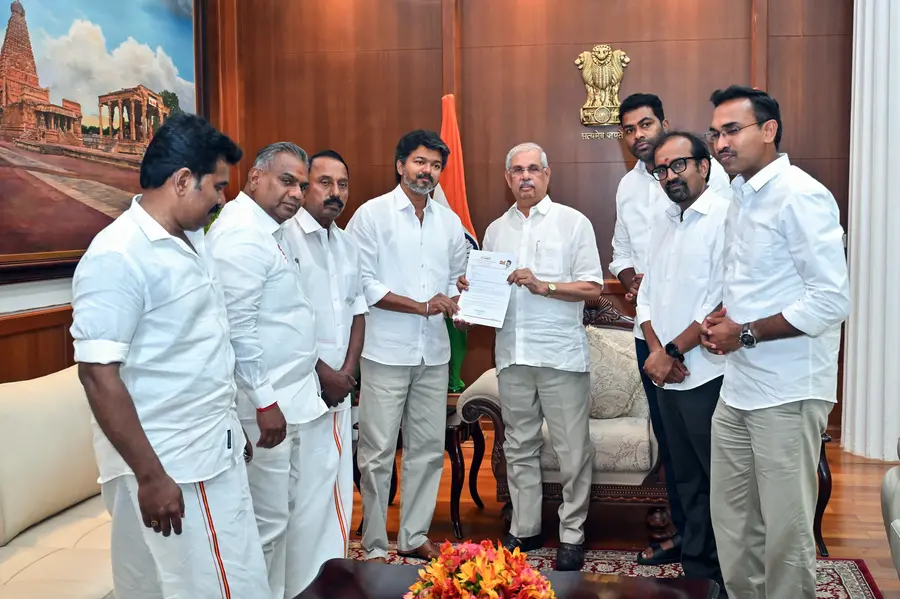
TVK Emerges as the Single-Largest Party
TVK emerged as the single-largest party in the 234-member Assembly with 108 seats, a remarkable debut that instantly transformed Vijay from cinema superstar to a serious claimant for the Chief Minister’s post. But the euphoria of victory quickly collided with the hard mathematics of governance. The majority mark stands at 118, and despite Congress extending support with its five MLAs, Vijay still remains short of the numbers needed to comfortably stake claim to power.
The suspense intensified after Tamil Nadu Governor Rajendra Vishwanath Arlekar reportedly refused to immediately approve the formation of a TVK-led government, citing doubts over whether the alliance could prove a stable majority. Vijay, who was initially expected to take oath as Chief Minister, had to postpone the ceremony as negotiations continued behind closed doors.
Sources indicated that Vijay met the Governor more than once, assuring him that TVK was prepared to prove its majority on the floor of the Assembly if invited to form the government. The party also reportedly kept legal options open in case its claim was denied again.
The Numbers Game Turns Into a Political Thriller
The numbers game has since become the centre of Tamil Nadu politics. Congress support pushed TVK’s tally to 113, but the party still needed additional backing from smaller regional and Left parties. TVK reached out to parties like the VCK, CPI, and CPM, hoping their support could help cross the crucial threshold. Together, these parties hold enough seats to potentially push Vijay past the majority mark.
However, the path has remained anything but straightforward.
A major roadblock emerged when the AIADMK categorically ruled out supporting Vijay’s government. AIADMK chief Edappadi K. Palaniswami reportedly rejected any possibility of extending support “under any circumstances,” despite speculation that sections within the party were open to negotiations.
That refusal became even more significant amid reports suggesting a possible anti-TVK understanding between arch-rivals DMK and AIADMK — a scenario almost unimaginable in Tamil Nadu’s political history. While discussions about such a tactical arrangement surfaced amid the hung verdict, the DMK publicly rejected alliance speculation. Yet the mere possibility reflected the anxiety within traditional Dravidian parties over Vijay’s sudden rise.
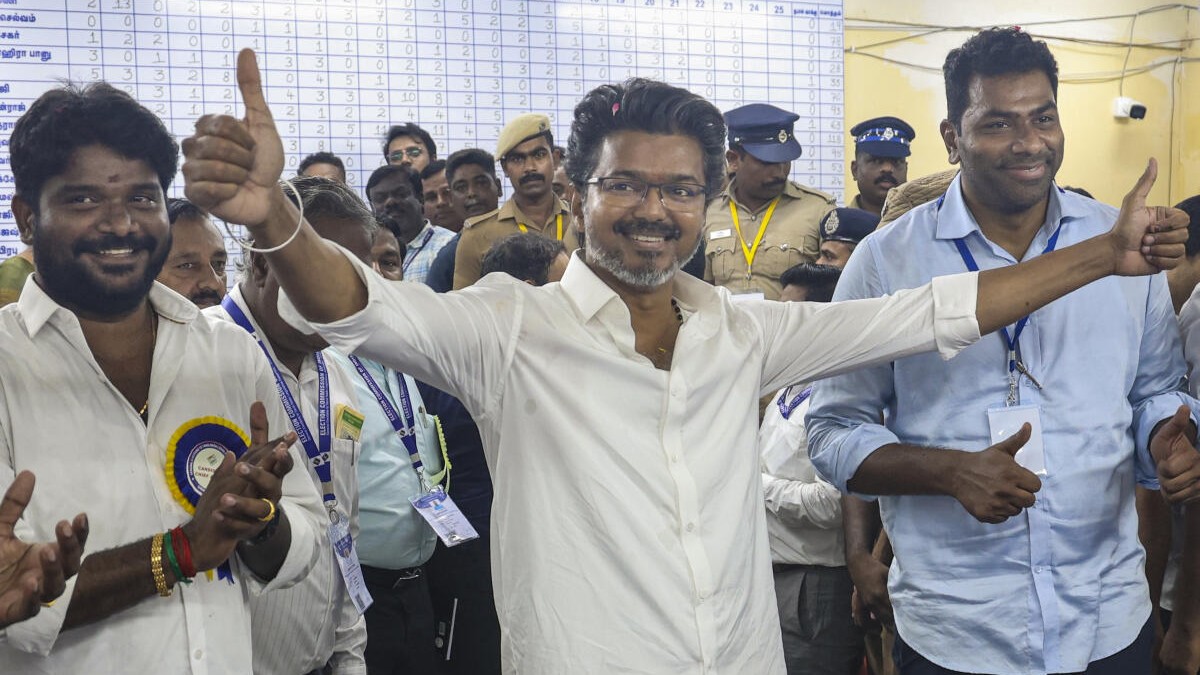
Historic Results Shatter Tamil Nadu’s Traditional Politics
The election itself has already rewritten Tamil Nadu’s political script.
For nearly six decades, the state’s politics revolved around the DMK and AIADMK. Vijay’s TVK shattered that binary in its very first Assembly election. Analysts described the outcome as the biggest political disruption in Tamil Nadu since the rise of legendary actor-politician M. G. Ramachandran.
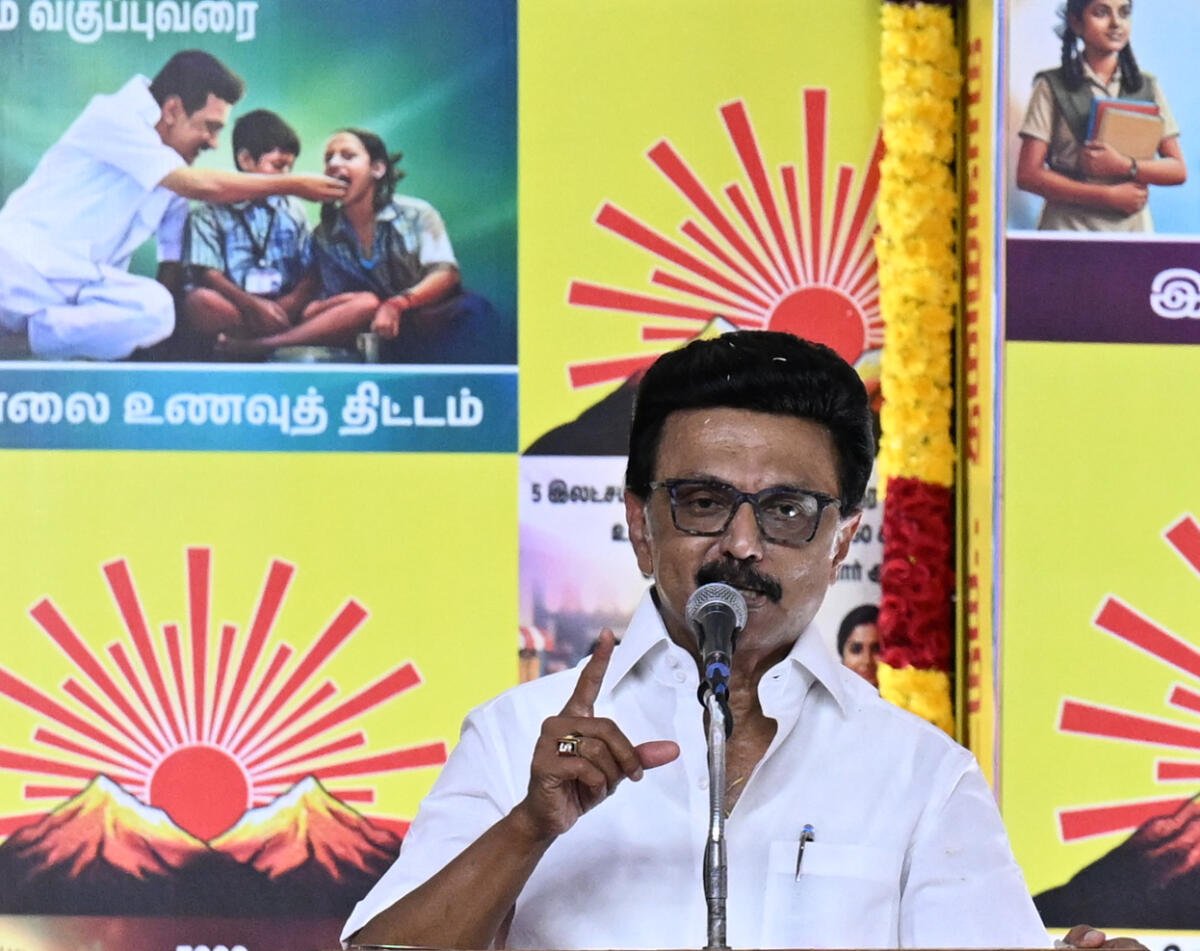
The scale of the upset became clearer with the defeat of several heavyweight leaders. Chief Minister M. K. Stalin lost from his Kolathur seat to TVK’s VS Babu, marking one of the biggest shocks of the election. At the same time, Stalin’s son Udhayanidhi Stalin managed to retain Chepauk-Thiruvallikeni.
Vijay himself registered emphatic victories from Perambur and Tiruchirappalli East, winning by massive margins against DMK candidates.
One of the most symbolic victories came from Virugampakkam, where R Sabarinathan — the son of Vijay’s driver — defeated established candidates from both DMK and AIADMK. The victory was projected by TVK supporters as proof that Vijay’s movement had successfully connected with ordinary voters and first-time political aspirants.
The Seats TVK Lost by Razor-Thin Margins
The narrowness of TVK’s miss has only added to the drama. An analysis of the results showed that the party lost at least 12 constituencies by margins of less than 2,000 votes. Some defeats were by fewer than 300 votes. Had even a handful of those seats flipped, Vijay would already have secured a comfortable majority.
The political uncertainty has also triggered unusual developments across party lines. Reports suggested that AIADMK shifted some of its MLAs to resorts amid fears of poaching attempts and intense backchannel negotiations. Meanwhile, Congress’ decision to support TVK reportedly strained its ties with the DMK-led INDIA bloc in the state.
Industry Leaders and Investors Watch Closely
Outside political circles, Vijay’s rise has also drawn enormous attention from industry leaders and investors because of Tamil Nadu’s role as one of India’s largest manufacturing hubs. The state houses major operations linked to companies like Apple suppliers, Samsung, Hyundai, and several global electronics and automobile manufacturers.
During the campaign, Vijay promised to transform Tamil Nadu into a $1.5 trillion economy within the next decade, focusing heavily on semiconductors, electric vehicles, artificial intelligence, and high-end manufacturing.
That vision found support from prominent entrepreneur Sridhar Vembu, who publicly predicted a “super-majority” win for Vijay and called for fresh Assembly elections after the fractured verdict. His comments amplified the perception that sections of Tamil Nadu’s business community see TVK as a potential vehicle for political and economic renewal. At the same time, many investors remain cautious because most TVK legislators are first-time MLAs with little administrative experience.
Yet the uncertainty surrounding government formation has also raised concerns over administrative continuity and investor confidence. Political observers note that while Tamil Nadu’s bureaucracy is considered institutionally strong, prolonged instability could delay key industrial and infrastructure decisions.
Constitutional Questions Add Another Layer of Uncertainty
Meanwhile, constitutional debates are intensifying around how a hung Assembly should function. Some political commentators argue that Vijay may not necessarily need 118 votes if rival parties abstain during a floor test, effectively lowering the majority mark in the House. Others point out that the Speaker’s election and potential resignations could alter the arithmetic further.
Several analysts also believe the DMK could strategically allow Vijay to form a minority government while retaining indirect influence over legislation and budgets. Such a scenario would allow the DMK to avoid appearing obstructionist while forcing TVK to depend on opposition support for survival.
From Film Superstar to Political Challenger
What makes the moment especially extraordinary is the speed of Vijay’s political ascent. He formally quit acting in 2024 to focus entirely on politics. Within two years, he has managed to dismantle entrenched political equations and position himself at the centre of Tamil Nadu’s power struggle.
Now, all eyes are on Chennai as negotiations continue between parties, independents, and smaller regional blocs. The Governor’s next move, the willingness of Left parties and VCK to support TVK, and the possibility of further political realignments could determine whether Vijay becomes Tamil Nadu’s next Chief Minister or whether the state heads toward an even deeper constitutional and political crisis.
For now, Tamil Nadu remains suspended between a political revolution and a deadlock — and Vijay, despite delivering one of the biggest electoral shocks in recent Indian politics, is still fighting the toughest battle of all: proving he has the numbers to rule.
With inputs from agencies
Image Source: Multiple agencies
© Copyright 2026. All Rights Reserved. Powered by Vygr Media.