
 By
By 
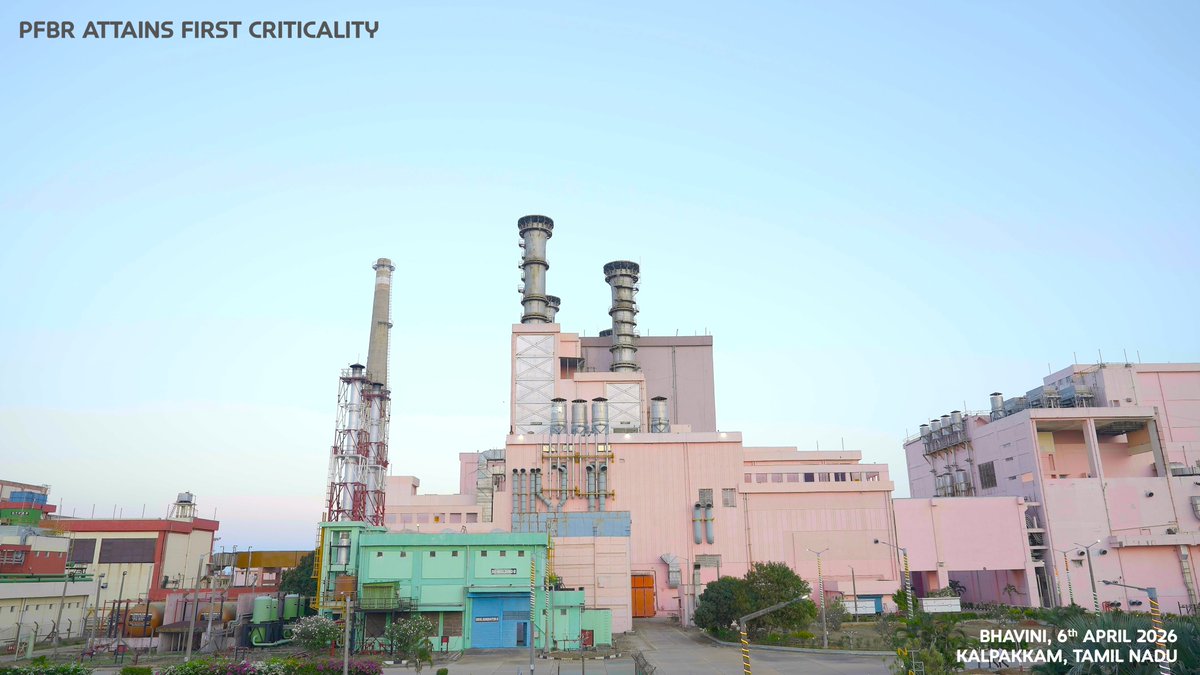
In a defining moment for India’s nuclear energy ambitions, the country’s most advanced atomic project—the Prototype Fast Breeder Reactor (PFBR) at Kalpakkam in Tamil Nadu—has achieved “criticality,” marking a decisive step in India’s long-term strategy for energy security and technological self-reliance. The milestone, reached on March 21, 2024, at 8:25 PM, places India among a select group of nations with operational fast breeder reactor technology and signals a major leap in its three-stage nuclear power programme.
The development was officially announced by the Press Information Bureau, which described the achievement as “landmark,” underscoring decades of indigenous research, engineering, and persistence. Built by Bharatiya Nabhikiya Vidyut Nigam Limited (BHAVINI), the PFBR is a 500 MWe sodium-cooled fast breeder reactor, designed to generate more fissile material than it consumes—a defining feature that sets breeder reactors apart from conventional nuclear systems.
A Milestone Decades in the Making
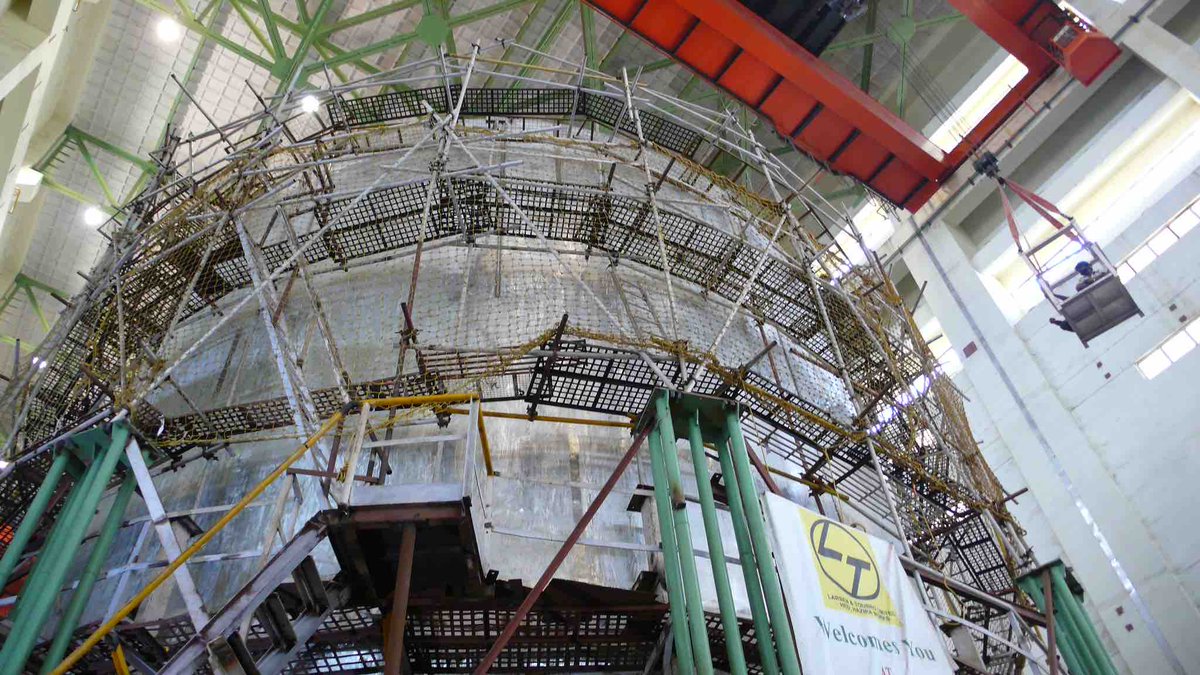
The PFBR project has been under development for years, with its origins tracing back to India’s visionary three-stage nuclear programme conceptualized by Homi J. Bhabha. The programme aims to maximize the use of India’s limited uranium reserves while leveraging its abundant thorium deposits. The Kalpakkam reactor represents the crucial second stage of this roadmap, where plutonium-based fast breeder reactors generate additional fuel for future thorium reactors.
Achieving “criticality” means that the reactor has reached a self-sustaining nuclear chain reaction—a foundational step before full power generation. It is not yet operating at its maximum capacity but has successfully initiated controlled fission, validating its core design and safety systems.
This achievement positions India alongside a handful of countries—such as Russia, China, and France—that have mastered fast breeder technology, often considered one of the most complex and strategic areas in nuclear science.
Why the PFBR Matters
The importance of the PFBR extends beyond technological prestige. It is central to India’s long-term energy independence. Unlike conventional reactors that primarily consume uranium, fast breeder reactors use plutonium as fuel and produce more fissile material—effectively “breeding” fuel for future use.
India’s limited uranium reserves have historically constrained its nuclear expansion. However, with breeder technology, the country can significantly extend its fuel supply. The PFBR uses a mixed oxide (MOX) fuel composed of plutonium and uranium and employs liquid sodium as a coolant instead of water. Sodium allows for higher operating temperatures and improved efficiency but also introduces additional engineering challenges due to its reactivity.
Experts note that the PFBR can generate up to 30% more fuel than it consumes, making it a cornerstone of India’s closed fuel cycle strategy. This cycle involves reprocessing spent nuclear fuel to extract usable materials, reducing waste and enhancing sustainability.
Indigenous Engineering and Strategic Autonomy
One of the most striking aspects of the Kalpakkam reactor is its indigenous development. Nearly all components—from the reactor core to the control systems—have been designed and built within India. This aligns with the government’s broader push for self-reliance in critical technologies.
The reactor’s construction involved collaboration between multiple Indian agencies, including the Indira Gandhi Centre for Atomic Research (IGCAR), which played a key role in design and R&D. The project also drew on expertise from the Department of Atomic Energy (DAE), reinforcing the country’s integrated nuclear ecosystem.
The indigenous nature of the PFBR is particularly significant in the context of global nuclear geopolitics, where access to advanced technologies is often restricted. By developing its own breeder reactor, India has reduced dependence on foreign suppliers and strengthened its strategic autonomy.
Leadership Response and National Significance
Prime Minister Narendra Modi hailed the achievement as a “proud moment” for the nation, emphasizing its implications for energy security and scientific progress. In his remarks, he highlighted the dedication of India’s nuclear scientists and engineers, calling the milestone a testament to the country’s growing technological capabilities.
The milestone also comes at a time when India is actively seeking to expand its nuclear power capacity as part of its clean energy transition. With increasing pressure to reduce carbon emissions while meeting rising electricity demand, nuclear energy is seen as a reliable and low-carbon option.
Technical Complexity and Challenges
Fast breeder reactors are among the most complex nuclear systems to design and operate. Unlike conventional reactors, they do not use a moderator to slow down neutrons. Instead, they rely on high-energy (fast) neutrons to sustain the chain reaction. This requires precise control mechanisms and advanced materials capable of withstanding extreme conditions.
The use of liquid sodium as a coolant presents both advantages and risks. Sodium has excellent heat transfer properties and does not slow down neutrons, making it ideal for fast reactors. However, it reacts violently with water and air, necessitating stringent safety protocols.
The PFBR incorporates multiple layers of safety systems, including passive cooling mechanisms and robust containment structures. Engineers have also designed the reactor to withstand seismic events and other external hazards.
Despite these safeguards, the project has faced delays over the years due to technical challenges and regulatory scrutiny. The attainment of criticality now signals that these hurdles have been successfully addressed.
Global Context and Strategic Implications
Globally, interest in fast breeder reactors has fluctuated over the decades. While countries like France and Japan have scaled back their programmes due to economic and safety concerns, Russia and China continue to invest heavily in breeder technology.
India’s success with the PFBR places it in a unique position. With its vast thorium reserves, the country has long envisioned a future where thorium-based reactors play a central role in its energy mix. The PFBR is a critical stepping stone toward that goal, as it generates the plutonium needed to initiate thorium fuel cycles.
Analysts suggest that the reactor could also have implications for India’s strategic capabilities, given its ability to produce fissile material. However, officials have consistently emphasized its civilian energy focus and adherence to international safeguards.
The Road Ahead
With criticality achieved, the PFBR will now undergo a series of tests and calibrations before reaching full power operation. This phased approach ensures that all systems function optimally and safely under varying conditions.
Once fully operational, the reactor is expected to contribute significantly to India’s electricity grid while demonstrating the viability of breeder technology on a commercial scale. It could pave the way for additional fast breeder reactors across the country, accelerating the transition to a sustainable and self-sufficient nuclear energy system.
The government has already indicated plans to build more such reactors, leveraging the experience gained from Kalpakkam. These future projects could further reduce India’s reliance on fossil fuels and imported energy resources.
A Turning Point in India’s Nuclear Journey
The attainment of criticality at the Kalpakkam PFBR is more than just a technical milestone—it is a statement of intent. It reflects India’s determination to chart its own path in the global energy landscape, harnessing advanced technologies to meet its unique challenges.
As the reactor moves closer to full operation, it stands as a symbol of innovation, resilience, and strategic foresight. For a country balancing rapid economic growth with environmental responsibility, the PFBR offers a glimpse into a future powered by sustainable and self-reliant energy solutions.
In the broader narrative of India’s development, this achievement marks a pivotal chapter—one that could redefine how the nation generates, consumes, and secures its energy for decades to come.
With inputs from agencies
Image Source: Multiple agencies
© Copyright 2025. All Rights Reserved. Powered by Vygr Media.