 By
By 
The Sun, the very star that sustains life on Earth, has once again reminded scientists why it commands both awe and caution. A dramatic surge in solar activity has triggered global alerts, with India’s space agency ISRO confirming that the country is facing a heightened risk of strong radio blackouts due to a series of exceptionally powerful solar flares erupting from the Sun’s surface.
Over the past few days, the Sun has unleashed multiple high-intensity explosions—some of the strongest seen in years—prompting space agencies worldwide to closely monitor their potential impact on satellites, communication networks, navigation systems, and power infrastructure. Indian scientists say there is no cause for panic yet, but the situation demands constant vigilance as the Sun remains volatile.
ISRO Places Over 50 Satellites Under Close Watch
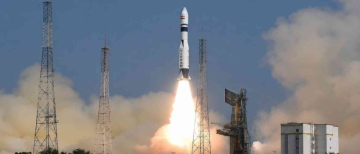
The Indian Space Research Organisation (ISRO) has confirmed that more than 50 operational Indian satellites are being continuously monitored as a precaution against possible disruptions caused by the ongoing solar storm activity.
“There is a strong possibility of radio blackouts. All ISRO satellites are being monitored very closely,” Anil Kumar, Director of ISRO’s Telemetry, Tracking and Command Network (ISTRAC), told NDTV. He added that any communication loss would be handled immediately, underscoring the preparedness of ground teams.
According to ISRO officials, alerts have already been issued to mission control centres, and contingency protocols are in place to respond swiftly to any anomaly affecting satellite payloads, communication links, or navigation signals.
Intense solar storms, when directed towards Earth, are known to interfere with satellite electronics, disrupt television and radio signals, affect radar systems, and, in extreme cases, stress power grids. With India’s growing dependence on space-based infrastructure—from navigation to weather forecasting—the stakes are higher than ever.
What Triggered the Sun’s Sudden Fury?
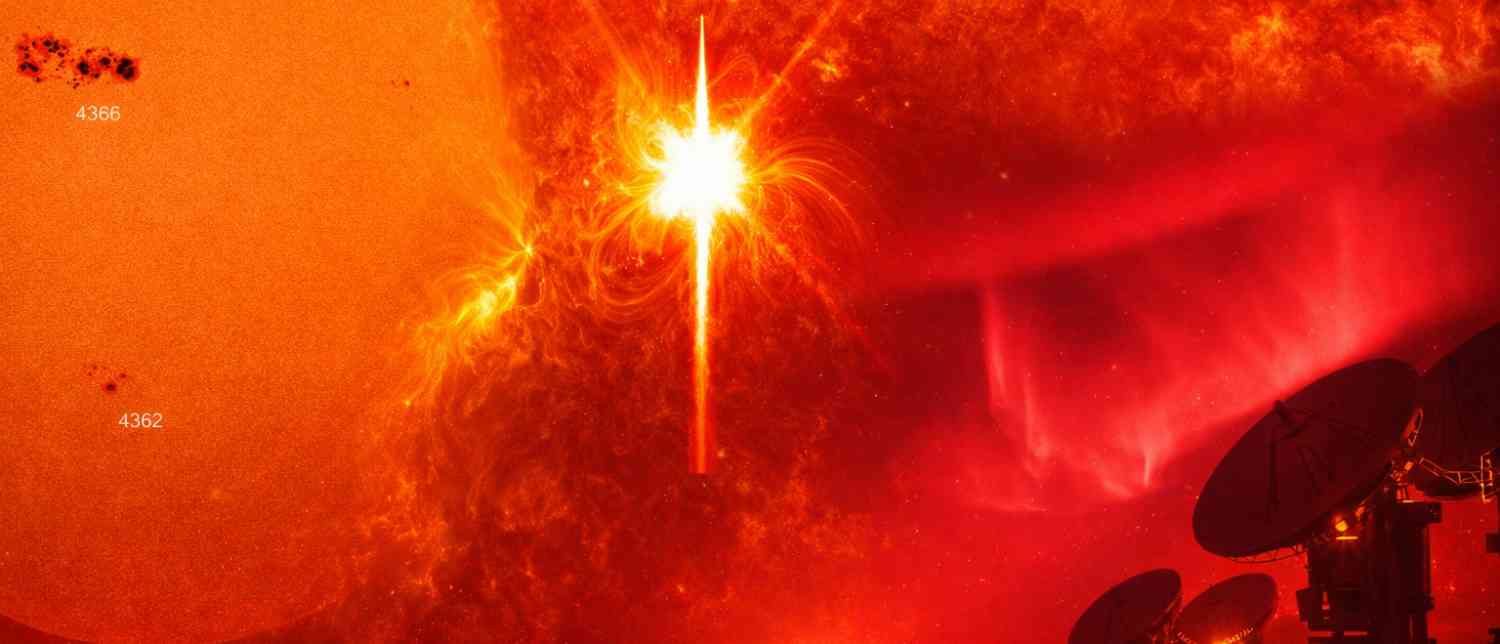
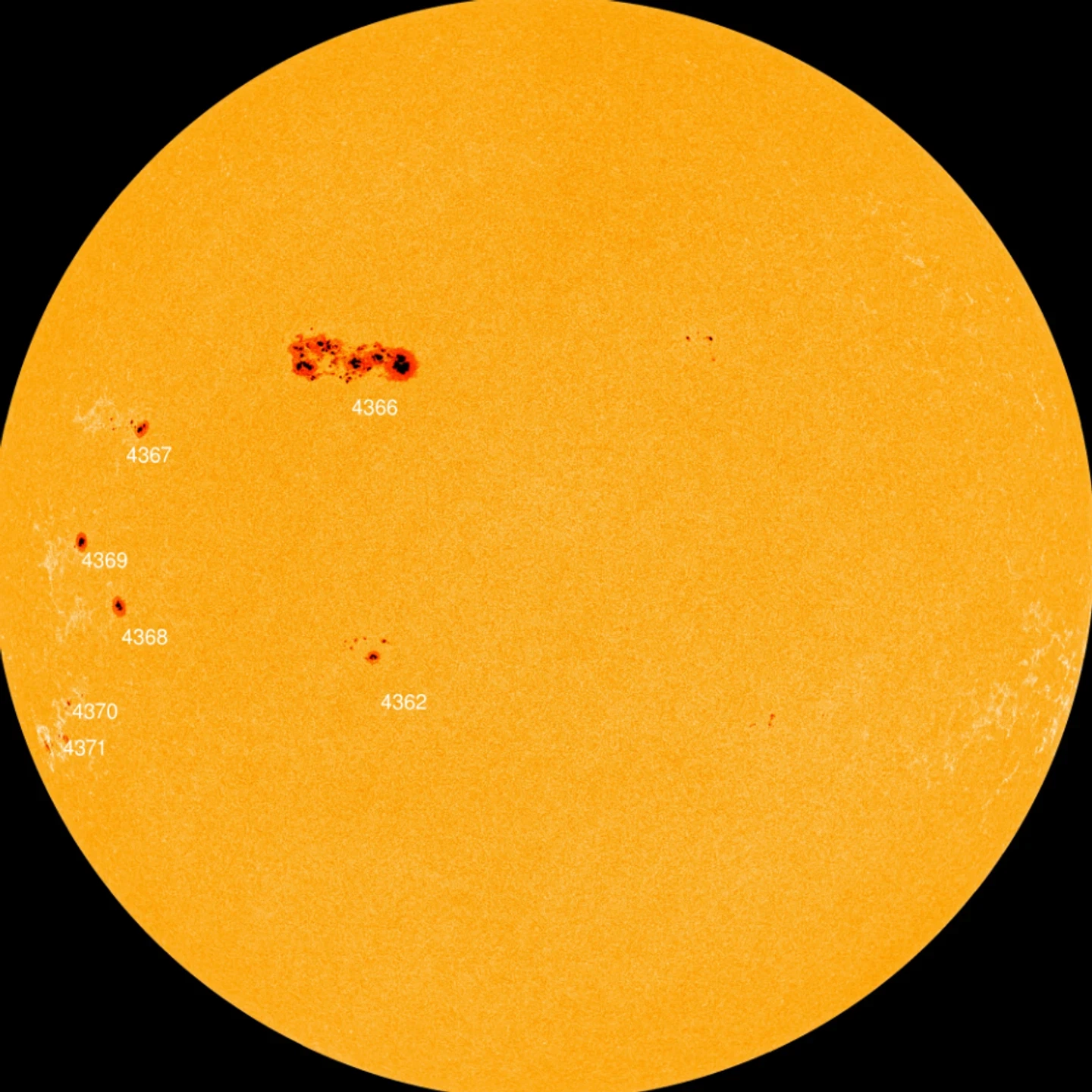
The current episode of solar unrest can be traced to a magnetically complex and highly unstable sunspot cluster known as Active Region 14366, also referred to as Sunspot Region 4366 by space weather agencies.
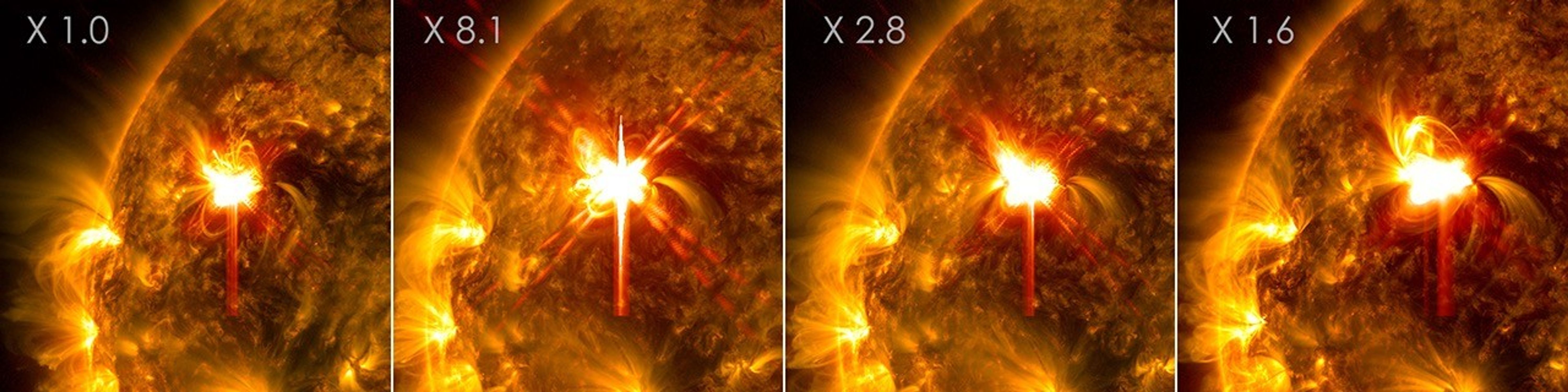
Over a short span of time, this region erupted repeatedly, producing at least 18 M-class flares and three X-class flares, the most intense category of solar explosions. Among them was an X8.1-class flare, initially identified as the most powerful of 2026, followed closely by an even stronger X8.3 flare, now confirmed as the strongest solar flare recorded so far in 2026.
NASA reported that the flares peaked between February 1 and February 2, with the most intense eruption reaching its maximum at 6:57 pm EST on February 1. Space weather monitoring agencies described this event as the brightest solar flare since October 2024 and ranked it among the top 20 most powerful flares observed since 1996, the year modern satellite-based solar monitoring began.
All these eruptions were captured in stunning detail by NASA’s Solar Dynamics Observatory, which continuously watches the Sun for explosive activity.
|| CESSI FLARE ALERT + SPACE WEATHER ADVISORY ||
CODE ♦️ SEVERE
The Sun has launched multiple solar flares over the past 24 hours, the strongest one being an X8.1 flare at
2026/02/01 23:57 UT (flare light curve below).
1/n + pic.twitter.com/4RW89i5ysp— Center of Excellence in Space Sciences India (@cessi_iiserkol) February 2, 2026
Understanding Solar Flares and the X-Class Scale
Solar flares are sudden, violent releases of energy from the Sun’s surface, driven by the snapping and reconfiguration of magnetic field lines. Scientists classify these flares according to their strength, using a scale that begins with A, B, and C, progresses to M, and culminates with X-class flares. Each step up the scale represents a tenfold increase in energy.
X-class flares are the most extreme explosions the Sun can produce, and an X8.3 flare sits alarmingly high on that scale. Such eruptions release intense bursts of ultraviolet and X-ray radiation that travel at the speed of light and reach Earth within minutes.
While this radiation does not directly harm humans on the ground, it can severely disturb the ionosphere, the electrically charged layer of Earth’s upper atmosphere that enables long-distance radio communication.
Real-World Impact: Radio Blackouts and Atmospheric Disturbances
The effects of the recent flares were felt almost immediately across parts of the globe. According to the US National Oceanic and Atmospheric Administration’s Space Weather Prediction Center, the powerful radiation triggered R3-level radio blackouts across regions of the South Pacific.
Shortwave radio communications were disrupted in eastern Australia and New Zealand, highlighting how quickly and unpredictably space weather can affect modern communication systems.
Such disturbances can also impact navigation signals, increase radiation exposure for satellites, and pose risks to high-altitude aviation, particularly on polar routes. Intense solar activity is also known to fuel dramatic auroral displays at higher latitudes.
An X1.0 Solar Flare Occurred from Region 4366 in the NE quadrant of the Sun. pic.twitter.com/Io8K1fPBQP— NOAA Space Weather Prediction Center (@NWSSWPC) February 1, 2026
Indian Scientists Had Anticipated Elevated Activity
Experts in India say the Sun’s current behaviour, though intense, was not entirely unexpected.
Professor Dibyendu Nandi, a solar astrophysicist at the Centre of Excellence in Space Sciences India (CESSI) at IISER Kolkata, described Active Region 14366 as unusually energetic.
“The magnetic active region 14366 is hyperactive and supercharged. It has been firing off one solar storm after another this week,” Nandi said.
He added that Indian scientists had analysed the region in advance and issued space-weather alerts earlier in the week based on those assessments.
“We had analysed this region in advance and issued a space-weather alert based on those assessments,” he explained.
The Sun follows an approximately 11-year cycle of activity, swinging between relatively calm periods and phases of intense magnetic turbulence known as solar maximum. Scientists say the current flurry of flares is consistent with this peak phase of the solar cycle.
Why Scientists Are Watching This Storm So Closely
Despite the dramatic flaring, researchers stress that Earth has so far avoided the worst-case scenario: a strong, Earth-directed coronal mass ejection (CME).
CMEs are massive clouds of charged solar plasma that, if aimed directly at Earth, can trigger powerful geomagnetic storms capable of causing widespread disruptions.
“So far, we have not seen a very strong Earth-directed CME. There is a weak one on the way, but we are watching for something bigger,” Nandi said.
However, the concern remains because Active Region 14366 lies close to the Sun–Earth line. As it rotates across the Sun’s face and turns more directly toward Earth, the likelihood of a stronger, more direct impact cannot be ruled out.
Early assessments suggest that most of the material from the X8.3 flare may miss Earth, though scientists say a slight impact is possible around February 5. If that happens, it could briefly increase geomagnetic activity and raise the chances of auroras at higher latitudes.
The Sun emitted a strong solar flare on Feb. 3, peaking at 9:08 a.m. ET. NASA’s Solar Dynamics Observatory captured images of the event, which was classified as X1.5. https://t.co/gHptBKDzqk pic.twitter.com/prkVqTWE8O— NASA Space Alerts (@NASASpaceAlerts) February 3, 2026
Aditya-L1: India’s Watchtower in Space
India’s first dedicated solar observatory, Aditya-L1, is playing a critical role in tracking the unfolding solar storm. Positioned at the Earth–Sun L1 Lagrange point, about 1.5 million kilometres from Earth, the spacecraft offers an uninterrupted, front-row view of solar activity.
From this vantage point, Aditya-L1 measures solar radiation, magnetic fields, and energetic particles in real time. This data allows ISRO to issue earlier warnings and take preventive steps to protect satellites and other critical space-based infrastructure.
The mission represents a major leap in India’s ability to independently monitor space weather and respond to solar threats.
India’s Big Bet on Solar Science: National Large Solar Telescope
India’s growing focus on solar research was further underscored on February 1, when Finance Minister Nirmala Sitharaman announced plans for a National Large Solar Telescope (NLST).
Estimated to cost around Rs 1,000 crore, the 2-metre-class optical and near-infrared telescope is expected to be completed within the next five years. It will be located near Pangong Lake at Merak in Ladakh, a site chosen for its exceptional atmospheric conditions.
The NLST will complement space-based missions like Aditya-L1 by providing ultra-high-resolution ground-based observations of the Sun. Its primary focus will be on studying solar magnetic fields—the driving force behind solar flares, coronal mass ejections, and space weather events.
As solar activity increasingly affects satellites, power grids, and communication networks, scientists say solar physics is no longer just an academic pursuit but a matter of national resilience.
A Volatile Star Under Constant Watch
For now, Indian scientists emphasise that there is no threat of catastrophic damage from the current solar storm. However, caution remains the watchword.
As Sunspot Region 4366 continues to evolve and rotate into a more Earth-facing position, both India and the world remain on high alert for the Sun’s next outburst.
The events of the past few days serve as a powerful reminder that while the Sun nurtures all life on Earth, it is also a dynamic and sometimes unpredictable star—one whose tempests can ripple across space and quietly test the technological foundations of modern civilisation.
With inputs from agencies
Image Source: Multiple agencies
© Copyright 2025. All Rights Reserved. Powered by Vygr Media.