 By
By 
BRICS was never supposed to become the geopolitical earthquake that its loudest critics and most enthusiastic supporters now imagine it to be. It began as an idea about emerging economies and gradually evolved into a political and economic platform for countries that wanted a greater say in a world still shaped disproportionately by Western institutions.
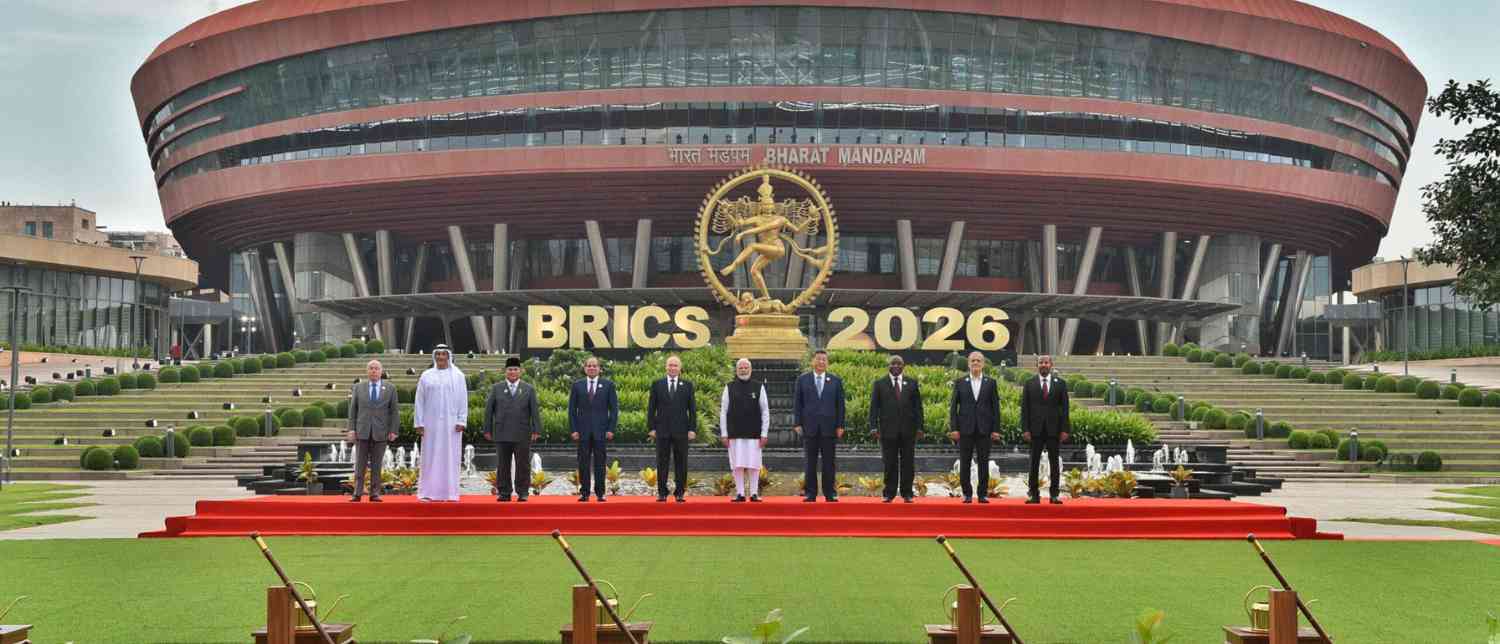
But BRICS 2026 is different.
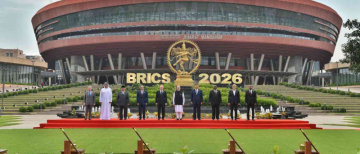
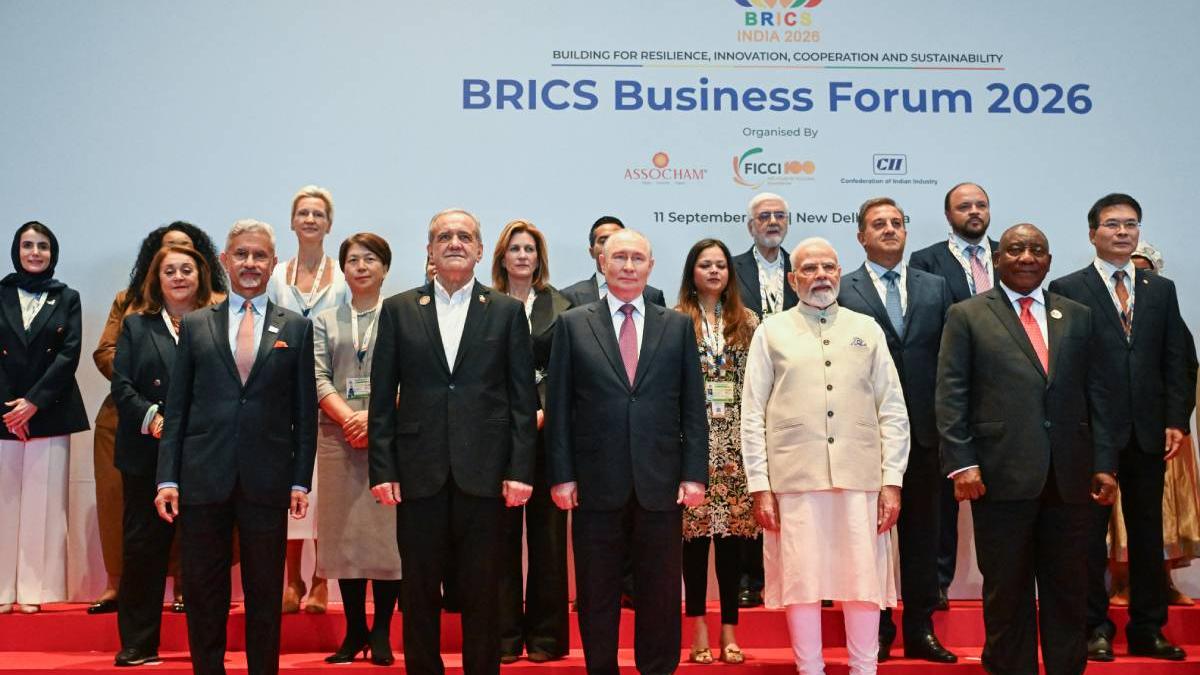
As India hosts the 18th BRICS Summit in New Delhi, the grouping finds itself at an uncomfortable but potentially transformative moment. It is larger, richer, more geographically diverse and more politically consequential than it was when the original four countries began meeting. Yet its expansion has also imported old rivalries into the organisation. Iran and the UAE are now members of the same grouping while standing on opposing sides of a devastating regional confrontation. China and India remain strategic competitors even as both recognise the economic costs of prolonged confrontation. Russia wants an international environment less hostile to it, while several other members want to preserve strong relationships with the United States and Europe.
That contradiction is not a side story. It is the central story of BRICS 2026.
The question is no longer whether BRICS can grow. It already has. The real question is whether it can mature.
BRICS Has Outgrown Its Original Identity
There was a time when BRICS could comfortably be described as an emerging-market conversation. That description no longer works.
The grouping now has 11 members and a much wider geographical footprint, bringing together major energy producers, enormous consumer markets, manufacturing powers, financial centres and some of the world's fastest-growing economies. Its economic weight has become substantial enough that BRICS represents roughly 37% of global GDP on a purchasing-power-parity basis, exceeding the G7 on that particular measure. The creation of the New Development Bank, the development of local-currency settlement mechanisms and increasing cooperation across trade, technology, energy and finance have given the grouping institutional substance that did not exist at its birth.
That growth has also changed the political meaning of BRICS.
For many members, BRICS is not an alliance. It is not NATO with a different flag, nor is it necessarily a project designed to replace the Western order with a Chinese- or Russian-led order. Its attraction lies precisely in its flexibility.
Countries want options.
They want to trade without being excessively dependent on one currency. They want development finance without always having to accept the conditions attached to traditional institutions. They want diplomatic relationships that do not force them to choose one geopolitical camp. And they want a greater voice in institutions whose rules were largely established when many of today's emerging powers had considerably less economic and political weight.
That is why reducing BRICS to an "anti-Western bloc" is intellectually convenient but strategically misleading.
If anything, the expanded BRICS is too diverse to function as a conventional anti-Western coalition. Countries such as India, the UAE, Saudi Arabia and several others have deep economic, security and technological relationships with the United States and Europe. Their participation in BRICS is better understood as strategic diversification than strategic abandonment.
This distinction is crucial.
Why Trump's Pressure May Be Strengthening BRICS
The irony of the current moment is that attempts to intimidate BRICS may actually make the grouping more relevant.
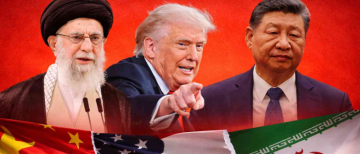
Washington's anxiety about BRICS has increasingly centred on the possibility of de-dollarisation and the emergence of alternative financial systems. Threats of punitive tariffs against countries that move away from dollar dependence reflect a fear that the international financial system could become less centred on American power.
But BRICS has never needed to launch a dramatic assault on the dollar to make alternative payment arrangements attractive.
The logic is simpler.
If access to financial infrastructure can be used as a tool of geopolitical pressure, countries will naturally look for insurance. If sanctions can suddenly make legitimate trade more difficult, governments will explore other channels. If payment systems are overwhelmingly dependent on institutions controlled or influenced by one dominant power, diversification becomes a matter of risk management.
That does not mean a BRICS common currency is around the corner. It is not.
A single currency would require enormous economic coordination, deep financial integration, monetary-policy alignment and a level of political trust that BRICS simply does not possess. Even among its largest members, economic priorities and financial systems differ sharply.
What is much more realistic is incremental change: more bilateral trade in national currencies, greater interoperability between payment systems, stronger financial links among member states and a gradual reduction in the need to use the dollar for every transaction.
That process will be slow. It will also be uneven.
But slow does not mean insignificant.
BRICS is therefore better understood as an experiment in financial diversification than as a revolution against the dollar.
The China Question Cannot Be Avoided
There is another uncomfortable reality that BRICS must confront: China is by far the most economically powerful member of the grouping.
That creates both an opportunity and a problem.
China's enormous manufacturing capacity, trade networks, technological capabilities and financial resources make deeper BRICS economic integration possible. Intra-BRICS trade has grown substantially, with China playing a major role in that expansion.
But China's dominance also generates apprehension among other members.
India, in particular, has little interest in replacing one form of strategic dependence with another. New Delhi wants multipolarity, not a world in which the United States is replaced by China as the single dominant centre of power.
The contradiction is visible in the economic relationship between India and China. Their economies are deeply interconnected, yet political and strategic trust remains limited. Indian businesses continue to face barriers in accessing the Chinese market, while the bilateral trade imbalance remains a serious concern. At the same time, completely decoupling from China would carry substantial economic costs.
India's emerging approach is therefore neither dependence nor rupture.
It is managed interdependence.
That is also the broader lesson India is bringing into BRICS 2026: countries can cooperate where interests overlap without pretending that strategic disagreements have disappeared.
The same principle may ultimately be what saves BRICS from becoming either a Chinese-led bloc or an ineffective talking shop.
Russia Wants Space. India Wants Stability.
Russia's relationship with BRICS is perhaps the clearest example of how the grouping serves different national purposes simultaneously.
For Moscow, BRICS provides economic partners, diplomatic legitimacy and alternatives to a Western system that has imposed extensive sanctions. A significant share of Russia's trade with BRICS countries is now conducted in national currencies, reducing its exposure to Western financial restrictions. BRICS also ensures that Russia continues to have political relationships with countries that do not accept the idea of isolating Moscow completely.
But Russia's interests cannot automatically become BRICS interests.
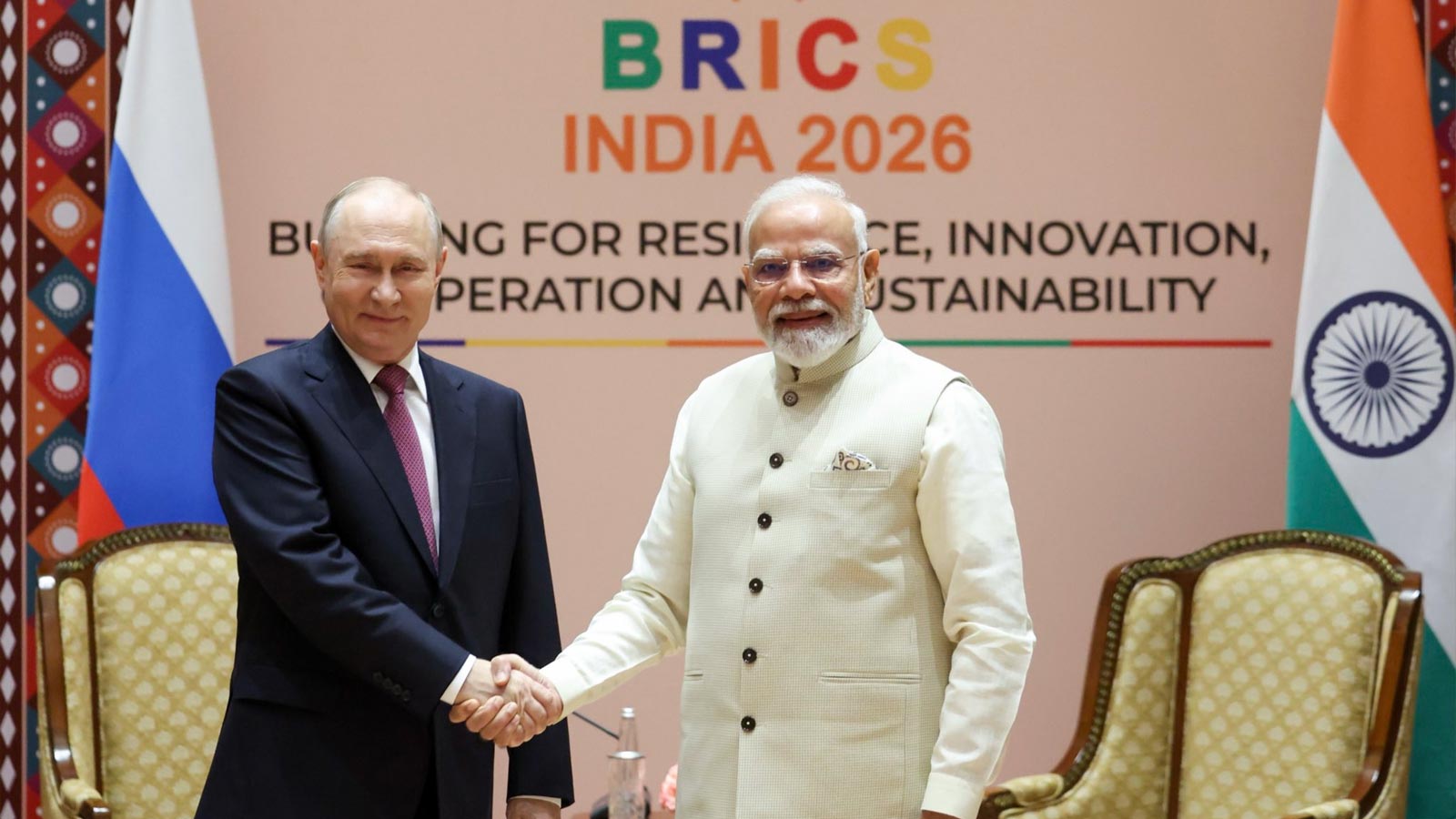
For India, the Ukraine conflict is a reminder of the importance of keeping diplomatic channels open while avoiding becoming a party to the conflict. New Delhi continues to maintain a deep relationship with Moscow, particularly in defence and energy, but it has simultaneously expanded relationships with the United States, Europe and other partners.
That is the essence of Indian multi-alignment.
India can work with Russia without endorsing every Russian position. It can engage China without accepting Chinese strategic ambitions. It can maintain ties with Iran while deepening relations with Israel and the Gulf. It can cooperate with the United States through the Quad while remaining a founding member of BRICS.
This may look contradictory from the perspective of traditional alliances.
From India's perspective, it is the point.
The Iran-UAE Crisis Is BRICS' Biggest Test
Nothing illustrates the limits of the expanded BRICS more clearly than the Iran-UAE confrontation.
Expansion gave BRICS greater representation across the Global South. But it also brought regional rivalries inside the room.
Iran and the UAE are geographically close, economically connected and historically intertwined, yet their strategic calculations have diverged sharply. The escalation of the Iran conflict in 2026 transformed those differences into a direct institutional challenge for BRICS. Attacks involving Gulf infrastructure and the disruption of the Strait of Hormuz pushed the issue beyond bilateral rivalry into the realms of global energy security, shipping and economic stability.
The consequences became visible at the BRICS Foreign Ministers' meeting, where disagreements prevented the members from issuing a full joint communiqué.
That was more than a diplomatic embarrassment.
It exposed the central weakness of a consensus-driven organisation that has expanded faster than its ability to reconcile the interests of its members.
Iran wants strong condemnation of military action against it and an emphasis on sovereignty. The UAE's priorities include protection of its territory, maritime security and the uninterrupted movement of commercial shipping. Saudi Arabia has its own calculations. Russia and China have their own strategic interests. India has a direct economic stake in stability.
There is no magic sentence that makes all those interests identical.
And that is precisely why India's role matters.
Can India Become the Bridge?
India has something few other members possess: working relationships with virtually every major player involved in the crisis.
The UAE is one of India's most important Gulf partners. Economic ties have expanded rapidly, cooperation extends into defence, energy, technology and infrastructure, and millions of Indians live and work in the Emirates.
Iran is equally important, although for different reasons. It matters to India's energy interests, regional diplomacy and connectivity strategy. The Chabahar project gives India an important route towards Afghanistan and Central Asia, while Iran's geographic position makes it difficult to ignore in any serious discussion of Eurasian connectivity.
India therefore has a powerful incentive to prevent the Iran-UAE confrontation from becoming permanent.
It also has an unusual diplomatic advantage: officials from both sides have indicated that India can play a constructive role in reducing tensions. That does not mean New Delhi can suddenly negotiate a grand peace settlement. Nor should it attempt to claim the role of regional policeman.
But quiet diplomacy is different from headline-grabbing mediation.
India could facilitate conversations on maritime safety, trade corridors, humanitarian issues, energy flows and confidence-building measures. It could encourage both sides to create enough diplomatic space for a broader de-escalation process.
The goal should not be to produce a dramatic handshake for television.
The goal should be to make the next crisis less dangerous than the current one.
That would be a far more meaningful achievement for BRICS.
Expansion Has Made BRICS More Representative and More Difficult
There is a paradox at the heart of BRICS expansion.
The more countries it includes, the more representative it becomes.
But the more representative it becomes, the harder it becomes to reach consensus.
This is not a temporary problem. It is structural.
The old BRICS already had disagreements, particularly between India and China. The expanded BRICS now includes countries with competing regional ambitions, different economic models, different security relationships and sometimes directly conflicting interests.
The Iran-UAE crisis is simply the most dramatic example.
This means BRICS should stop measuring its success primarily through the ability to produce sweeping political declarations.
A 100-paragraph declaration is not necessarily more successful than a 10-paragraph one.
The real test is whether BRICS can build institutions and mechanisms that continue functioning after the leaders return home.
That is where the grouping still has unfinished business.
BRICS Needs an Institutional Backbone
Eighteen years into its summit-era existence, BRICS remains surprisingly light on permanent institutional machinery.
There is a New Development Bank. There are multiple working groups, meetings and ministerial processes. There is extensive interaction among officials, businesses and institutions.
Yet there is still a gap between summit rhetoric and sustained implementation.
A mature BRICS should consider creating a stronger permanent secretariat, professional staff and a mechanism for tracking commitments between summits.
Without such machinery, every summit risks becoming a reset.
With it, BRICS could begin accumulating institutional memory.
That would matter for everything from local-currency settlements and digital payment interoperability to development finance, energy cooperation, climate finance, technology partnerships and supply-chain resilience.
India is particularly well placed to push this agenda because its diplomatic tradition is better suited to holding together divergent interests than forcing uniformity.
The objective should not be to turn BRICS into a rigid bureaucracy.
It should be to give the grouping enough institutional capacity to turn consensus into implementation.
Energy Could Become BRICS' Most Powerful Common Interest
If geopolitics divides BRICS, energy may be the issue that brings it back together.
The grouping includes some of the world's most important energy exporters and some of its largest energy consumers.
Russia, Saudi Arabia, Iran, the UAE and Brazil are major producers. India and China are enormous consumers and importers. That creates a natural interdependence.
For exporters, energy security means securing reliable demand.
For importers, it means securing reliable supply at predictable prices.
That common interest could become one of BRICS' greatest strategic assets.
India's vulnerability is obvious. Its economic growth remains closely tied to affordable and uninterrupted energy supplies. Any prolonged disruption around the Strait of Hormuz can quickly become an Indian economic problem through higher oil prices, inflation, pressure on the rupee, higher transport costs and broader disruptions to trade.
The answer cannot simply be to buy more oil.
India needs diversification of suppliers, transport routes, strategic reserves, renewable energy, nuclear power and new technologies.
But diplomatic and institutional cooperation also matters.
BRICS could develop a dedicated energy-security mechanism linking producers and consumers, encouraging long-term contracts, strengthening supply-chain resilience, facilitating payments in national currencies where practical and promoting cooperation in both hydrocarbons and clean energy.
Such a platform would be far more useful than another declaration about the future of the world order.
Why India Needs BRICS and the Quad
The false choice between BRICS and the Quad should be rejected.
India does not have to choose.
In fact, India's energy-security interests demonstrate why it needs both.
BRICS brings together major oil and gas producers alongside major consumers. The Quad provides another network involving the United States, Australia, India and Japan, with significant capabilities in technology, maritime cooperation, supply chains and energy.
These platforms serve different purposes.
The strategic genius of multi-alignment is precisely that India does not need every partnership to do everything.
One grouping can help with energy producers and emerging-market finance. Another can support maritime security and advanced technology. The G20 can provide a broader economic forum. Bilateral relationships can fill the gaps.
India's foreign policy should therefore be judged not by how many alliances it joins, but by how effectively it converts multiple relationships into strategic room for manoeuvre.
That is what makes India's BRICS presidency so consequential.
The Real Meaning of BRICS 2026
The biggest mistake would be to expect BRICS 2026 to produce a revolutionary new world order overnight.
It will not.
Nor should it.
BRICS is too diverse to become a conventional geopolitical alliance. Its members have too many competing interests, and many of them remain deeply connected to the Western economic and security architecture.
Its strength lies elsewhere.
BRICS gives countries more choices.
It creates additional diplomatic channels. It provides a platform for reforming international institutions. It offers new possibilities in development finance and payments. It brings energy producers and consumers into the same conversation. And it gives the Global South a collective platform from which to argue that international governance should better reflect the distribution of economic and demographic power in the 21st century.
For India, the opportunity is even more specific.
New Delhi should resist attempts to turn BRICS into an anti-American project. That would unnecessarily narrow India's options and alienate members that prefer balanced relations with Washington and Europe.
At the same time, India should resist the opposite temptation: treating BRICS as a symbolic club whose relevance ends with summit photographs.
There is real work to do.
Strengthen the New Development Bank. Improve payment connectivity. Expand trade in national currencies where economically sensible. Build energy-security mechanisms. Promote resilient supply chains. Develop technology partnerships. Support reform of global financial institutions. Create stronger institutional machinery. And, where possible, use the grouping as a venue for quiet diplomacy.
Above all, BRICS needs to learn to live with disagreement.
Its members do not have to agree on everything.
They simply need to identify enough common ground to make cooperation worthwhile.
India’s Three-Part BRICS Strategy
The clearest expression of India's approach can be reduced to three words: deepen, preserve, stabilise.
Deepen relationships where interests converge.
Preserve strategic space where relationships are complicated but valuable.
Stabilise conflicts where confrontation threatens India's interests and the wider regional order.
That approach explains India's simultaneous engagement with Russia, Iran and China. It also explains why India can work with the United States and its allies without abandoning BRICS.
This is not traditional non-alignment.
It is not bloc politics either.
It is multi-alignment built around national interest.
And BRICS, perhaps unexpectedly, is becoming one of the best laboratories for that approach.
BRICS Has Come of Age. Now It Must Prove It.
At 18, BRICS has reached the point where size is no longer enough.
Membership expansion is no longer enough.
Summit declarations are no longer enough.
The grouping now has to demonstrate that it can convert diversity into strength rather than paralysis.
The Iran-UAE confrontation has provided a brutal test. The China-India relationship provides another. Financial diversification presents a third. Energy security may offer the most practical opportunity of all.
India's challenge is to hold these contradictions together without pretending they do not exist.
That means being ambitious about economics but realistic about geopolitics. It means resisting the temptation to turn BRICS into an ideological anti-Western club while still pushing for a more representative international system. It means engaging China without surrendering strategic autonomy, working with Russia without endorsing every Russian policy, and maintaining ties with Iran and the Gulf simultaneously.
Most importantly, it means understanding that multipolarity is not the absence of conflict.
It is the management of conflict in a world where no single power can dictate outcomes indefinitely.
That is the real significance of BRICS 2026.
The summit in New Delhi is not merely another diplomatic gathering. It is an examination of whether an increasingly multipolar world can build institutions capable of managing its own contradictions.
India has the opportunity to shape that answer.
But the measure of success will not be how impressive the declaration sounds when the summit ends.
It will be whether BRICS still has something useful to say and something tangible to show when the next crisis arrives.
With input from agencies
Image Source: Multiple agencies
© Copyright 2026. All Rights Reserved. Powered by Vygr Media.