 By
By 
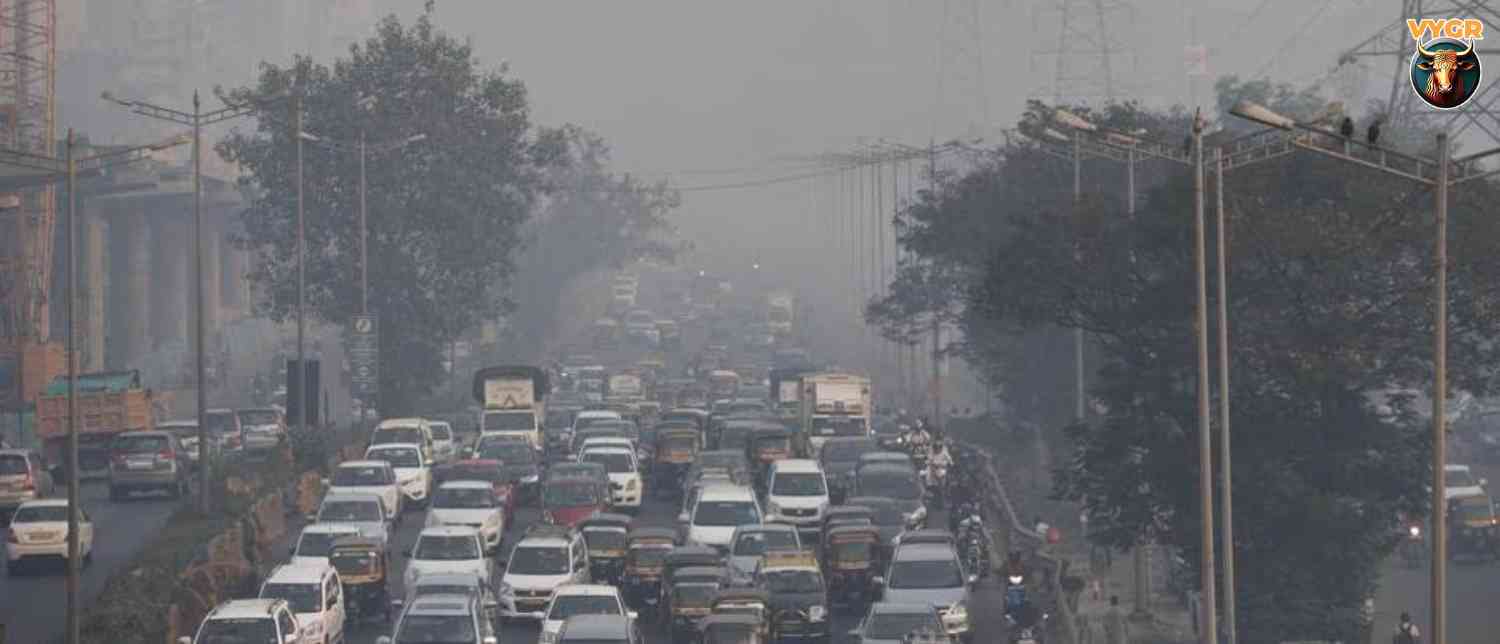
For most of the year, Mumbai gets away with a comparison it hasn’t earned. Delhi is the city India associates with bad air, and Mumbai, with its sea breeze and humid coastline, is the one people assume can breathe easy. This week that assumption has been tested. On Thursday the city recorded an Air Quality Index (AQI) of 152, in the “unhealthy” band, according to the US-based monitoring organisation IQAir, which placed it at the top of its India rankings.
Friday looked worse. One report has the city’s AQI at 181 on October 16, also in the unhealthy range. Behind the numbers lies a more complicated story than a simple ranking suggests.
Same city, two answers
The first thing readers should know is that Mumbai has two different AQI figures this week, and they are both correct.
IQAir uses the US AQI scale, which sets stricter thresholds. On Thursday it gave 152. India’s Central Pollution Control Board (CPCB) put the city’s overall AQI at 98 the same day, a “satisfactory” reading on the Indian scale. The two systems calculate pollution differently and draw on different monitoring stations, which is why a city can look alarming on one app and acceptable on another.
That is also why “worst in India” needs care. It describes one ranking at one moment. Rankings shift by the hour, and cities like Delhi and Kolkata regularly swap places with Mumbai on days like this.
A three-week slide
The more telling picture is the trend. Readings on the US scale from a widely used monitoring portal show the air deteriorating steadily after the monsoon.
| Date Mumbai | AQI (US scale) |
|---|---|
| September 27 | 55 |
| September 28 | 71 |
| September 29 | 77 |
| September 30 | 121 |
| October 1 | 145 |
| October 7 | 158 |
| October 8 | 162 |
The air also fluctuates sharply through the day. On the night of October 13, the reading touched 173, and on Wednesday evening, October 14, it stood at 154, with PM2.5 at about 64 micrograms per cubic metre. On Thursday evening, another monitor showed 160, with PM2.5 at 71. The World Health Organization’s recommended 24-hour limit for PM2.5 is 15 micrograms per cubic metre, so these numbers are several times the guideline.
The ozone factor
What stands out this time is the main pollutant. Delhi’s winter smog is largely particulate matter. IQAir identified ground-level ozone (O3) as the principal pollutant behind Mumbai’s elevated reading on Thursday.
Ground-level ozone is not the same thing as the protective ozone layer high in the atmosphere. It is a secondary pollutant, meaning no chimney or exhaust pipe emits it directly. It forms when nitrogen oxides and volatile organic compounds, released mainly by vehicles, industry and fuel burning, react in strong sunlight and heat. That is why it tends to build through the afternoon and why hot, still, sunny days favour it.
And it has been hot. Mumbai has seen temperatures of around 37°C this October, and reports link the unusual warmth to El Niño. The mix of heat, sunlight and the city’s traffic emissions is close to ideal for ozone formation.
The other contributors
Ozone is not working alone. Several other factors add to the load.
Construction and dust. After the monsoon, accumulated mud, silt and debris dry out, and construction picks up again. Mumbai is in the middle of large infrastructure and redevelopment work. In earlier pollution episodes, BMC officials themselves named construction dust and changing wind speeds as the two main drivers, and the city’s dust-control rules were tightened in 2023 after a bad spell.
Traffic and burning. Vehicle exhaust supplies the nitrogen oxides that feed ozone and adds fine particles. Waste burning in some pockets adds to it.
Weather. Post-monsoon air is drier, and low wind speeds let pollutants accumulate. Mumbai’s sea breeze is the city’s natural air purifier. When it weakens or arrives late, readings climb. Experts have noted before that Mumbai’s AQI seldom stays in one category for long, since the breeze can clear the air quickly when it picks up.
What the BMC is doing
The Brihanmumbai Municipal Corporation announced an “Air Pollution Control and Enforcement Action Plan-2026” on October 2, as the post-monsoon season began. The plan includes:
- identifying 10 pollution hotspots in each municipal ward, with regular review at ward level;
- stricter checks on construction dust, debris, waste burning and vehicular emissions;
- a post-monsoon deep-cleaning drive in the first two weeks of October to clear silt and dust;
- resumption of road washing from October 1, as directed by Municipal Commissioner Ashwini Bhide.
On the day the plan was announced, the city’s AQI stood at 110, up 31 points in 24 hours, and Worli recorded the poorest reading at 169. Two weeks later the numbers are higher, which suggests the city is still some way from getting ahead of the problem.
Dust control is something municipal action can influence directly. Ozone is harder. Because it forms in the atmosphere from emissions across a wide area, cutting it means reducing traffic and industrial emissions over time, not sweeping roads.
What the pollution does to your body
Ozone and fine particles hurt in different ways. Ozone irritates the airways and can cause coughing, throat irritation, chest tightness and shortness of breath, and it can trigger asthma attacks. PM2.5 is small enough to pass deep into the lungs and enter the bloodstream, and long-term exposure is linked to heart and respiratory disease. Children, older people and anyone with asthma, heart or lung conditions are most at risk.
What you can do
Check the live AQI before planning outdoor exercise or long commutes, and look at more than one source. Because ozone peaks in the afternoon, early morning and late evening are better for outdoor activity. A properly fitted N95 respirator reduces exposure to particles, though it will not remove ozone. Keep children and older family members indoors during the worst hours, and keep prescribed inhalers or medicines close.
What happens next
There is some relief in the forecast. Rain is likely over the weekend, which usually helps wash pollutants from the air and brings temperatures down. Whether the improvement lasts depends on how long the heat holds, how soon the sea breeze returns and how much dust the city’s construction sites kick up in the meantime. Winter, when cooler air traps pollutants close to the ground, is still ahead, and that is when Mumbai’s air is traditionally at its worst.
© Copyright 2026. All Rights Reserved. Powered by Vygr Media.