 By
By 
The protests against Chief Election Commissioner Gyanesh Kumar began as an argument over electoral rolls. Over the past 48 hours, they have also become an argument about words: “Bangladesh”, “Gen Z” and, above all, “regime change”.
Two statements set it off. One was a video message from a student leader. The other was a line from a senior lawyer at a press conference. The BJP has since used both to argue that the agitation is not what its organisers say it is. The Opposition and the protest leaders say the party is twisting ordinary democratic language to discredit a movement.
What was actually said
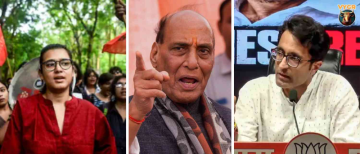
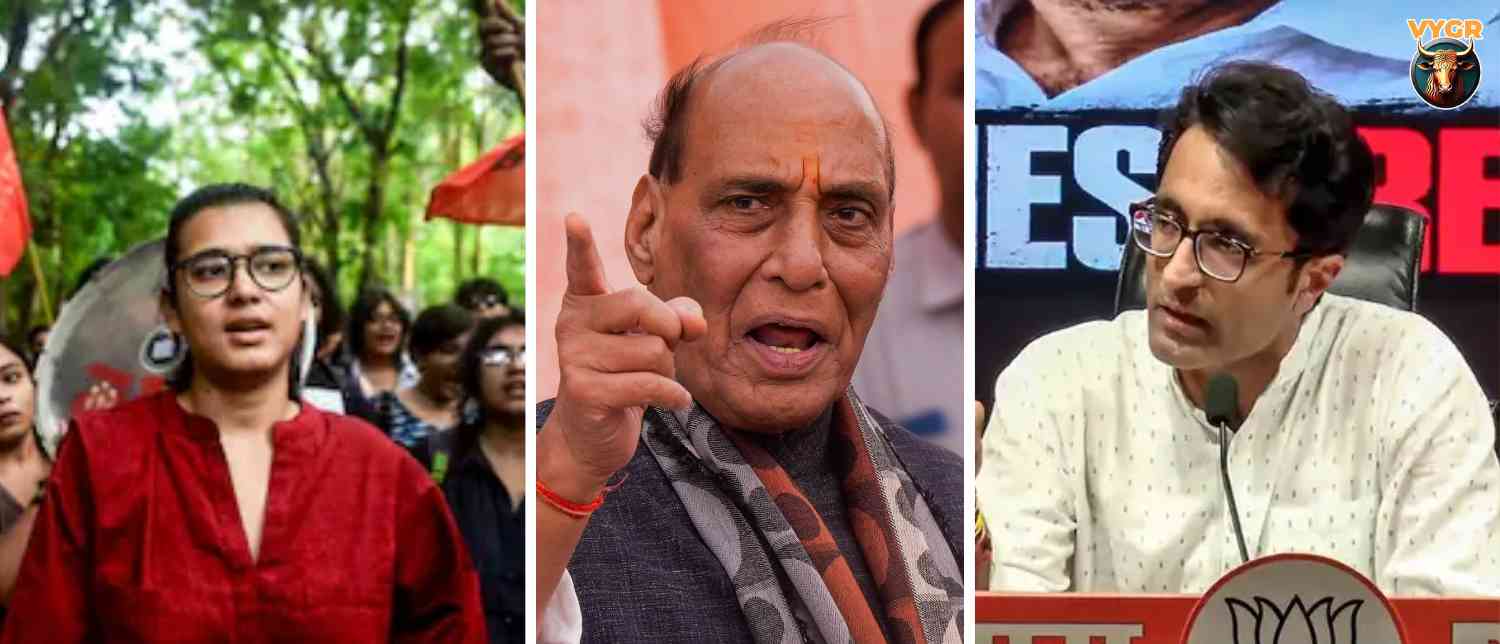
The video. On Wednesday, October 14, Neha Bora, president of the All India Students Association (AISA), released a video in which she gave a “red salute” to protesters in Bangladesh. She drew parallels between the Gen Z-led movement that ousted then Prime Minister Sheikh Hasina in 2024 and the youth-led protests in India against the Special Intensive Revision (SIR) of electoral rolls and CEC Gyanesh Kumar. She said the Bangladesh movement had “shown us the way”, and described it as a movement for democratic and voter rights. Reports also quote her saying the Bangladesh protests were an inspiration for young people in India.
The press conference. On Thursday, Prashant Bhushan joined Cockroach Janta Party (CJP) founder Abhijeet Dipke, actor Prakash Raj, Bora and others at the Press Club of India. Responding to the BJP’s accusation, Bhushan said: “Yes, we all want regime change.” He called it the democratic right of every citizen, and added that the BJP itself had run several movements for regime change when the UPA was in power. “That is why this is now really a fight for regime change,” he said.
The BJP’s case
The party moved quickly. BJP national spokesperson Pradeep Bhandari accused Rahul Gandhi and what he called the “entire ecosystem” of not wanting to engage in political resistance and instead seeking regime change. He said Rahul Gandhi had made Bora his “poster girl”, which in his view meant her views matched the Congress leader’s. The BJP also accused the Congress of trying to “destroy Indian democracy”.
BJP MP Sambit Patra posted on X that Bhushan had admitted the struggle was about regime change, and alleged that the Opposition wanted a “Bangladesh-like Gen Z movement” in India. These are the party’s allegations, and the Congress has not accepted that framing.
The argument the BJP is making can be summed up simply. It says the SIR and the CEC are a pretext, that the real aim is to unseat an elected government outside the ballot box, and that the Bangladesh comparison shows what the protesters have in mind.
The Opposition’s answer
Bhushan’s own reply was that the BJP cannot call something a conspiracy when it did the same thing itself. He pointed to the movements the BJP supported against the UPA government, and said that wanting a change of government is not an unlawful aim in a democracy.
That distinction is the heart of the dispute. In an electoral democracy, voters change governments all the time and parties campaign openly to make that happen. “Regime change” in that sense just means defeating the incumbent. The word has a darker meaning when it refers to removing a government by force or street pressure, as it did in Bangladesh. The two sides are using the same phrase to mean different things.
None of the reports I reviewed show Bora, Bhushan, or the CJP calling for violence or for the removal of the government by unconstitutional means. The CJP has said it is an independent platform for young people and is not affiliated with any political party.
Why the Bangladesh comparison is so potent
“Bangladesh” carries a heavy load in Indian politics. The 2024 uprising began with student protests over government job quotas and grew into a nationwide movement that ended with Hasina fleeing the country. It was followed by violence and, in the view of many in India, by a deterioration in the situation of minorities in Bangladesh. For the BJP, invoking it casts the CJP protests as a threat to stability, not just a dispute about a voter-list exercise.
The framing is also not new. Last year, the Delhi Police told the Supreme Court that the anti-CAA protests in the capital were aimed at regime change like Bangladesh and Nepal, an allegation that the accused in the 2020 riots case have denied. Nepal had seen its own Gen Z-led uprising that brought down a government in 2025. Linking protests at home to those events has become a recurring argument.
Why the remarks gave the BJP an opening
For a government that has been on the back foot over the SIR exercise, the Supreme Court notice on the Opposition’s petition and the detentions of protesters, the remarks were useful. They let the BJP shift the question from “is the voter-roll revision fair?” to “what do these protesters really want?”. The party’s caution is also a strategic one. By calling attention to a Bangladesh-style outcome, it can appeal to voters who value stability and who may be uneasy about street agitation, without having to answer the Opposition’s specific allegations about deletions.
For the protest leaders, there is a corresponding risk. The more they speak in the language of regime change, the easier it is for critics to portray them as seeking something beyond what their stated demands, a CEC’s resignation and a rethink of the SIR, would require.
What to watch
Three things will show where this goes. Whether the Congress and other INDIA bloc parties endorse or distance themselves from the “regime change” wording. How the police and courts treat Friday’s planned CJP rally, since the BJP’s framing could shape the response. And whether the Supreme Court’s hearing on the SIR petition brings the argument back to the substance of voter deletions, which is where the protest began.
© Copyright 2026. All Rights Reserved. Powered by Vygr Media.