 By
By 
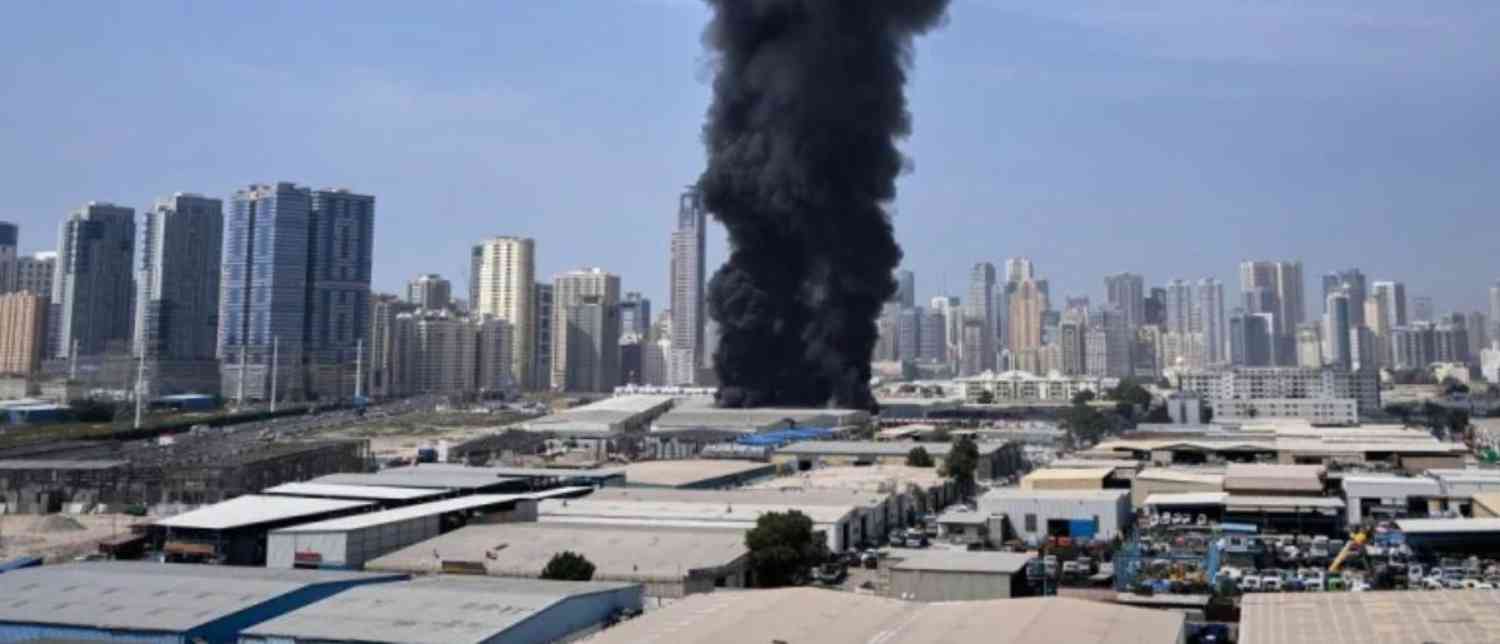
Dubai International Airport, the world’s busiest hub for international travel, experienced brief chaos on Saturday after a suspected drone strike near the airport triggered explosions and forced authorities to suspend flights temporarily. The incident came amid a rapidly escalating regional conflict involving Iran, the United States, and Israel, which has begun spilling into Gulf countries.
Passengers were moved into underground train tunnels for safety as air defence systems across the United Arab Emirates (UAE) responded to incoming missile and drone threats. While flight operations have partially resumed, the developments highlight the growing impact of the Middle East conflict on aviation, regional security, and international travel.
Explosions Near Dubai Airport Trigger Emergency Measures
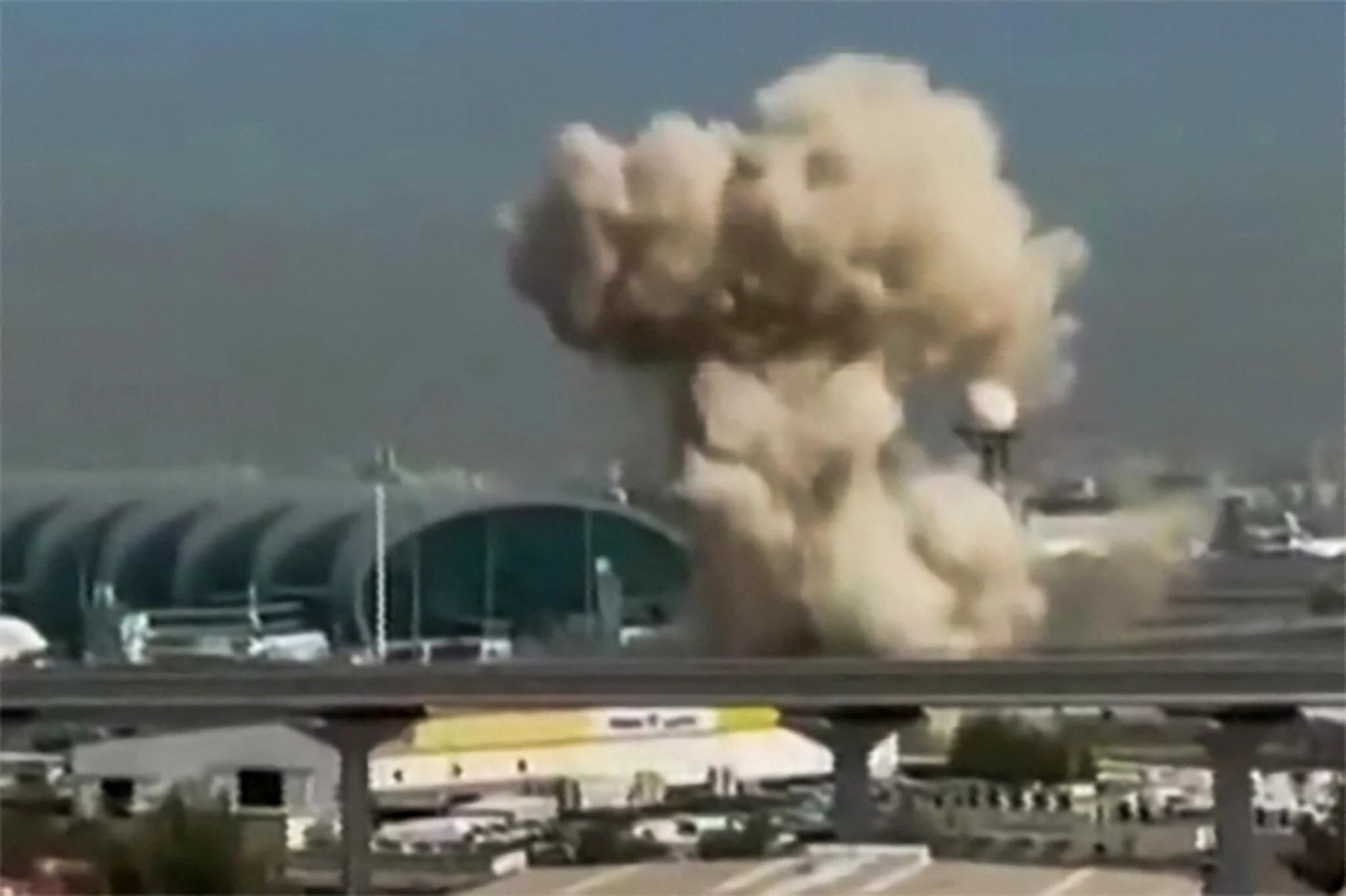
Several explosions were heard across Dubai on Saturday morning as the UAE activated its air defence systems to counter Iranian missile and drone attacks targeting Gulf states. These attacks were reportedly launched in response to a joint bombing campaign carried out by the United States and Israel.
At Dubai International Airport, passengers awaiting flights were quickly escorted into train tunnels beneath the massive airport complex after the alert was triggered.
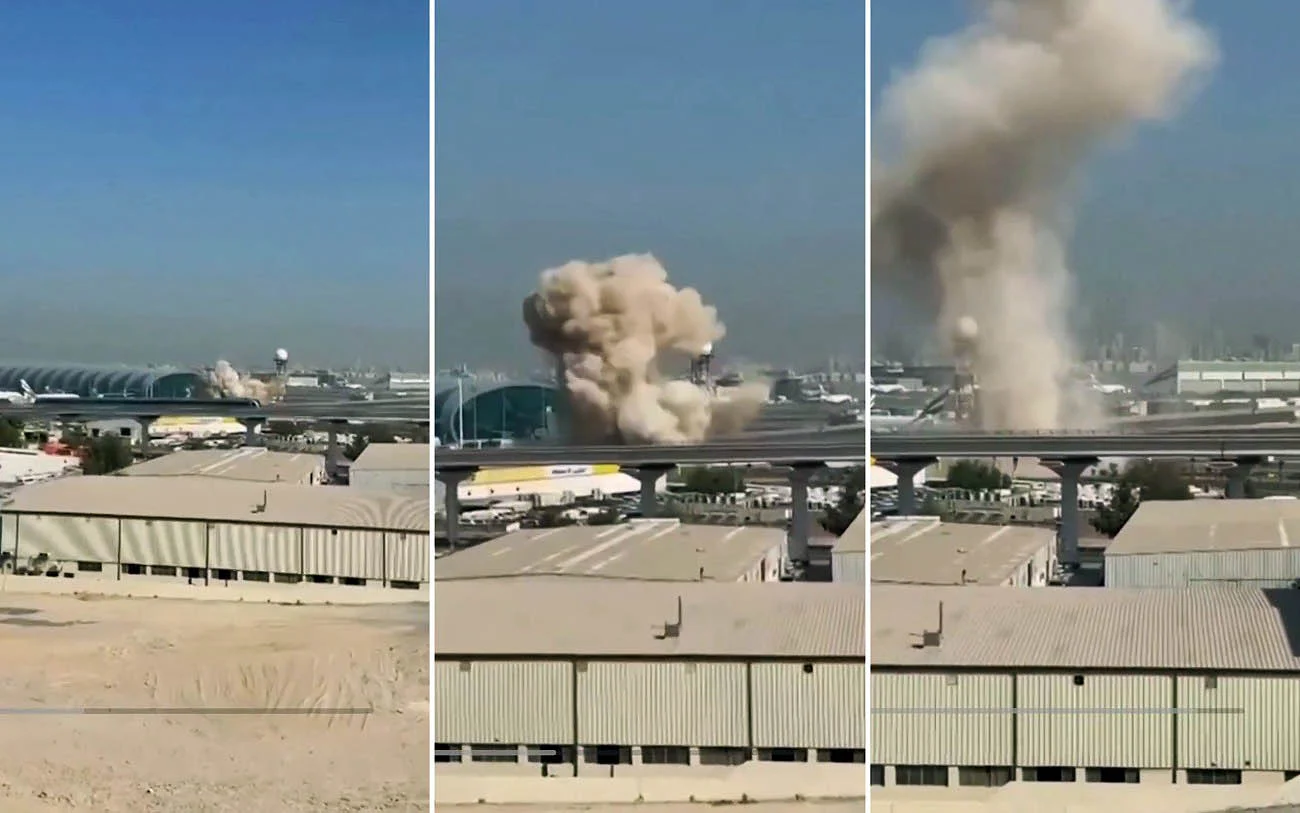
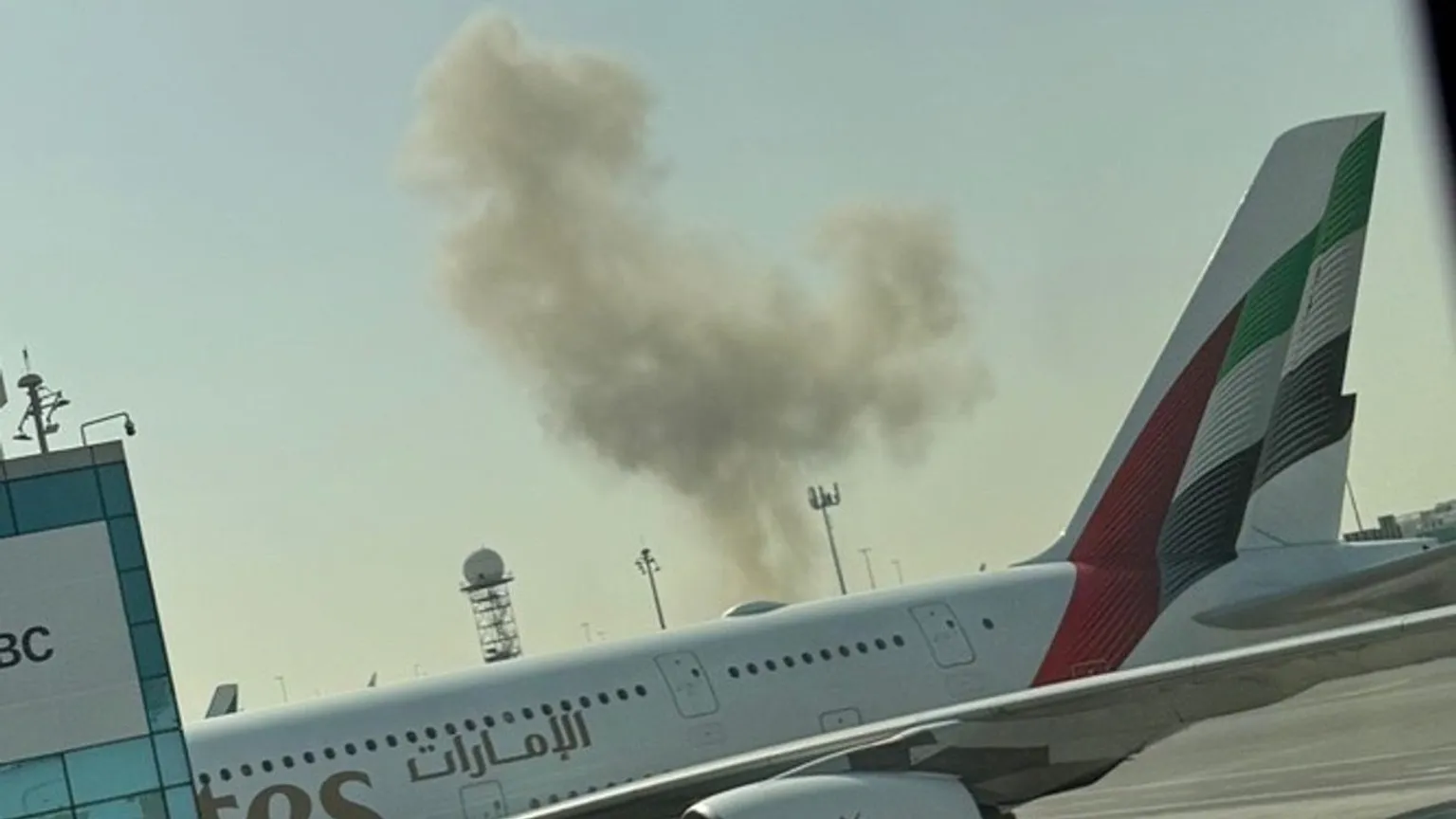
Video footage circulating online showed a loud whirring sound moments before an explosion, followed by smoke rising near one of the airport terminals. Initial reports suggested that the drone’s impact occurred close to a concourse area of the airport.
Authorities have not yet confirmed whether the projectile was intercepted or whether the airport sustained direct damage.
Flights Suspended, Then Gradually Resumed
Following the explosions, flight operations at Dubai International Airport were briefly halted. However, Emirates airline later resumed long-haul services after suspending flights temporarily.
A Dubai Airports spokesperson confirmed that operations had partially restarted.
“Dubai Airports confirms partial resumption of operations from today, 7 March, with some flights operating out of Dubai International (DXB) and Dubai World Central – Al Maktoum International (DWC),” the spokesperson said.
Passengers were advised not to travel to the airports unless their airlines had confirmed that their flights were operating, as schedules continued to change.
Emirates also clarified its operational status on social media. In a post on X, the airline stated that an earlier message regarding flight operations had been removed to avoid confusion.
“Emirates has resumed operations. Passengers who have confirmed bookings for this afternoon’s flights may proceed to the airport,” the airline said.
This advisory also applied to passengers transiting through Dubai, provided their connecting flights were operating.
Despite the resumption of services, some aircraft were seen circling in the air near Dubai airport, and delays were reported.
UAE Intercepts Missiles and Drones
The UAE Ministry of Defence confirmed that the loud explosions heard across Dubai were the result of air defence systems intercepting incoming missiles and drones launched by Iran.
According to official figures released by the ministry:
-
Air defence systems detected 16 ballistic missiles on March 7.
-
15 missiles were intercepted, while one fell into the sea.
-
Authorities detected 121 drones, of which 119 were intercepted and two landed within UAE territory.
Since the beginning of the Iranian attacks, the UAE has detected:
-
221 ballistic missiles, with 205 destroyed, 14 falling into the sea, and two landing within UAE territory.
-
Eight cruise missiles, all of which were successfully intercepted.
The attacks resulted in three deaths, including nationals from Pakistan, Nepal, and Bangladesh. Authorities also reported 112 minor injuries involving individuals of various nationalities.
Officials added that a “minor incident” occurred in Dubai when debris from an intercepted missile fell in the city.
Iranian President Apologises but Defends Strikes
Amid the escalating conflict, Iranian President Masoud Pezeshkian issued an apology to regional states for the attacks, suggesting that miscommunication within Iran’s military ranks may have contributed to the strikes.
In a pre-recorded address broadcast on Iranian state television, Pezeshkian said Iran would halt attacks on neighbouring countries. However, he also criticized the United States, dismissing Washington’s demand for Iran’s unconditional surrender.
“The demand by the US for an unconditional surrender is a dream that they should take to their grave,” he said.
Despite the apology, Iranian officials signalled that strikes could continue against regional states perceived to be supporting Iran’s enemies.
Gholamhossein Mohseni Ejei, Iran’s judiciary chief and a member of the interim leadership council, warned that the country would keep targeting regional territories used by adversaries.
“Evidence from Iran’s armed forces shows that the geography of some countries in the region is openly and covertly at the disposal of the enemy,” he said.
Conflict Expands Across the Middle East
The crisis intensified as Israel launched a broad wave of strikes against targets in western Tehran. Footage showed explosions and smoke rising above the Iranian capital.
Loud booms were also heard in Jerusalem as Iranian missiles triggered air raid warnings across Israel. Civilians rushed to bomb shelters, although Israeli emergency services reported no immediate casualties.
Israeli forces have also targeted locations in Beirut and Tehran.
Meanwhile, Lebanon was pulled further into the conflict earlier in the week after Hezbollah, an Iran-aligned militant group, launched rockets and drones into Israel. Israel retaliated with heavy strikes across southern and eastern Lebanon, as well as areas near Beirut.
Rising Death Toll Across the Region
The week-long conflict has caused significant casualties across multiple countries.
According to officials:
-
At least 1,230 people have been killed in Iran
-
More than 200 deaths have been reported in Lebanon
-
Around a dozen people have been killed in Israel
-
Six US troops have also been reported dead
The ongoing hostilities show little sign of ending.
The United States recently approved a £112 million arms sale to Israel, further intensifying tensions in the region.
US President Donald Trump warned that Iran would face severe consequences if the attacks continued.
Writing on Truth Social, he said Iran would be “hit very hard,” adding that new potential targets were under consideration.
“Under serious consideration for complete destruction and certain death… are areas and groups of people that were not considered for targeting up until this moment,” Trump wrote.
US officials have also warned that an even more intense bombing campaign could be imminent.
UAE President Warns Nation Is “In a Period of War”
In his first public remarks since the missile attacks began, UAE President Sheikh Mohammed bin Zayed Al Nahyan addressed the nation in a televised statement.
The UAE leader acknowledged the seriousness of the situation but said the country would emerge stronger from the conflict.
“The UAE is in a period of war,” he said in a rare address broadcast on Abu Dhabi TV.
However, he emphasized that the country would not be easily defeated.
“We will emerge stronger,” he added.
Gulf Residents Receive Missile Threat Alerts
Earlier in the week, residents in Dubai and Qatar received emergency alerts on their mobile phones warning of potential missile threats.
The message advised residents to seek immediate shelter in secure buildings and avoid windows, doors, and open spaces.
Qatar later informed residents that the security threat had been eliminated.
Meanwhile, sirens were also heard in Bahrain’s capital, Manama, where at least five explosions were reported.
Travel Disruptions Spread Beyond the Gulf
The growing regional conflict has also disrupted global aviation.
At least 100 international flights were cancelled at India’s Delhi and Mumbai airports on Saturday due to the crisis.
Airport officials reported:
-
Mumbai Airport: 35 departures and 36 arrivals cancelled
-
Delhi Airport: 22 departures and 17 arrivals cancelled
Countries around the world have begun organizing evacuation flights to bring home citizens stranded in the Gulf.
Poland, France, Hungary, Italy, Germany, Bulgaria, and the Netherlands are among the nations planning repatriation operations.
India Plans Evacuation Flights
India has also stepped up evacuation efforts as tensions escalate.
The Indian government announced that domestic airlines would operate 96 flights to evacuate nationals from the UAE, Qatar, Saudi Arabia, and other parts of West Asia.
Meanwhile, the Indian embassy in Qatar issued an advisory asking tourists holding the Hayya A1 Visa to fill out a form.
Officials said the information would help determine the number of Indian nationals stranded in the country who are not residents of Qatar.
Uncertain Future for Regional Security
With missile strikes, drone attacks, and retaliatory bombings continuing across the Middle East, the situation remains volatile.
Air defence systems across the Gulf remain on high alert as Iran vows to continue targeting territories it believes are assisting its enemies.
Meanwhile, global aviation, international travel, and civilian safety continue to be affected by the rapidly expanding conflict.
For travellers and residents alike, the events at Dubai International Airport serve as a stark reminder of how quickly geopolitical tensions can disrupt one of the world’s busiest transportation hubs.
With inputs from agencies
Image Source: Multiple agencies
© Copyright 2025. All Rights Reserved. Powered by Vygr Media.