 By
By 
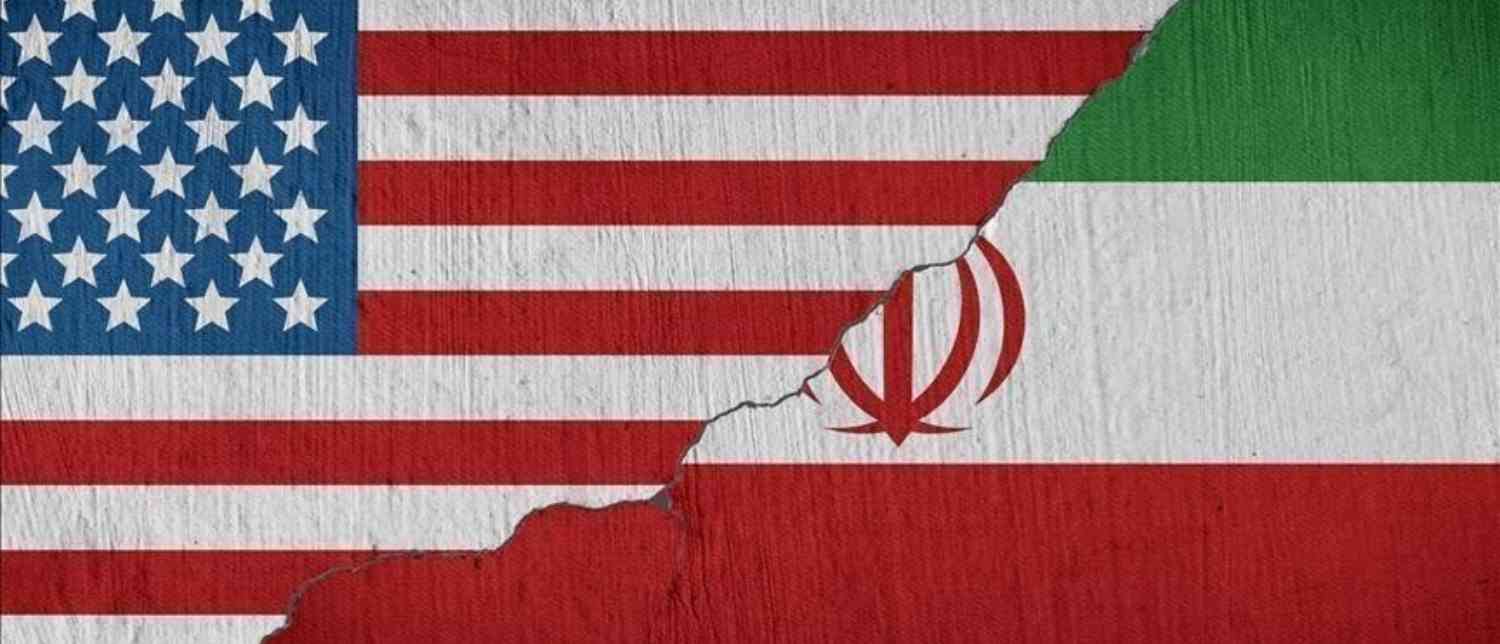
On February 28, the United States and Israel bombed Iran. That was the headline. That was the kinetic war — loud, visible, measurable in damage, retaliation, and escalation. But within 24 hours, something else had already begun to unfold, something quieter but arguably more consequential. Iran wasn’t just responding with missiles. It was responding with memes — and in doing so, it exposed a profound shift in how modern conflict is fought, perceived, and, ultimately, won.
This wasn’t improvisation. It wasn’t a spontaneous burst of online creativity triggered by crisis. It was doctrine. As Iran’s Supreme Leader Ayatollah Ali Khamenei stated in 2024, “The media is more effective than missiles, planes and drones in forcing the enemy to retreat.” That line now reads less like rhetoric and more like a mission statement. Because what followed the February strikes wasn’t just a propaganda campaign — it was a full-spectrum, digitally native information offensive that blended humour, cultural literacy, psychological targeting, and algorithmic amplification into something that traditional statecraft simply isn’t equipped to counter.
Within the first 25 days of the conflict, NewsGuard tracked 50 false claims circulating online — 92 percent of them pro-Iranian. That statistic alone would be alarming in any context. But the real story lies in the speed and effectiveness of the campaign. By mid-March, 58 percent of Americans opposed the strikes. That’s not a marginal shift. That’s a narrative collapse. Iran didn’t just respond to the attack — it walked into the American living room and started rearranging the furniture.
And it did so using the internet’s most underestimated weapon: the meme.
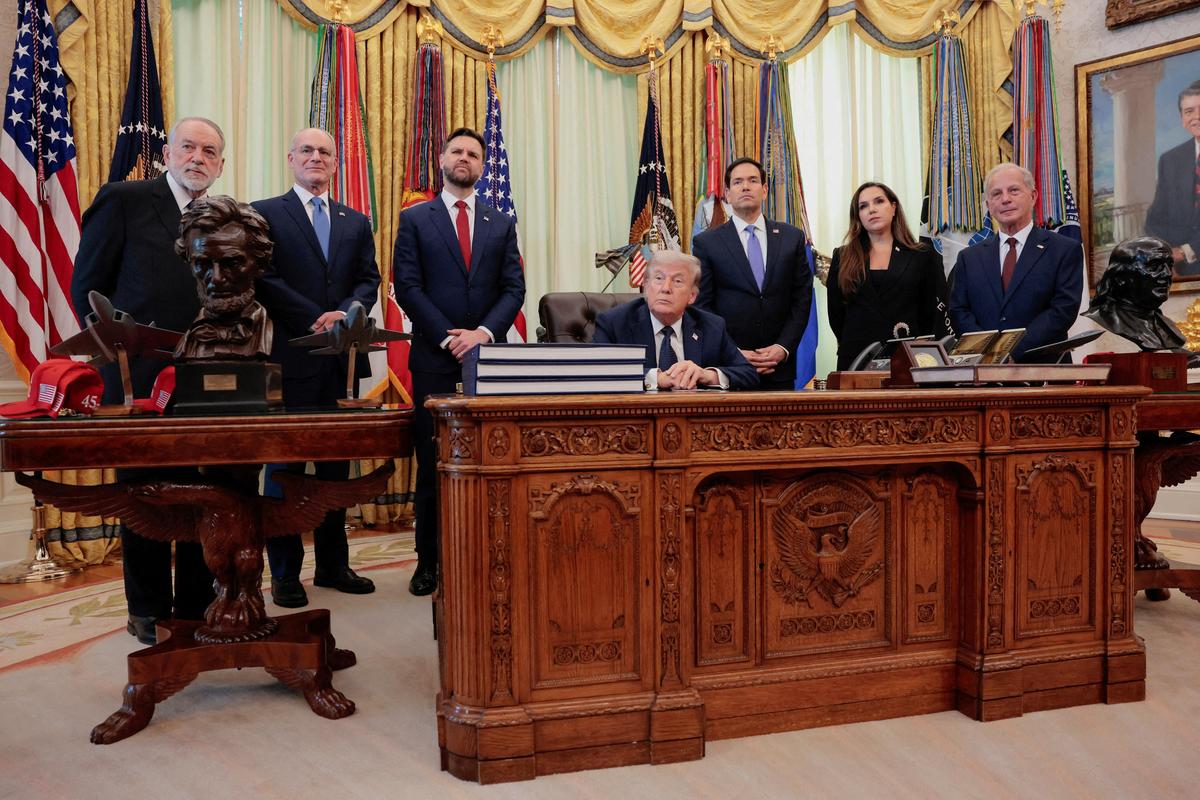
The Meme as a Weapon of War
Modern warfare has always had a propaganda dimension, but what we’re witnessing now is something fundamentally different. This is not the era of state-controlled broadcasts or carefully worded press releases. This is the era of virality, where a 30-second clip can shape public perception more effectively than a 30-page policy brief.
Iran understood this. More importantly, it understood the audience.
The new generation of Iranian propagandists is not cloistered in ideological silos. They are digitally fluent, culturally aware, and, crucially, highly educated. Many of them have advanced degrees. They grew up online. They speak the language of memes, irony, and internet subcultures. They don’t frame their content as traditional resistance messaging. Instead, they tap into American counterculture — referencing everything from the Epstein scandal to reality television.
This is not accidental. It is strategic empathy weaponised.
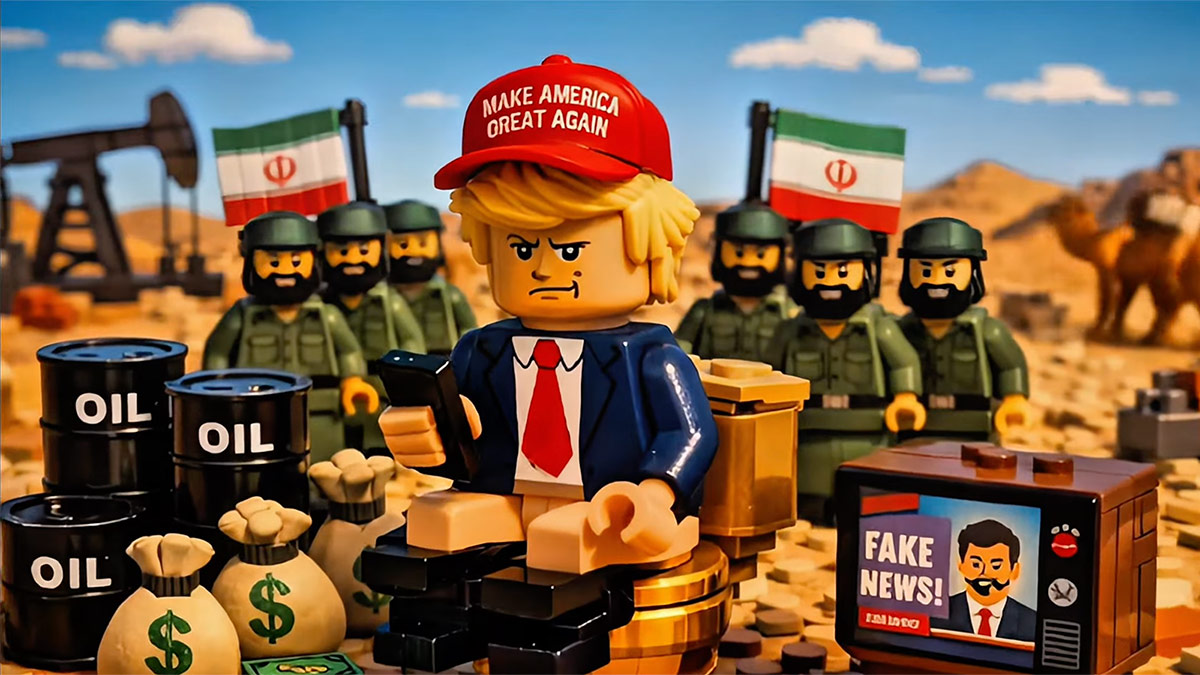
Meme #1: The Lego Epstein Video
The first viral hit of the campaign was deceptively simple: a Lego animation.
It opens with Donald Trump and Benjamin Netanyahu hunched over a folder labelled “Epstein Files.” A red devil Lego figure hovers ominously behind them, raising a golden goblet. They press a button. An Iranian school is bombed. The aftermath lingers — a small pair of shoes, a school bag buried in rubble. Then comes the retaliation: Iranian strikes on US bases, Ben Gurion Airport, and a Dubai hotel. Iranian soldiers charge. Credits roll.
Produced by Explosive Media (also known as AkhbarEnfejari or Explosive News), the video amassed millions of views within weeks. The group describes itself as a “student-led media team,” though investigations by the BBC suggest that the Iranian government may have been a paying client.
But the real brilliance of the video lies in its framing. The Epstein reference is not incidental — it is the emotional anchor. Jeffrey Epstein is not an Iranian issue. He is an American trauma, a symbol of elite impunity and systemic failure. By invoking that imagery, the video bypasses geopolitical complexity and taps directly into pre-existing outrage.
Iran didn’t need to explain why it was retaliating. The audience already felt something was wrong. Iran simply redirected that feeling.
That is the essence of effective propaganda in the digital age: don’t build new emotions — hijack existing ones.
Meme #2: “Hey, Trump. You Are Fired.”
The second viral moment required no animation, no special effects, and no budget. It featured Brigadier General Ebrahim Zolfaghari, standing in uniform, staring directly into the camera.
He spoke first in Persian, then in English:
“Hey, Trump. You are fired. You are familiar with this sentence. Thank you for your attention to this matter.”
It was a direct reference to Trump’s catchphrase from The Apprentice. And it worked.
The clip spread globally within hours. Zolfaghari, previously a relatively obscure figure, became an internet sensation overnight. He later renamed Operation Epic Fury to “Epic Fear” and added that wars are decided “in the field, not by tweets.”
What made this moment powerful wasn’t just the humour. It was the audacity. This was not deniable, anonymous propaganda. This was the Iranian state, on record, engaging in satire.
And the tone — that slight smirk — was not incidental. It was a calculated signal. Confidence, mockery, control.
In a media environment saturated with outrage and fear, humour becomes disarming. It lowers defences. It invites sharing. It transforms a military message into a cultural moment.
Meme #3: The Strait of Hormuz Key
If the Lego video was clever and the Zolfaghari clip was sharp, the third meme was pure comedic timing.
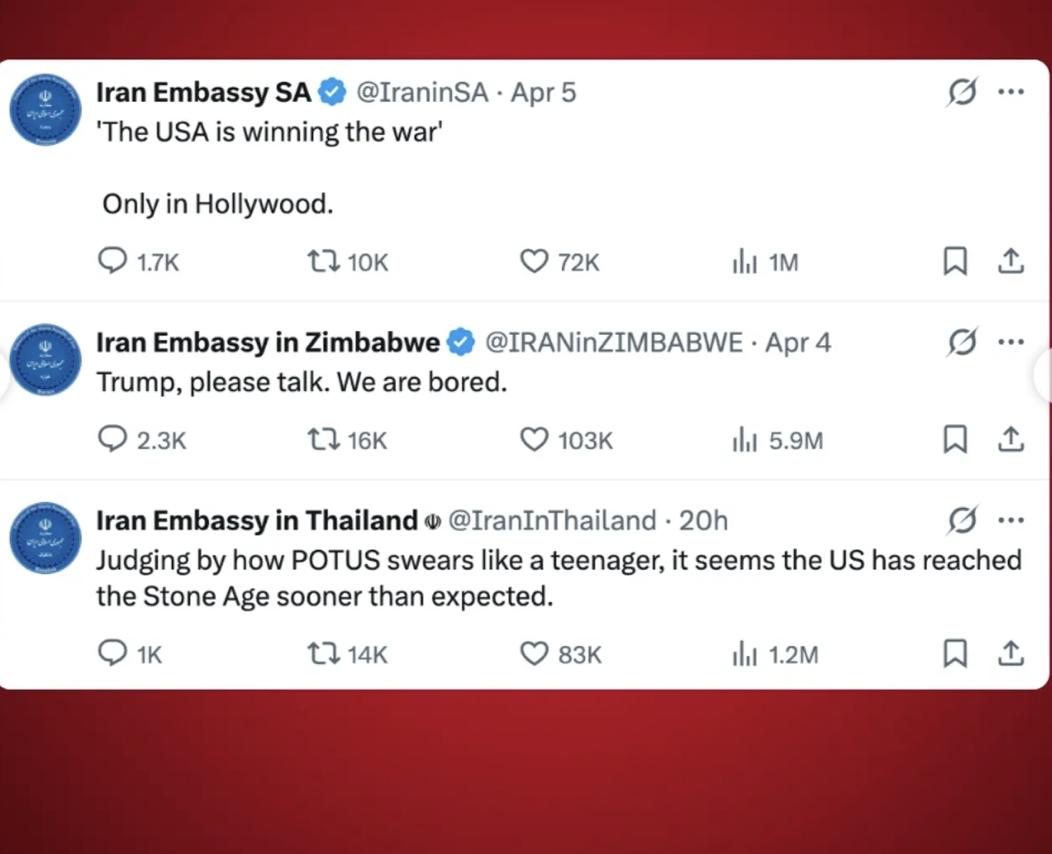
After Trump issued an ultimatum demanding the reopening of the Strait of Hormuz by April 7, Iranian diplomatic accounts responded with a series of posts.
The Iranian embassy in Zimbabwe: “Sorry, lost the key.”
After the deadline passed: “We found the key.”
The Iranian embassy in South Africa chimed in: “Eish, eventually. I told you it was under the flower pot, lazy.”
The joke went global. It was absurd, playful, and entirely unexpected from official government accounts.
But the most telling moment came when an Indian user on X asked Iran’s Mumbai consulate if it was hiring. The reply: “No vacancies. Our team is all Iranian — with a soft spot for India — though bringing our Indian friends onboard someday is a pretty great idea.”
That single line carried layers of meaning. It referenced decades of India-Iran relations, acknowledged a foreign audience, and did so with warmth and humour — all within the framework of a meme.
This is not just social media engagement. This is diplomacy reimagined for the algorithmic age.
The Architecture of a Digital Offensive
What makes Iran’s campaign particularly striking is its structure. It operates across three distinct layers:
Official channels include IRGC-affiliated media, state embassies, and semi-formal production houses like Explosive Media. These provide legitimacy and visibility.
Covert networks consist of fake personas — accounts posing as Latin American women in Texas or Scottish independence supporters — that build credibility over time. On February 28, 61 such accounts simultaneously pivoted to pro-Iran war content. The coordination was precise. The shift was instantaneous. There was nothing organic about it.
Amplification networks involve external actors, particularly Russia and China, boosting content at scale. What begins as a regional narrative quickly becomes a global one.
This multi-layered approach ensures reach, repetition, and reinforcement — the three pillars of effective propaganda.
The Information Void
None of this would work without one critical condition: uncertainty.
Both sides in the conflict have restricted information flow. Journalists have limited access. Independent verification is scarce. The result is an information vacuum.
Iran fills that vacuum with content that is fast, emotional, and highly shareable. It doesn’t need to be entirely accurate. It just needs to feel plausible — for a few seconds, long enough to be liked, shared, and internalised.
This is where the concept of “gamification of war” becomes relevant. Conflict is no longer just reported — it is consumed. Metrics like views, likes, and shares become proxies for influence. Narratives are tested, iterated, and optimised in real time.
War becomes content. And content becomes power.
Learning from the Enemy
There is a deeper irony here. Much of Iran’s playbook appears to be borrowed — or adapted — from Donald Trump himself.
Trump’s political communication style has always relied on brevity, repetition, provocation, and emotional resonance. Catchphrases. Insults. Viral moments. A deliberate rejection of traditional political decorum.
Iran watched. It learned. And now it is deploying those techniques with remarkable precision.
The difference is execution. Iran’s messaging is often sharper, more coherent, and more strategically aligned. It presents a clearer villain, a more consistent narrative, and a more targeted emotional appeal.
In many ways, it is Trumpism turned back on Trump — refined, localised, and weaponised.
Why Other Propaganda Machines Are Failing
Political IT cells around the world — including those in India — have long relied on volume. Mass-produced content, WhatsApp forwards, outrage cycles. The assumption is that more content equals more influence.
Iran’s campaign challenges that assumption.
Volume without wit is noise. Reach without resonance is forgettable.
The difference lies in humour, timing, and cultural intelligence. Iran’s memes are not just seen — they are remembered. Even critics find them amusing. That emotional engagement extends their lifespan and amplifies their impact.
In contrast, most state-sponsored content feels forced, repetitive, and disconnected from the audiences it seeks to influence.
Iran has demonstrated that propaganda in 2026 is not about shouting louder. It is about speaking smarter.
The Future of Warfare
What happened after February 28 is not an anomaly. It is a preview.
The lines between warfare, media, and entertainment are blurring. Governments are becoming content creators. Diplomats are becoming meme strategists. Audiences are becoming participants.
This raises uncomfortable questions. If public opinion can be shaped so quickly, so effectively, what does that mean for democratic decision-making? If narratives can be manufactured and amplified at scale, how do we distinguish truth from manipulation?
There are no easy answers. But one thing is clear: the battlefield has expanded.
It now includes timelines, comment sections, and algorithmic feeds.
And in that battlefield, Iran didn’t just show up. It dominated.
The February strikes may have been measured in explosions and casualties. But the real story — the one that will define future conflicts — unfolded online.
Iran’s meme warfare campaign was not just effective. It was transformative. It demonstrated that in the age of digital media, influence can be as decisive as firepower.
Missiles destroy infrastructure. Memes reshape perception.
And in modern conflict, perception often wins.
With inputs from agencies
Image Source: Multiple agencies
© Copyright 2026. All Rights Reserved. Powered by Vygr Media.