 By

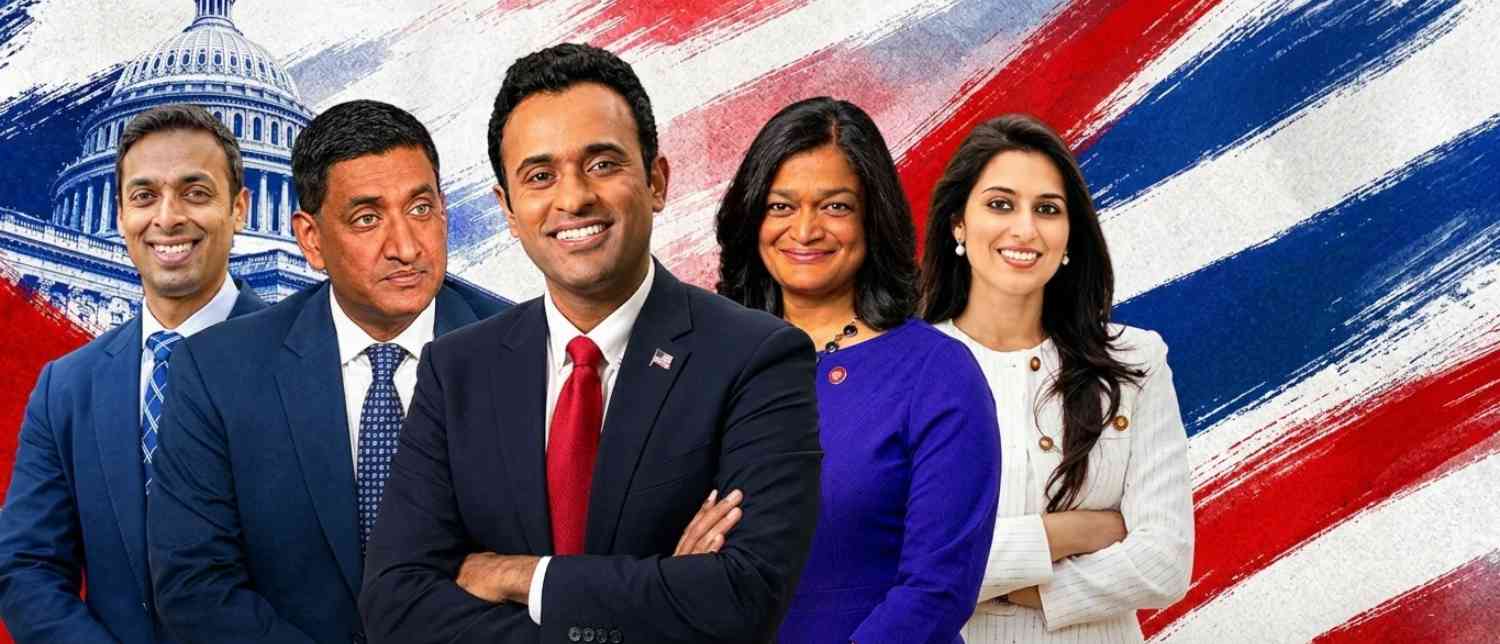
The 2026 US midterm elections are drawing attention for more than the battle between Republicans and Democrats. Across the United States, a growing number of Indian-American politicians are seeking influential public offices, competing for positions ranging from state governorships and congressional seats to attorney-general posts and city council positions.
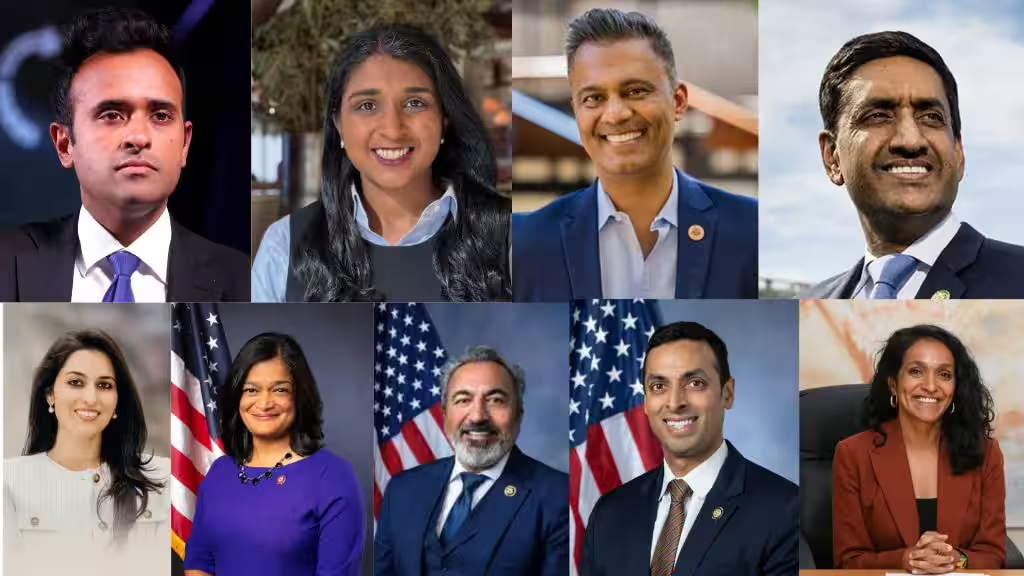
Among the most closely watched names is Republican leader Vivek Ramaswamy, who is contesting the Ohio governor's race against Democratic candidate Amy Acton. Meanwhile, Maryland Lieutenant Governor Aruna Miller is seeking re-election, while prominent Democratic lawmakers Ro Khanna, Pramila Jayapal, Ami Bera and Suhas Subramanyam are hoping to retain their seats in the US House of Representatives.
The Indian-American presence in the 2026 US midterm elections extends well beyond these familiar faces. Candidates from the community are contesting elections across several states, representing both major political parties as well as independent platforms.
With an estimated population of 5.2 million, Indian Americans are increasingly visible in American public life. The November 3 elections offer another opportunity for the community to expand its political representation and strengthen its influence at the federal, state and local levels.
Vivek Ramaswamy's Ohio Governor Race Draws National Attention
One of the biggest talking points among Indian-American candidates in the US midterm elections 2026 is Vivek Ramaswamy's bid to become the next governor of Ohio.
The Republican politician is facing Democratic challenger Amy Acton in a closely watched contest. Ramaswamy has received the backing of US President Donald Trump, making the race particularly significant for the Republican Party.
Born in Cincinnati, Ohio, to parents who immigrated from Kerala, Ramaswamy first attracted nationwide attention during his campaign for the Republican presidential nomination in 2024. Before entering politics, he established himself in the biotechnology industry and founded Roivant Sciences in 2014.
He withdrew from the presidential contest in January 2024 and subsequently endorsed Trump. Following Trump's election victory, Ramaswamy was selected alongside Elon Musk to lead the Department of Government Efficiency (DOGE), although he later left the initiative to concentrate on his political ambitions.
Ramaswamy launched his Ohio gubernatorial campaign in February 2025 and secured the Republican nomination in May 2026.
The outcome could carry historic significance. If elected, he would become the third governor of Indian heritage in the United States, following Bobby Jindal of Louisiana and Nikki Haley of South Carolina. He could also become the first Hindu governor of an American state.
His contest against Acton is therefore being closely followed by Indian-American communities and political observers across the country.
Aruna Miller Seeks Another Term as Maryland Lieutenant Governor
Another prominent Indian-origin politician in the 2026 US midterm elections is Aruna Miller, who is seeking re-election as Maryland's lieutenant governor.
Born in Hyderabad, India, Miller has established herself as one of the most prominent Indian-American women in American electoral politics. Her position in Maryland's state administration makes her re-election campaign particularly important for the community.
Maryland has traditionally been a strong state for Democrats, and Miller is seeking another term alongside Governor Wes Moore.
Her political journey represents the growing presence of Indian-origin leaders in American state governments, where elected representatives influence policies that directly affect millions of residents.
A successful re-election campaign would further consolidate her position as an influential Indian-American political figure.
Ro Khanna, Pramila Jayapal, Ami Bera and Suhas Subramanyam Seek Re-Election
At the congressional level, four prominent Indian-American Democratic lawmakers are seeking another term in the US House of Representatives.
Ro Khanna: The California Congressman
Ro Khanna is contesting from California's 17th Congressional District, which covers parts of Silicon Valley. He is facing Republican challenger Ritesh Tandon, an Indian-American entrepreneur.
Born in Philadelphia to Punjabi parents, Khanna has emerged as an influential progressive voice within the Democratic Party. His political positions include economic reform, technology policy, artificial intelligence, semiconductor manufacturing and US foreign policy.
Khanna has also been a vocal critic of Trump's policies, particularly concerning immigration, economic priorities and democratic institutions.
Pramila Jayapal: Seeking Another Term in Washington
Pramila Jayapal is seeking re-election from Washington's 7th Congressional District, which she has represented since 2017.
She made history as the first Indian-American woman elected to the US House of Representatives. Her family has roots in Kerala, and she has become an influential figure in the progressive wing of the Democratic Party.
Jayapal faces Republican challenger Nirav Sheth, a Gujarat-born former US Marine. Their contest is particularly notable because both candidates have Indian roots but represent opposing political parties.
Ami Bera: Continuing His Congressional Journey
Ami Bera is seeking another term from California's 3rd Congressional District.
Born in the United States to Gujarati parents who migrated from Rajkot, Bera became the third Indian-American elected to the US Congress. He has also played an important role in strengthening India-US relations.
During the 114th Congress, he served as co-chair of the Congressional Caucus on India and Indian Americans, reflecting his involvement in issues concerning bilateral relations and the Indian-American community.
Suhas Subramanyam: A Prominent Indian-American Voice From Virginia
Democratic Congressman Suhas Subramanyam is also seeking re-election.
He made history in 2024 by becoming the first Indian-American elected to Congress from Virginia and the East Coast. His mother is from Bengaluru, while his father is from Chennai.
His continued presence in Congress would represent another milestone for Indian-origin political representation in a region where the community has steadily expanded its presence.
Indian-American Candidates Contesting Other Important Congressional Seats
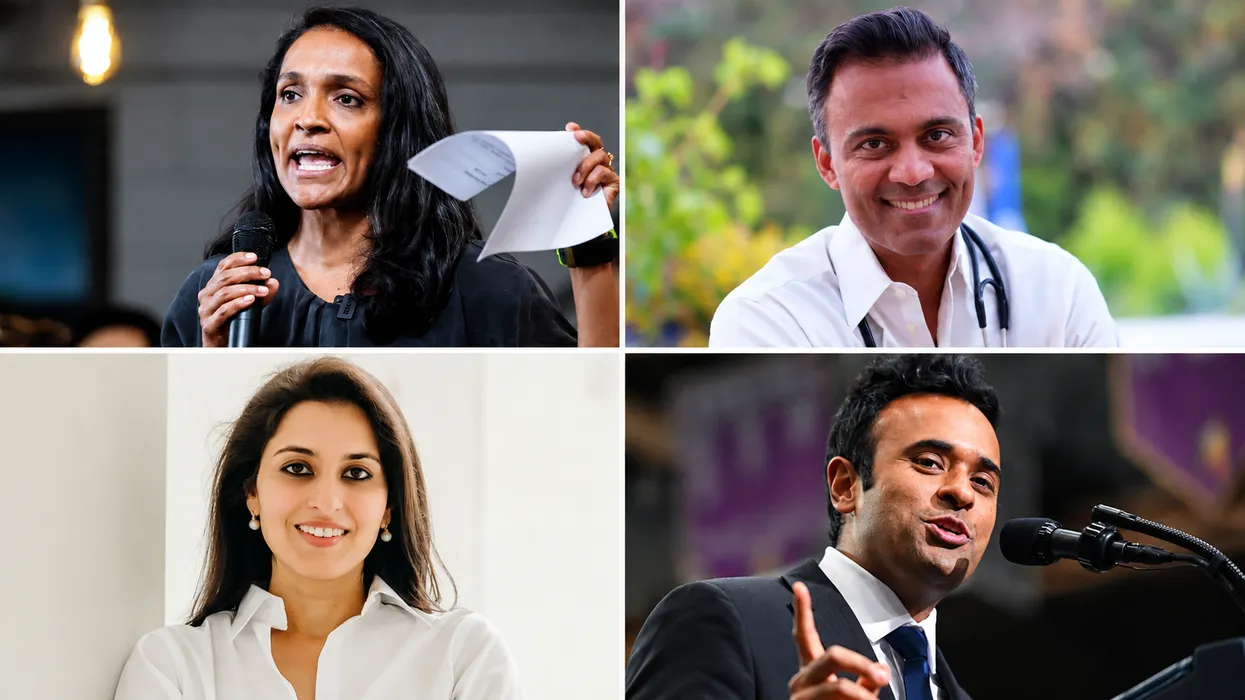
The 2026 elections feature several additional Indian-American candidates seeking to enter Congress.
Amish Shah, an emergency medicine physician and former three-term member of the Arizona House of Representatives, is contesting Arizona's 1st Congressional District as a Democrat. He faces Republican candidate Jay Feely, a former NFL kicker. Shah narrowly lost the congressional contest in 2024 and is attempting another electoral comeback.
In Florida's 22nd Congressional District, former school principal Pia Dandiya is representing the Democratic Party against Republican Casey Askar. Both Dandiya and Shah have received support from the Democratic Congressional Campaign Committee as the party seeks to gain additional congressional seats.
Other candidates include Republican Mahesh Ganorkar in North Carolina's 4th Congressional District and independent candidates Sandeep Dixit in Ohio's 13th District and Anil Kumar in Michigan's 11th District.
Meanwhile, Sandeep Srivastava, a businessman and community advocate, is contesting Texas House District 66 as a Democrat.
The presence of candidates from different political backgrounds highlights an important development: Indian-American political participation is no longer confined to a single party or ideological position.
Saritha Komatireddy, Josh Kaul and Other Candidates in State-Level Races
Several Indian-origin politicians are also competing for influential positions in state governments.
Republican Saritha Komatireddy is challenging Democratic incumbent Letitia James for the New York attorney-general position. She has extensive experience in legal and national security matters, having worked on cases involving international terrorism, drug cartels and financial crimes. She has also received Trump's endorsement.
In Wisconsin, Josh Kaul is seeking re-election as attorney general.
Arizona State Senate Minority Leader Priya Sundareshan is contesting another term. If Democrats secure control of the chamber, she could potentially become its president.
In Michigan, House Minority Leader Ranjeev Puri is seeking re-election. A Democratic victory that changes control of the chamber could put him in contention to become the first Indian-American Speaker of the Michigan House.
Delhi-educated Lisa Kaul is another Indian-origin candidate contesting for the New York State Senate, while former immigration attorney Pooja Sethi is running for the Texas House of Representatives against Republican Jennifer Mushtaler.
These contests demonstrate how Indian-American political representation is expanding beyond Washington and into state-level decision-making.
Nithya Raman and Other Indian Americans Eye Local Government Positions
Indian-American participation in the 2026 US midterm elections also extends to city and county politics.
One of the prominent names is Nithya Raman, an urban planner and Los Angeles City Council member who is contesting the mayoral election in the second-largest city in the United States.
Raman was elected to the Los Angeles City Council in 2020, becoming the first Asian-American woman and the first South Asian to hold the position. She secured a second term in March 2024.
Her professional background includes urban planning, homelessness advocacy and community development. She has also been involved in initiatives addressing housing, civil rights, immigration and neighbourhood services.
In Georgia, Shuchita Patel is contesting for Forsyth County Commissioner as a Democratic candidate. The daughter of Indian immigrant parents, she is the first Indian-American to run for public office in the county.
Meanwhile, Aparna Raj is seeking election to the Washington, DC, City Council.
Although these positions may receive less national attention than congressional and gubernatorial contests, local governments have a direct influence on everyday issues such as housing, public safety, transportation, education and community services.
From Dilip Singh Saund to 2026: A Growing Indian-American Political Presence
The increasing participation of Indian Americans in US politics reflects a journey that began several decades ago.
One of the earliest major milestones came in 1956, when Amritsar-born Dilip Singh Saund was elected to the US House of Representatives. He became the first Asian American and the first Sikh to serve in Congress, eventually completing three terms.
Since then, Indian-origin politicians have gradually expanded their presence across American political institutions.
The election of leaders such as Bobby Jindal and Nikki Haley as governors, followed by the rise of lawmakers including Ro Khanna, Pramila Jayapal and Ami Bera, has further strengthened the community's visibility.
The 2026 elections represent another chapter in that evolution, with Indian-American candidates competing across party lines and at different levels of government.
Why the 2026 US Midterm Elections Matter for Indian Americans
The November 3 elections are significant not only for individual candidates but also for the broader political landscape of the United States.
All 435 seats in the House of Representatives are being contested, alongside 35 regular Senate seats and two additional special Senate elections in Ohio and Florida. The results will determine the balance of power in Congress and influence the legislative environment for the remainder of Trump's presidential term.
For Indian Americans, stronger representation could translate into a greater voice in discussions surrounding immigration, technology, healthcare, education, trade and India-US relations.
However, the community should not be viewed as a single political voting bloc. Indian-American candidates represent different ideologies, political parties and policy priorities. Their electoral success ultimately depends on their ability to connect with voters across diverse constituencies.
From Vivek Ramaswamy's high-profile Ohio gubernatorial contest to Aruna Miller's re-election campaign, and from congressional races involving Ro Khanna and Pramila Jayapal to local contests featuring Nithya Raman and Shuchita Patel, the 2026 US midterm elections showcase the expanding reach of Indian-origin political participation.
Whether these campaigns translate into further historic victories remains to be seen. What is already evident, however, is that Indian Americans are increasingly becoming an important part of America's political conversation, seeking not merely representation but a meaningful role in shaping the country's future.
© Copyright 2026. All Rights Reserved. Powered by Vygr Media.