 By
By 
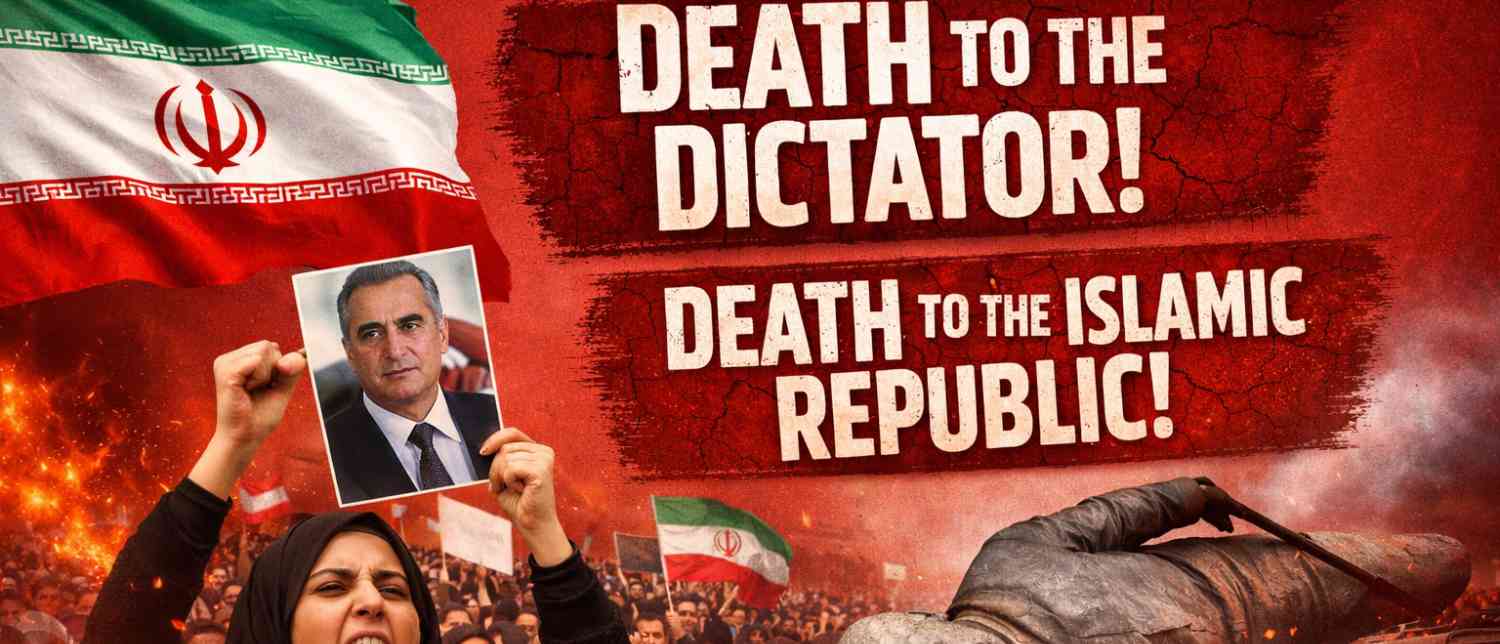
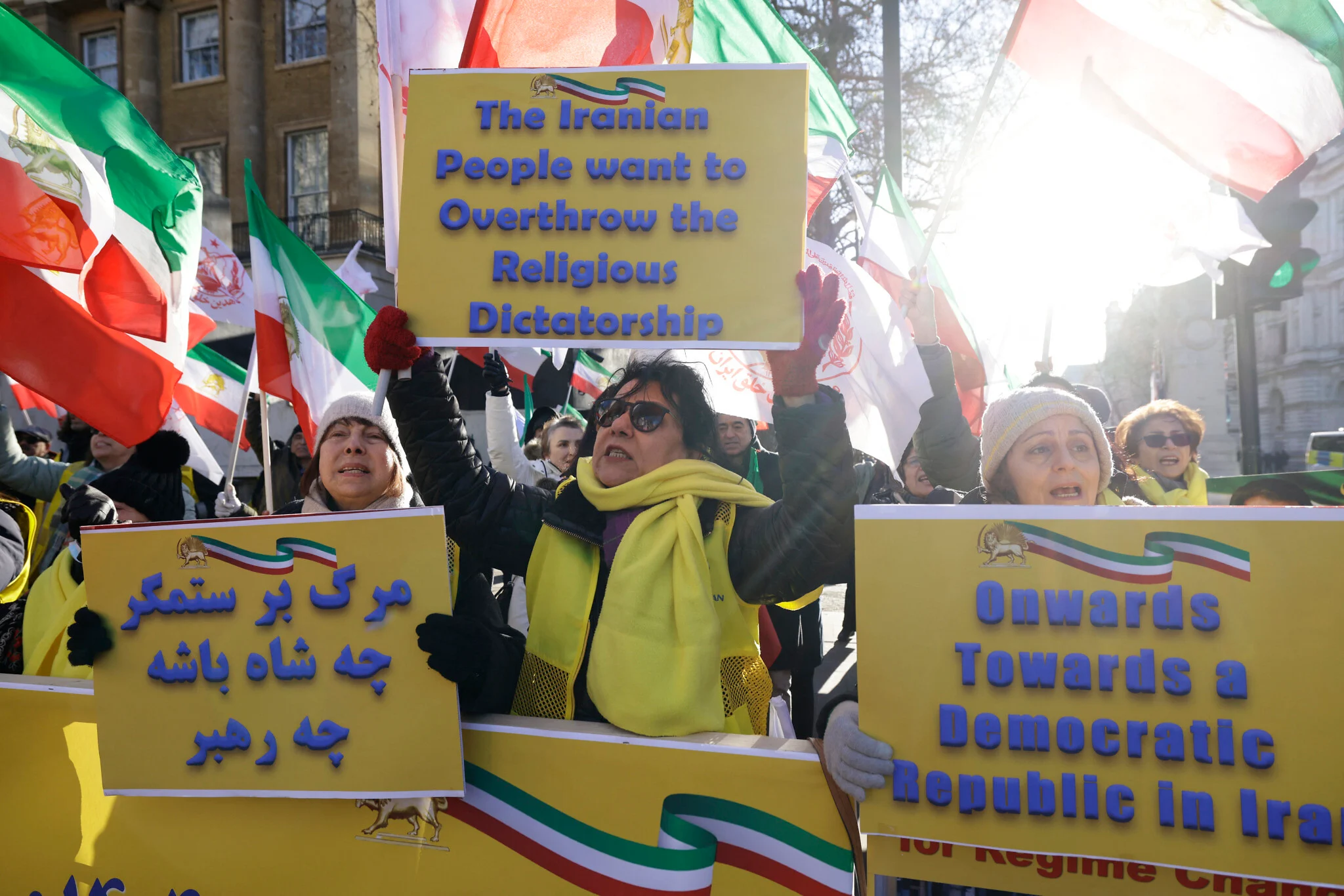
Iran is once again in the grip of widespread unrest as nationwide anti-government protests sweep across all 31 provinces, exposing deep fractures in the country’s political, economic, and social foundations. What began as anger over a collapsing currency and soaring inflation has evolved into one of the most serious challenges faced by the Islamic Republic in years, with demonstrators openly calling for the downfall of the clerical regime and, in some cases, the return of Iran’s former monarchy.
From Tehran’s Grand Bazaar to provincial towns and university campuses, crowds have poured into the streets chanting slogans such as “Death to the dictator” and “Death to the Islamic Republic.” In an extraordinary revival of pre-revolutionary symbolism, some protesters have shouted, “This is the last battle! Pahlavi will return!”—a reference to Reza Pahlavi, the exiled crown prince and son of Iran’s last Shah.
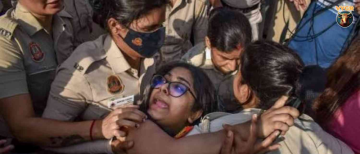
The unrest, marked by violent clashes, mass arrests, fatalities, and a sweeping internet blackout, has drawn sharp international reactions, particularly from the United States and Israel. At the same time, it has triggered serious geopolitical concerns, including in India, where instability in Iran threatens the future of the strategically vital Chabahar Port.
Economic Collapse Sparks the Fire
The immediate catalyst for the protests was Iran’s rapidly deteriorating economy. In late December, demonstrations erupted in Tehran’s historic Grand Bazaar after the Iranian rial plunged to around 1.4 million rials per US dollar, devastating purchasing power. Official inflation surged to 42.5 percent in December 2025, intensifying pressure on ordinary Iranians already struggling with job insecurity, rising food prices, and years of sanctions.
What started as a shutdown by bazaar traders quickly snowballed. University students joined the protests, and within days, unrest spread far beyond Tehran. According to the US-based Human Rights Activists News Agency (HRANA), demonstrations have now occurred in 348 locations across all 31 provinces, including at least 34 universities, where 46 separate gatherings have taken place.
Analysts argue the crisis goes deeper than economics. Alex Vatanka, director of the Iran Program at the Middle East Institute in Washington, described the situation as a collapse of trust rather than currency alone. “The collapse is not just of the rial, but of trust,” he told Reuters, capturing the growing sense that faith in the Islamic Republic itself is eroding.
From Economic Protest to Political Revolt
Unlike the women-led protests of 2022–23 following the death of Mahsa Amini, this wave of unrest has been driven largely by young men, though participants span age groups, regions, and social classes. Demonstrators have increasingly framed their demands in explicitly political terms, calling not just for economic relief but for an end to clerical rule.
Chants against Supreme Leader Ayatollah Ali Khamenei, now 86, have grown louder. Protesters have shouted slogans such as “Seyyed Ali will be toppled,” openly challenging the authority of a system that has ruled Iran since the 1979 Islamic Revolution.
Iranian officials acknowledge economic hardship but insist that “networks linked to foreign powers” are manipulating the unrest. Iran’s top judge warned that there would be “no leniency for those who help the enemy against the Islamic Republic,” signalling a hardline response even as demonstrations persisted.
Protesting is legitimate, but protesting is different from rioting. We talk with protesters. The officials must talk with the protesters. But, there’s no point in talking with a rioter. Rioters must be put in their place.— Khamenei.ir (@khamenei_ir) January 3, 2026
Reza Pahlavi and the Night Protests That Changed Momentum
A pivotal moment came when Reza Pahlavi, Iran’s exiled crown prince, issued a call on social media urging Iranians to take to the streets at 8 pm on Thursday and Friday. According to multiple reports, that appeal transformed scattered protests into coordinated nighttime demonstrations.
As the hour struck, chants echoed through neighbourhoods across Tehran and other major cities, with people shouting from rooftops, windows, and streets. Crowds marched late into the night in cities such as Tehran and Mashhad before communications were abruptly cut.
Pahlavi declared that “millions of Iranians demanded their freedom tonight,” accusing the government of silencing the population in response. “In response, the regime in Iran has cut all lines of communication,” he said. “It has shut down the Internet. It has cut landlines. It may even attempt to jam satellite signals.”
He urged European governments to follow Washington’s lead in pressuring Tehran, calling on them to use “all technical, financial, and diplomatic resources available” to restore communications. “Do not let the voices of my courageous compatriots be silenced,” he added.
Iran’s Internet Blackout and the Crackdown
On the night of January 8, Iranian authorities imposed a near-total internet and international phone shutdown, leaving more than 85 million people largely disconnected from the outside world. Internet monitoring firms Cloudflare and NetBlocks confirmed the outage, attributing it to government interference.
Calls into Iran from locations such as Dubai failed, affecting both landlines and mobile networks. Iranian state television did not initially acknowledge the blackout, focusing instead on food subsidy announcements, a silence that recalled previous periods of repression.
Historically, such communication shutdowns have preceded heavy crackdowns. By limiting online access, authorities restricted the flow of images, videos, and real-time information that could draw global scrutiny.
Despite this, protests continued. At 8 pm local time, chants rang out across Tehran, and large crowds were visible in several cities before communications were cut.
Tehran today
A sea of people in the streets.
The patience of the Iranian people is over. Khamenei and his allies must leave Iran as soon as possible.#Iran pic.twitter.com/Wx2CddZ3YT— Masih Alinejad 🏳️ (@AlinejadMasih) January 8, 2026
Death Toll, Arrests, and Rising Violence
Human rights organisations report a growing toll. The Norway-based NGO Iran Human Rights says at least 45 protesters, including eight minors, have been killed since demonstrations began in late December. HRANA reported at least 38 deaths, including four security personnel, by the 11th day of protests, along with 2,217 arrests and dozens of injuries. Other estimates place the death toll above 42, with more than 2,270 detained.
Violence has escalated on both sides. Iran’s judiciary news agency reported that a police colonel died from stab wounds near Tehran. In Lordegan, gunmen killed two security force members and injured 30 others. In Chenaran, an attack on a police station left five people dead, while the Revolutionary Guard confirmed that two of its members were killed in Kermanshah.
Authorities have cited these incidents to justify tougher security measures, deploying tear gas and force even as officials claim openness to dialogue over economic grievances.
Symbols Toppled, Anger Intensified
In a striking act of defiance, protesters in Kuhchenar, in southern Fars province, reportedly pulled down a statue of Qassem Soleimani, the former foreign operations commander of the Revolutionary Guards killed in a US strike in 2020. Though the timing could not be independently verified, the act underscored the depth of anger toward the regime’s symbols of power.
Iranian state media eventually broke its silence, alleging that “terrorist agents” linked to the US and Israel were responsible for violence and arson, a narrative that did little to calm tensions.
The statue of IRGC Quds Force chief Qasem Soleimani burned in the city of Kashan, Iran.
It’s happening folks.
pic.twitter.com/BqOfZcennA— Claretta Nijhuis (@NijhuisClaretta) January 8, 2026
Who Is Reza Pahlavi?
Reza Pahlavi was born on October 31, 1960, the son of Mohammad Reza Pahlavi, Iran’s last Shah, and Empress Farah Diba. Named crown prince in 1967, he was undergoing jet fighter training in the United States when the 1979 Islamic Revolution overthrew the monarchy. The Pahlavi family fled Iran before the clerical system took hold under Ayatollah Ruhollah Khomeini.
Pahlavi later earned a degree in political science from the University of Southern California and volunteered to serve as a fighter pilot during the Iran-Iraq War, though the clerical regime barred him. His website describes him as an advocate for a secular, democratic Iran, committed to human rights.
He has authored three books—Gozashteh va Ayandeh, Winds of Change: The Future of Democracy in Iran, and IRAN: L’Heure du Choix. While his calls have energized some protesters, analysts say chants praising the monarchy may reflect broader anger with the current system rather than clear support for Pahlavi himself.
A Leaderless Movement With Uncertain Direction
Despite its scale, the protest movement remains largely leaderless. Analysts argue this has historically weakened uprisings in Iran. Nate Swanson of the Atlantic Council noted that the security apparatus has systematically eliminated potential transformational leaders through arrests, persecution, and exile.
While Pahlavi seeks to rally support from abroad, his actual influence inside Iran remains uncertain. Iranian authorities, however, appear concerned. The conservative Kayhan newspaper published footage suggesting security forces would use drones to identify demonstrators.
Millions of Iranians demanded their freedom tonight. In response, the regime in Iran has cut all lines of communication. It has shut down the Internet. It has cut landlines. It may even attempt to jam satellite signals.
I want to thank the leader of the free world, President…— Reza Pahlavi (@PahlaviReza) January 8, 2026
Trump, Washington, and International Reactions
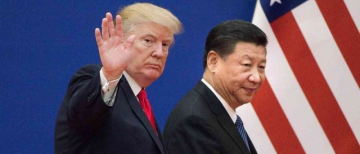
US President Donald Trump has taken a hard line, repeatedly warning Tehran against killing protesters. “If they start killing people… we’re going to hit them very hard,” he said in an interview, adding that Iranian authorities had been warned they would “pay hell.”
Trump reiterated his stance aboard Air Force One, stating that the enthusiasm to overturn the regime was “incredible.” Earlier this month, he posted, “We are locked and loaded and ready to go,” referencing potential action if force is used against demonstrators.
US Vice President JD Vance said Washington supports peaceful protesters while stressing the importance of negotiations over Iran’s nuclear programme. Trump, however, has not committed to meeting Pahlavi, saying it would be inappropriate to decide “who emerges” at this stage.
Senator Lindsey Graham issued especially aggressive warnings, telling Iran’s leadership that continued repression would have deadly consequences, while Israeli Prime Minister Benjamin Netanyahu praised the protests as a decisive moment for Iran’s future.
Inside Iran, however, opinions on foreign intervention remain divided, with many fearing it could worsen suffering.
Sanctions, War, and Economic Freefall
Iran’s economy has been battered by years of sanctions, mismanagement, and regional tensions. A 12-day conflict involving US and Israeli strikes on Iranian nuclear sites further disrupted trade and investment.
US Treasury Secretary Scott Bessent described Iran’s economy as “on the ropes,” noting that what was once an affluent society is now struggling to maintain basic living standards. He questioned how Tehran could rebuild its nuclear programme amid such constraints.
My fellow countrymen, today, Wednesday January 7th, your presence across Iran was unprecedented.
And this constitutes a declaration of readiness for tomorrow’s plan (the call for Thursday January 8th, at 8 p.m.).
Of course, reports have reached us that the regime is deeply… https://t.co/JJiTNZ8cxW— Reza Pahlavi (@PahlaviReza) January 7, 2026
India’s Chabahar Concerns
The unrest has raised alarms in India, where instability threatens the $500 million Chabahar Port project, a cornerstone of New Delhi’s regional strategy. Intelligence sources warn that strikes, blackouts, and supply-chain disruptions could delay cargo handling and infrastructure development.
Chabahar is central to India’s Connect Central Asia Policy and the International North-South Transport Corridor (INSTC), which cuts transit time by 40 percent and costs by 30 percent compared to the Suez route. Prolonged instability could undermine these gains and allow China to expand its influence, particularly as a counterweight to Beijing-backed Gwadar Port in Pakistan.
A Defining Moment for Khamenei and the Islamic Republic
For Supreme Leader Ali Khamenei, the protests represent one of the most severe tests of his rule. He has vowed that Iran “will not yield to the enemy,” even as analysts warn that the clerical system’s strategy of repression and limited concessions may be nearing its limits.
Nobel Peace Prize laureate Narges Mohammadi, imprisoned since December, has become a symbol of the crackdown. Her son, Ali Rahmani, said the protests echo those of 2009 and 2019, driven by the same demands: an end to the Islamic Republic and clerical rule.
With protests reaching every province and legitimacy increasingly questioned, Iran stands at a crossroads. Whether the unrest leads to reform, intensified repression, or something more transformative remains uncertain—but the scale and persistence of the uprising suggest that the status quo is under unprecedented strain.
With inputs from agencies
Image Source: Multiple agencies
© Copyright 2025. All Rights Reserved. Powered by Vygr Media.