 By
By 
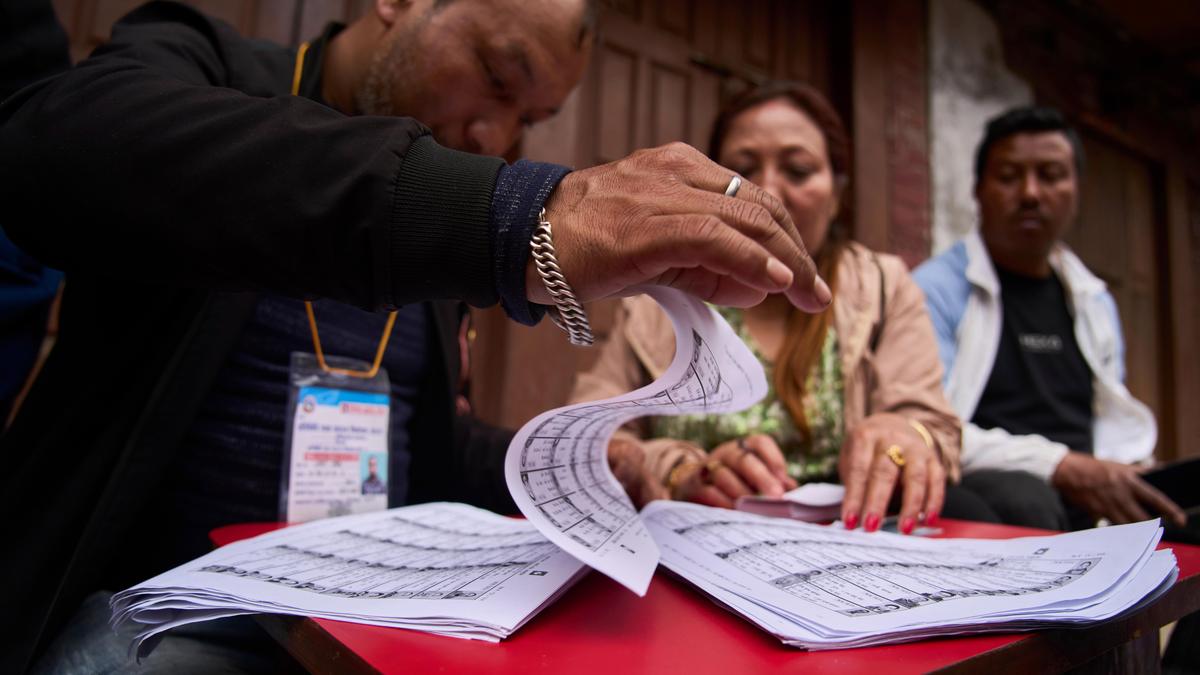
Nepal is heading into a pivotal political moment as voters participate in the country’s first general election since the September 2025 Gen Z-led protests that toppled the government. The polls are also the third parliamentary election since the adoption of the 2015 Constitution, making them a critical test for the country’s evolving democratic system.
More than 18.9 million registered voters are eligible to cast their ballots to elect 275 members to Nepal’s House of Representatives. Of these, 165 lawmakers will be elected through the first-past-the-post (FPTP) system, while 110 will be chosen through proportional representation.
Originally scheduled for November–December 2027, the election was brought forward by nearly two years after widespread protests forced former Prime Minister K.P. Sharma Oli to resign. The demonstrations—led largely by young Nepalis—sparked nationwide debate about corruption, unemployment, political instability, and the dominance of traditional political elites.
With 68 political parties fielding candidates out of the 120 that initially registered, and 3,406 candidates contesting the direct FPTP seats, the election represents one of the most competitive political contests in Nepal’s modern democratic history.
A Political System Dominated by the Old Guard
For decades, Nepal’s politics has been described as a “game of musical chairs.” Power has largely circulated among three major parties and their leaders:
-
The Communist Party of Nepal (Unified Marxist–Leninist) led by K.P. Sharma Oli
-
The Nepali Congress (NC), historically led by Sher Bahadur Deuba
-
The Communist Party of Nepal (Maoist Centre) led by Pushpa Kamal Dahal Prachanda
Over the past three and a half decades, these parties have formed fragile coalitions that frequently collapse due to competing leadership ambitions and power-sharing arrangements.
Political instability has been a defining feature of Nepal’s democracy. Since the monarchy was abolished and the country became a republic nearly two decades ago, Nepal has had around 10 prime ministers and four elections since 2008. In fact, no prime minister has managed to complete a full five-year term in office.
The power balance has shifted repeatedly:
-
2017 election: CPN-UML emerged as the largest party.
-
2022 election: Nepali Congress became the biggest political force.
-
By July 2024: CPN-UML and Nepali Congress formed a coalition government with K.P. Sharma Oli as prime minister.
That government ultimately collapsed following the Gen Z protests in 2025.
The Gen Z Protests That Changed Nepal’s Politics
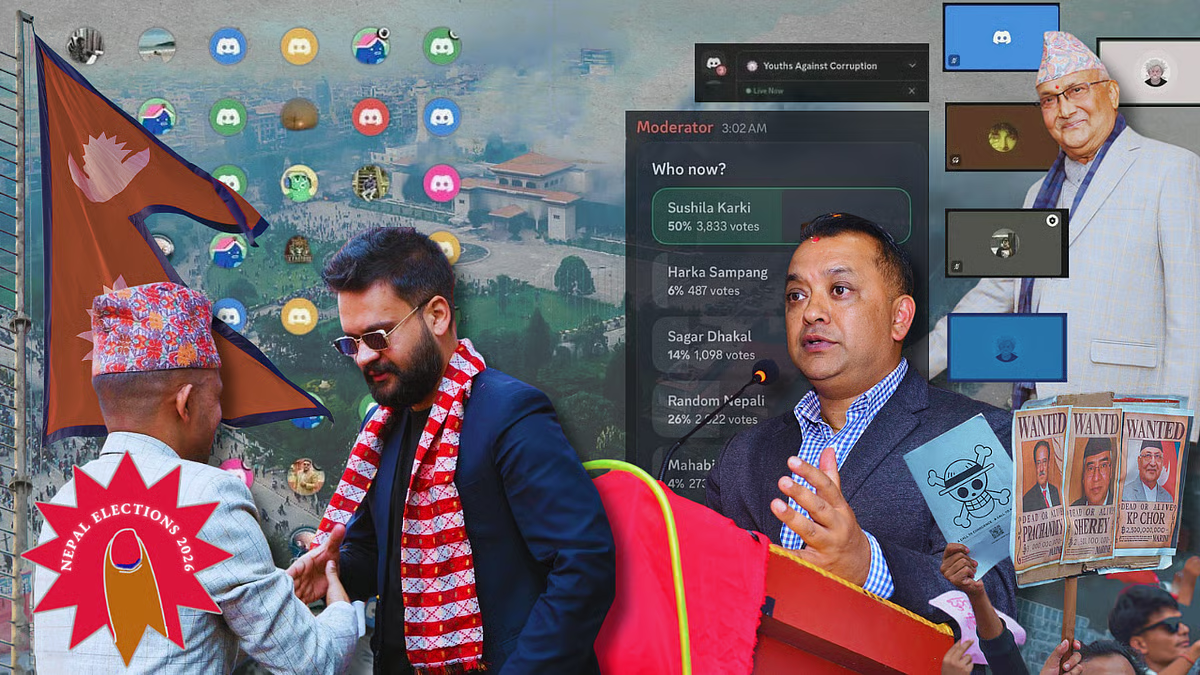
The protests that forced Oli’s resignation began after the government imposed a ban on 26 social media platforms. The move triggered widespread outrage among young Nepalis and quickly evolved into a broader movement against corruption, unemployment, inequality, and elite dominance in politics.
Demonstrations soon escalated into violent clashes with authorities.
Police opened fire on protesters in Kathmandu, leading to chaos across the country. Protesters stormed parliament, torched government buildings, and broke through police barricades. Within days:
-
At least 70 people were killed
-
Nationwide unrest forced Prime Minister Oli to resign
-
An interim government took control to organize new elections
Earlier in the protests, a violent crackdown reportedly resulted in 19 deaths on the first day alone, further fueling public anger.
The uprising was driven largely by younger citizens frustrated with the lack of opportunities and the dominance of aging political leaders.
Leadership Changes and Internal Party Struggles
The protests triggered internal shifts within several major parties.
Nepali Congress: Gagan Thapa’s Rise
In the Nepali Congress, Gagan Kumar Thapa emerged as the new leader and prime ministerial candidate. The shift pushed longtime party figure Sher Bahadur Deuba into the background.
Deuba and his wife Arzoo Rana Deuba, who served as foreign minister in the previous government, faced strong criticism during the protests. Internal tensions between Deuba and Thapa intensified after the party aligned with the CPN-UML.
Despite resistance from Deuba, Thapa pushed for a special party convention, whose legality was later upheld by Nepal’s Supreme Court. This eventually paved the way for Thapa to become the party’s leader heading into the election.
Maoists and the Creation of a New Alliance
Meanwhile, Pushpa Kamal Dahal Prachanda has attempted to retain influence by forming a broader alliance called the Nepali Communist Party (NCP). The coalition includes roughly 10 smaller parties, including the CPN (Unified Socialist) led by Madhav Kumar Nepal.
However, analysts believe the Maoists have lost considerable political leverage after the protests.
K.P. Sharma Oli’s Controversial Comeback
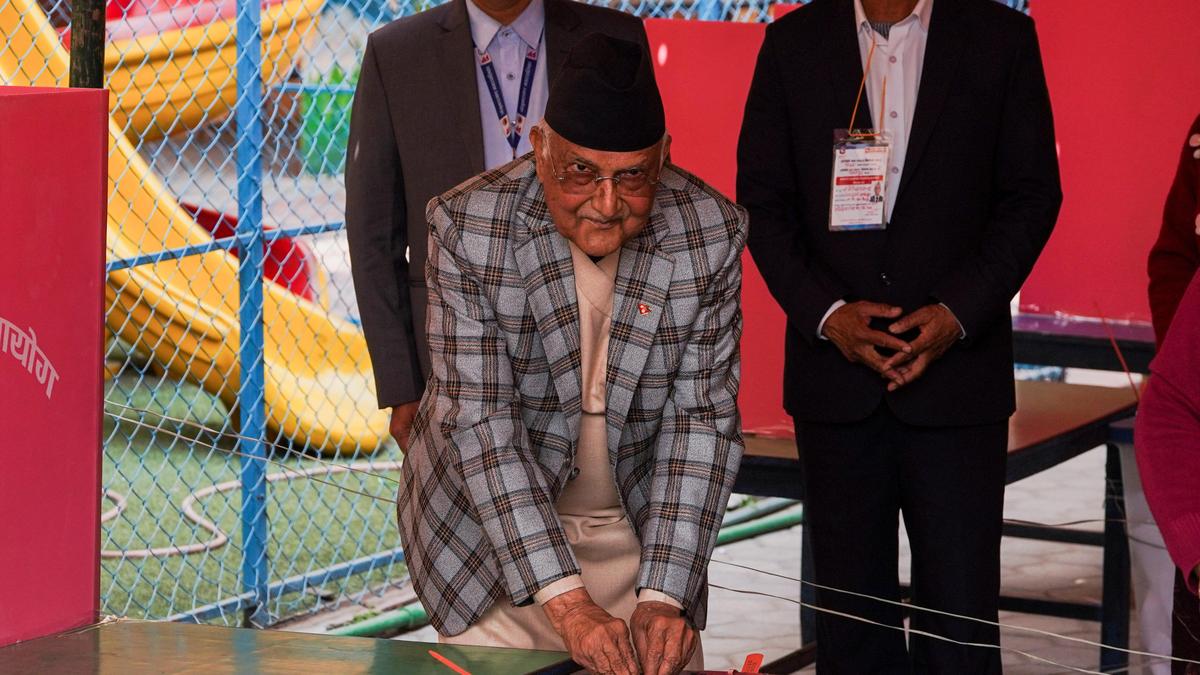
Despite intense anti-incumbency sentiment, K.P. Sharma Oli remains the face of the CPN-UML and is again contesting the election.
The 74-year-old leader is running from Jhapa-5, his home constituency where he has previously won six times.
During the protests, Oli dismissed the movement as a foreign attempt to destabilize Nepal and threaten its sovereignty. Even after resigning, he refused to accept responsibility for the violent crackdown and continued to criticize the interim government, calling it illegal and urging the Supreme Court to restore the dissolved parliament.
The Rise of Balendra Shah and the Rastriya Swatantra Party
While traditional parties remain powerful, the Rastriya Swatantra Party (RSP) has emerged as a major challenger.
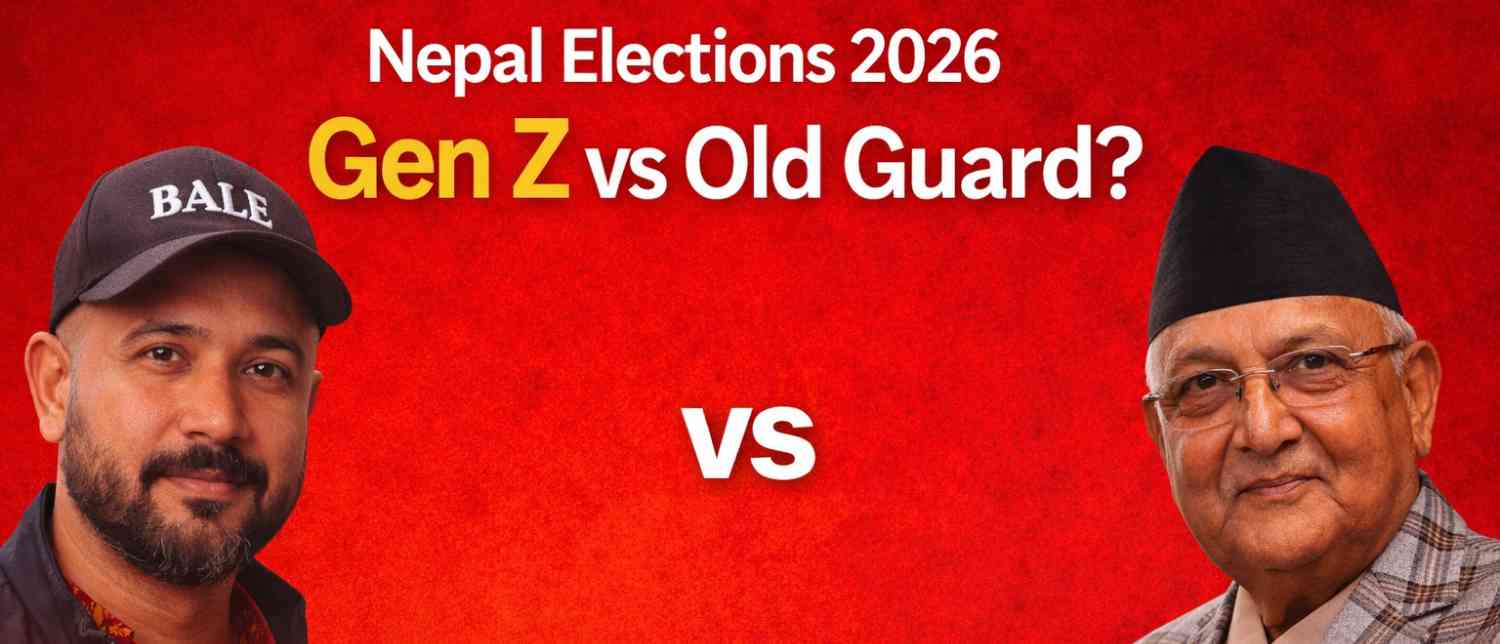
Founded in 2022, the party has projected Balendra Shah, a 35-year-old rapper-turned-politician, as its prime ministerial candidate.
Shah previously served as Mayor of Kathmandu, gaining popularity for his action-oriented governance, especially his focus on urban infrastructure and public health services.
His decision to contest from Jhapa-5 against K.P. Sharma Oli has turned the race into a symbolic battle between Nepal’s old political establishment and a new generation of leaders.
According to Bipin Acharya, RSP’s co-general secretary, the party’s agenda centers on:
-
Economic reform
-
Bureaucratic restructuring
-
Anti-corruption policies
Many young voters who participated in the 2025 protests have rallied behind Shah, hoping his leadership will break Nepal’s cycle of unstable coalition politics.
However, critics say his leadership style can sometimes be ad hoc and unilateral, raising concerns about governance if he comes to power.
Other Emerging Political Forces
Several smaller parties are also contesting the election with technocratic and reform-oriented agendas.
One of them is the Ujaylo National Party (UNP), founded by Kulman Ghising, former chief of the Nepal Electricity Authority.
The Rashtriya Prajatantra Party (RPP) is also participating, although its popularity remains limited compared to the larger parties.
Economic Frustrations Driving Political Change
Underlying the political upheaval are deep economic frustrations.
Nepal remains one of South Asia’s poorest nations, facing structural economic challenges:
-
Unemployment rate: 10.7%
-
Youth unemployment: 20.7%
-
Population aged 15–34: 36% of total population
-
Share of working population in this age group: 47%
According to the World Bank, more than 7 million Nepalis have migrated abroad in the past three decades in search of work.
Remittances from overseas workers now account for 26.4% of Nepal’s GDP.
Tourism—one of Nepal’s key industries—has also struggled to recover fully after the Covid-19 pandemic, further worsening economic pressures.
Meanwhile, corruption remains a major concern. Nepal ranked 107 out of 180 countries in Transparency International’s 2024 Corruption Perceptions Index.
Representation Challenges in the Election
Despite the youth-driven nature of the protests, young candidates remain underrepresented in the election.
Among the 3,406 candidates contesting FPTP seats:
-
31% are aged 25–40
-
56% are aged 41–60
Women are also significantly underrepresented. Only 388 candidates (11.4%) are women, despite women making up 51% of Nepal’s population. Many of them are contesting as independent candidates rather than representing major parties.
Early Results Indicate a Surge for RSP
Early vote counting suggests a dramatic political shift.
According to Election Commission data from 144 out of 165 constituencies, the Rastriya Swatantra Party is leading the race, with:
-
3 seats already won
-
Leads in 104 constituencies
In comparison:
-
Nepali Congress: 2 seats won, leading in 12 constituencies
-
CPN-UML: leading in 10 constituencies
-
Nepali Communist Party: 1 seat won and leading in 6 constituencies
Balendra Shah himself is leading comfortably in Jhapa-5 against K.P. Sharma Oli, with a margin of more than 13,000 votes.
Several RSP candidates have also shown strong performances:
-
Biraj Bhakta Shrestha – Kathmandu-8
-
Ranju Darshana – Kathmandu-1 (won with 15,455 votes)
-
Ganesh Parajuli – Kathmandu-7
-
Sulav Kharel – leading in Rupandehi-2 with 16,788 votes, ahead of CPN-UML vice-chair Bishnu Paudel
-
Ashika Tamang – leading in Dhading-1 with 4,375 votes
-
Amresh Kumar Singh – leading in Sarlahi-4 against Gagan Thapa
-
Govinda Panthi – early lead in Gulmi-2 with 1,384 votes
Meanwhile:
-
Pushpa Kamal Dahal Prachanda is leading in Rukum East-1 with 5,924 votes, ahead of CPN-UML’s Lilamani Gautam by about 3,000 votes.
-
Suhang Nembang (CPN-UML) is leading in Ilam-2 with 491 votes.
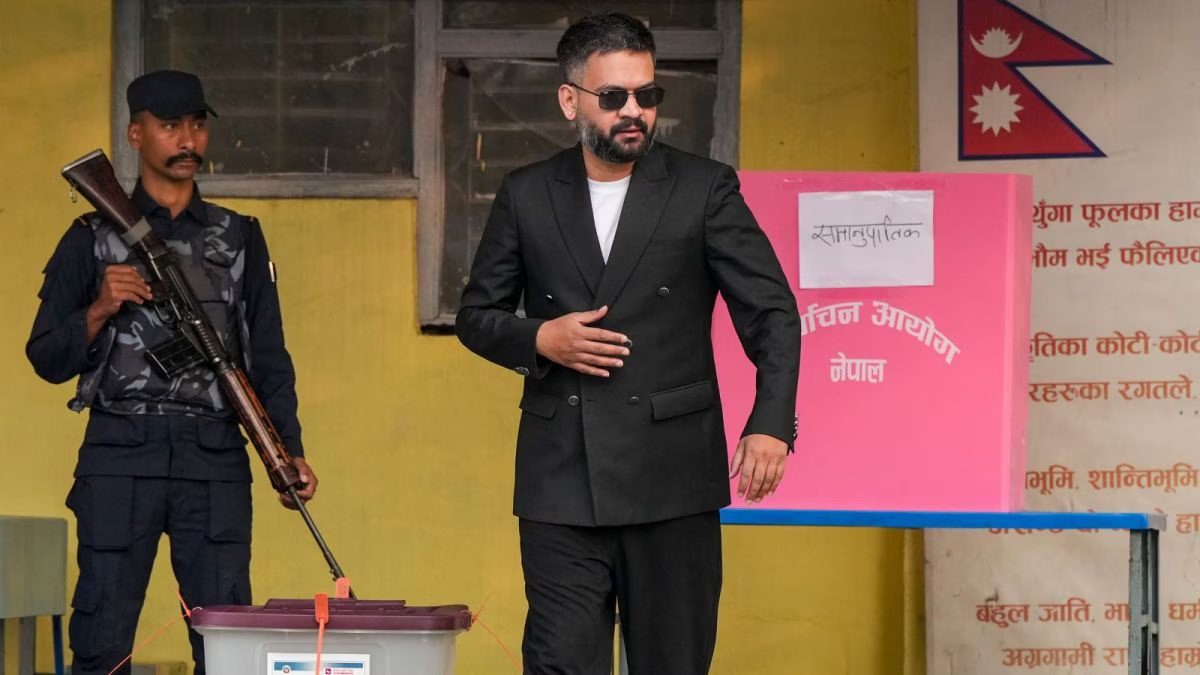
The Election Commission reported around 60% voter turnout, with vote counting beginning late Thursday night. Final results are expected by Friday evening or Saturday.
A Crucial Test for Nepal’s Democracy
Nepal has experienced 14 governments in the past 18 years, highlighting the country’s chronic political instability.
Even if the RSP emerges as the largest party, the structure of Nepal’s electoral system makes it difficult for any single party to win an outright majority. As a result, another coalition government remains the most likely outcome.
Analysts warn that coalition politics could again complicate efforts to implement major reforms.
According to Shivam Shekhawat of the Observer Research Foundation, the protests forced political parties to recognize the importance of youth voices in governance.
However, she cautions that failure to enact meaningful reforms could lead to the return of the old political status quo.
The Road Ahead
For many observers, the 2026 election is not just about choosing a government—it is a referendum on the Gen Z movement itself.
Activists hope the momentum of last year’s protests can translate into lasting institutional reforms.
As Sasmit Pokharel, an RSP candidate in Kathmandu, stated:
“The next government in the parliament needs to take the voice that was raised on the streets and change it into policy and law.”
Whether Nepal’s political transformation truly begins now—or whether the country returns to familiar patterns of coalition instability—will become clear as the final results emerge.
With inputs from agencies
Image Source: Multiple agencies
© Copyright 2025. All Rights Reserved. Powered by Vygr Media.