
 By
By 
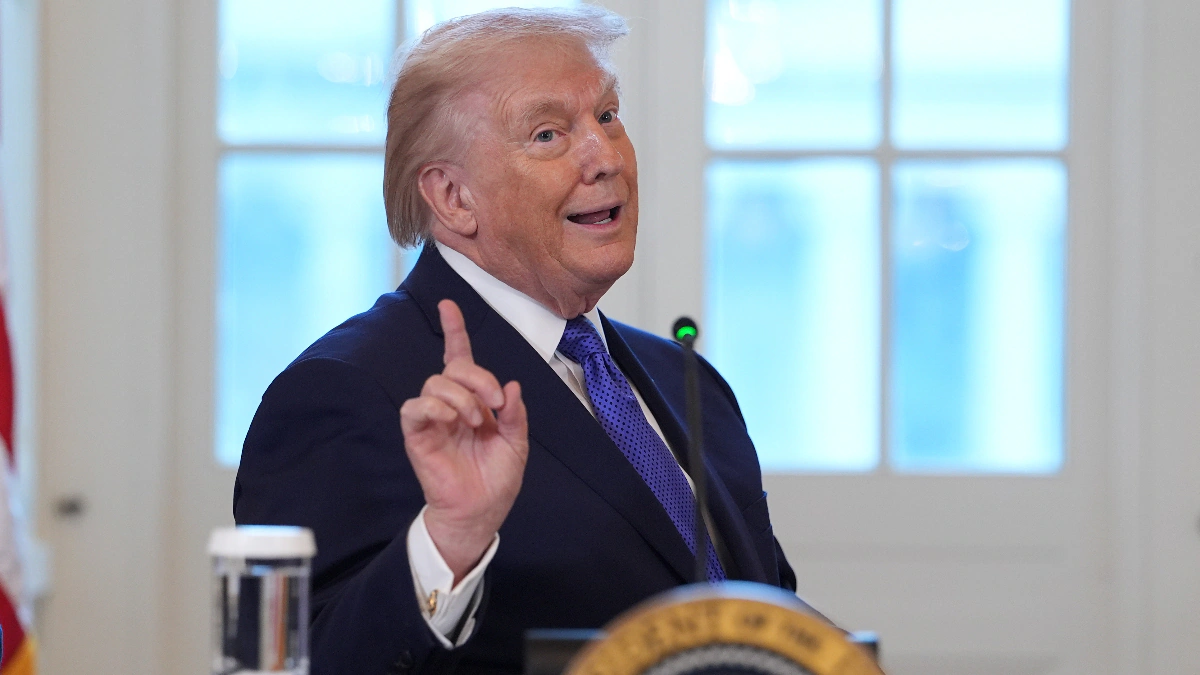
The global trade landscape has been jolted once again after US President Donald Trump announced a sweeping new tariff policy targeting countries that continue to conduct business with Iran. Declaring the move “final and conclusive,” Trump said that any country trading with the Islamic Republic of Iran would face a 25 per cent tariff on all goods and services exchanged with the United States, effective immediately.
The announcement comes amid Iran’s most serious internal unrest in decades, with nationwide anti-government protests escalating into a humanitarian and political crisis. As Tehran faces mounting international scrutiny for its violent crackdown on demonstrators, Washington has chosen to ratchet up economic pressure—not just on Iran, but on its trading partners as well.
The implications of this move are far-reaching. Major economies such as China, India, Turkey, the United Arab Emirates, and members of the European Union now find themselves caught between maintaining strategic and commercial ties with Iran and protecting their access to the US market.
Why Trump Is Targeting Iran’s Trade Partners
President Trump linked the tariff decision directly to Iran’s response to ongoing protests that erupted amid worsening economic conditions, currency instability, and long-standing political grievances. Over time, the demonstrations have evolved into what analysts describe as the most serious challenge to Iran’s ruling system since the 1979 Islamic Revolution.
Human rights groups estimate that between 600 and 648 protesters have been killed so far, including minors, while more than 10,000 people have been arrested. Internet access has been severely restricted, making independent verification of events difficult.
Trump has openly supported the protesters and warned Tehran against continuing its violent suppression. In recent remarks, he said the United States would hit Iran “very hard” if the crackdown persisted. While he has acknowledged that Iranian officials have reached out to explore talks through diplomatic channels, Trump has also confirmed that military options—including air strikes—remain on the table.
Against this backdrop, the tariff announcement is intended to choke off Iran’s remaining economic lifelines, particularly oil revenues, by deterring foreign governments and companies from maintaining trade ties with Tehran.
How the Tariffs Will Be Imposed
According to Trump’s statement on his Truth Social platform, the tariffs take effect immediately, although the administration has yet to release formal documentation clarifying the precise scope of the order. What remains unclear is how “doing business with Iran” will be defined—whether it applies to direct trade only or extends to indirect transactions through intermediaries.
Trump is expected to invoke executive authority to enforce the tariffs without congressional approval. However, this power is currently under legal scrutiny. The US Supreme Court is reviewing the legality of Trump’s broader global tariff framework, with a ruling expected soon. A decision against the administration could limit the president’s ability to implement or sustain the new duties.
Iran’s Global Trade Footprint
Despite years of sanctions, Iran remains deeply embedded in global trade networks.
According to World Bank data, Iran exported goods to 147 trading partners in 2022. As a member of the Organization of the Petroleum Exporting Countries (OPEC), fuel remains its most valuable export, while major imports include intermediate goods, machinery, equipment, vegetables, and other essentials.
Iran’s top trading partners include China, Iraq, the United Arab Emirates, Turkey, Germany, and other East Asian economies, with India consistently ranking among its most important commercial counterparts.
China: Iran’s Largest and Most Exposed Partner
China is by far Iran’s biggest trading partner and oil buyer, making it the country most exposed to Trump’s tariff threat.
In 2022, Iranian exports to China totalled $22 billion, with fuels accounting for more than half of that figure. During the same period, China exported $15 billion worth of goods to Iran, according to World Bank data.
More recent figures underscore Beijing’s reliance on Iranian oil. In 2025, China purchased more than 80 per cent of Iran’s shipped oil, according to analytics firm Kpler. Analysts estimate that in some years, China has accounted for over 90 per cent of Iran’s oil exports, often routed through intermediaries to circumvent US sanctions.
Official Chinese customs data released in late December showed that bilateral trade between China and Iran fell by 24 per cent in the first 11 months of last year, reflecting both sanctions pressure and economic headwinds.
Beijing has reacted sharply to Trump’s announcement. In a post on X, a spokesperson for China’s embassy in Washington said China “firmly opposes any illicit unilateral sanctions and long-arm jurisdiction,” warning that “tariff wars and trade wars have no winners.”
China has consistently opposed unilateral US sanctions, arguing that coercion and pressure cannot resolve complex geopolitical disputes.
India: Strategic Ties and Economic Risks
While China dominates Iran’s trade landscape, India’s position is uniquely sensitive, combining commercial interests with long-standing strategic engagement.
India-Iran Trade Volumes
According to the Indian Embassy in Tehran, India’s bilateral trade with Iran stood at $1.68 billion in FY 2024–25, comprising:
-
$1.24 billion in exports
-
$440 million in imports
For the first 10 months of 2025 alone, India’s total trade with Iran amounted to $1.34 billion, according to India’s commerce ministry.
Earlier, in 2022–23, bilateral trade between the two countries had reached $2.33 billion, indicating a gradual decline amid sanctions and geopolitical uncertainty.
What India Exports to Iran
India’s major exports to Iran include:
-
Organic chemicals worth $512.92 million
-
Edible fruits, nuts, citrus peels, and melons valued at $311.60 million
-
Mineral fuels, oils, and distillation products worth $86.48 million
-
Basmati rice, tea, sugar, fresh fruits, vegetables
-
Pharmaceuticals and drugs
-
Pulses, kernels, boneless bovine meat, and soft drinks
What India Imports from Iran
India imports relatively smaller volumes from Iran, including:
-
Saturated methanol
-
Petroleum bitumen
-
Liquefied propane
-
Apples, almonds, dry dates
-
Inorganic and organic chemicals
Tariffs on Top of Tariffs
India already faces up to 50 per cent US tariffs linked to its purchase of Russian oil, including a 25 per cent levy imposed earlier. Trump has recently warned that these duties could rise further, potentially pushing total tariffs to 75 per cent.
In early 2026, Trump reiterated that tariffs could be raised “very quickly” if Washington remained unhappy with New Delhi’s energy sourcing decisions. He has also approved legislation proposing 500 per cent tariffs on countries buying Russian oil.
The new Iran-linked tariff threatens to further strain India-US trade talks, which have been ongoing for months to secure tariff relief and improve market access.
The Chabahar Port Factor
One of India’s most significant strategic interests in Iran is the Chabahar Port project, agreed upon in 2015. The port is critical for:
-
Providing India access to Afghanistan and Central Asia
-
Facilitating humanitarian aid
-
Counterbalancing regional rivals’ influence
While Chabahar has previously received limited sanctions exemptions, analysts warn that a broad tariff regime could indirectly complicate financing, logistics, and private-sector participation in the project.
BREAKING: Trump appears to have just put a 25% tax on Americans buying products from:
China
United Arab Emirates
Turkey
Iraq
India
Pakistan
Russia
Afghanistan
Armenia
Azerbaijan
Syria
Oman
Qatar
Malaysia
Indonesia
South Korea
Germany
Italy
France
These are trade partners of… pic.twitter.com/yJ2kEFY667— Brian Krassenstein (@krassenstein) January 12, 2026
Turkey, UAE, and Europe: Collateral Impact
Turkey
Iran’s exports to Turkey reached $5.8 billion in 2022, while imports from Turkey totalled $6.1 billion, according to the World Bank. Turkey’s strong energy and trade links with Iran place it squarely within the scope of Trump’s tariff threat.
United Arab Emirates
The UAE remains a key commercial hub for Iranian trade, acting as both a direct partner and a re-export gateway. While specific figures vary year to year, the UAE consistently ranks among Iran’s top trading partners.
Germany and the EU
Germany exported $1.9 billion worth of goods to Iran in 2022, while importing $178 million. Other EU nations such as Italy also maintain trade ties that could now be reassessed under the new US tariff framework.
East Asia: Japan and South Korea
South Korea
Between January and November 2025, South Korea exported $129 million worth of goods to Iran, while imports from Iran stood at just $1.6 million, according to the Korea International Trade Association.
Japan
Japan’s trade with Iran remains modest. It imports limited quantities of fruits, vegetables, and textiles from Iran and exports machinery and vehicle engines in return, according to data through November 2025.
Iran’s Protests: A Crisis Escalates
The tariff announcement is inseparable from Iran’s domestic crisis. What began as protests over economic hardship has turned into a nationwide movement challenging clerical rule.
Rights groups report:
-
Between 646 and 648 confirmed deaths, including at least nine minors
-
Over 10,700 arrests
-
A near-total internet blackout, hampering independent verification
Norway-based Iran Human Rights warned that the actual death toll could exceed 6,000, while the US-based Human Rights Activists News Agency has documented harrowing scenes, including grieving families searching through body bags.
Iran’s leadership has blamed foreign powers for instigating the unrest. Supreme Leader Ayatollah Ali Khamenei claimed pro-government rallies showed the movement had been defeated and warned the US against interference.
Military Options and Diplomatic Channels
While Trump has signalled openness to talks, he has also made clear that the US is prepared to act forcefully. According to Bloomberg, Trump has been briefed on military strike options, including attacks on non-military sites.
White House Press Secretary Karoline Leavitt confirmed that air strikes remain an option, even as diplomatic channels stay open through Trump’s special envoy, Steve Witkoff.
Will the Tariffs Actually Work?
Experts remain divided. Michael Singh, former senior director for Middle East affairs at the US National Security Council, described the tariffs as a “mild response to a very significant situation.”
He noted that existing sanctions on Iran are already extensive but often poorly enforced, raising questions about whether the new tariffs will meaningfully alter Tehran’s behaviour.
A High-Stakes Gamble for Global Trade
Trump’s 25 per cent tariff threat represents a dramatic escalation of economic pressure, extending Washington’s Iran policy beyond sanctions to directly penalise third countries.
For nations like India and China, the decision forces difficult trade-offs between strategic autonomy and economic exposure. For Iran, it tightens an already suffocating economic noose amid internal upheaval.
Whether the tariffs withstand legal scrutiny—and whether they succeed in reshaping Iran’s actions—will shape global trade and geopolitics in the months ahead.
With inputs from agencies
Image Source: Multiple agencies
© Copyright 2025. All Rights Reserved. Powered by Vygr Media.