 By

The public disagreement between two of India's most prominent religious personalities, Baba Ramdev and Dhirendra Krishna Shastri, has taken an unexpected turn. What initially appeared to be a controversy over remarks about Hindu deities has evolved into a wider debate involving religious conduct, public influence, political associations and the growing intersection of spirituality and electoral politics.
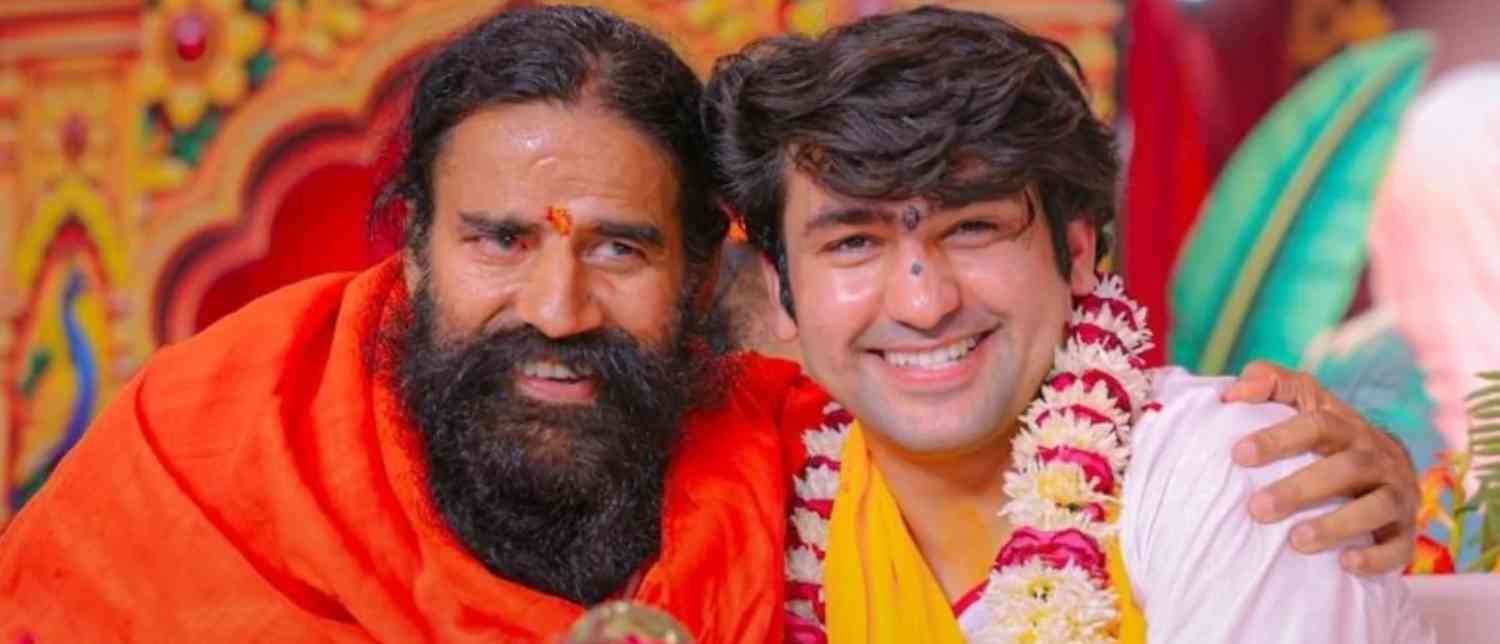
The controversy became particularly striking when yoga guru Baba Ramdev, who had shared a public platform with Bageshwar Dham chief Dhirendra Shastri just days earlier, openly criticised him, calling him a 'pakhandi' (hypocrite). However, the disagreement did not last long. Both personalities subsequently sought to downplay the confrontation, presenting it as a matter of affection, respect and guidance between an elder and a younger religious figure.
But the episode has raised a bigger question: Was this merely a disagreement between two spiritual leaders, or does the Ramdev-Shastri controversy reveal deeper tensions within India's religious and political landscape?
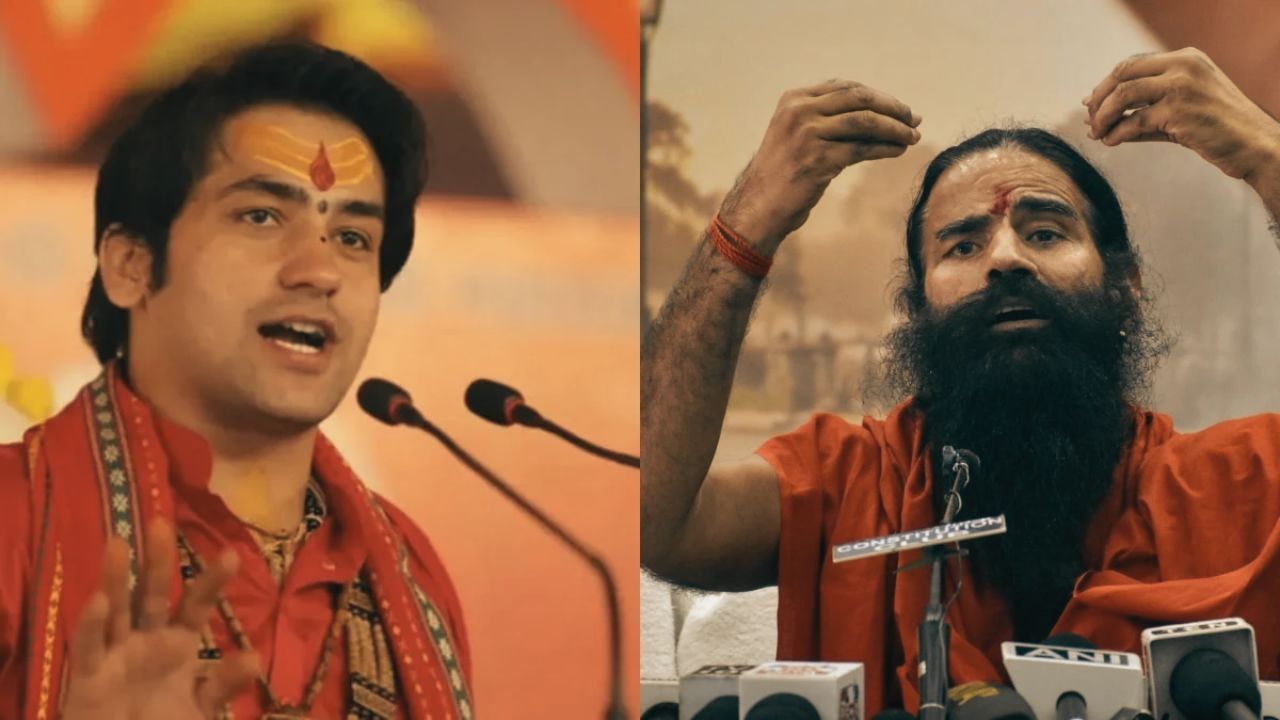
How the Ramdev-Dhirendra Shastri Controversy Began
The origins of the dispute can be traced to a controversial video of Dhirendra Shastri from an earlier religious discourse in Madhya Pradesh.
During a Ram Katha programme in Karera, Shivpuri district, Shastri made remarks comparing the appearance and characteristics of Lord Ram and Lord Krishna. While describing Lord Krishna's traditional three-bend posture, known as tribhanga, he contrasted it with Lord Ram's straight posture and mannerisms.
His comments, which included describing Krishna as 'tedhe-medhe' (crooked), were interpreted by several devotees and religious figures as an inappropriate comparison between two revered Hindu deities.
The video subsequently circulated widely on social media, triggering criticism, demands for an apology and objections from religious personalities, particularly those associated with the Braj region.
Shastri later issued a clarification and apologised to anyone whose religious sentiments had been hurt. He maintained that his intention was not to create a distinction between Lord Ram and Lord Krishna or disrespect either deity. He also reiterated his devotion to Krishna and his association with the Braj tradition.
However, the clarification did little to immediately contain the controversy.
Why Did Baba Ramdev Call Dhirendra Shastri a 'Pakhandi'?
What made the controversy particularly interesting was Baba Ramdev's intervention.
Ramdev had recently shared a stage with Dhirendra Shastri at the much-publicised Ram Katha organised in Kunda, Uttar Pradesh, by Raghuraj Pratap Singh, popularly known as Raja Bhaiya.
Their public appearance had conveyed an impression of cordial relations between the two religious personalities. Consequently, Ramdev's subsequent criticism came as a surprise.
Speaking at an event in Jamshedpur, Ramdev strongly objected to Shastri's comparison of Lord Ram and Lord Krishna. He questioned how a religious preacher could make such remarks about revered deities and subsequently offer an apology.
He went on to call Shastri a 'pakhandi', arguing that religious personalities should maintain decorum, discipline and responsibility while speaking about Hindu traditions and deities.
The criticism was significant because Ramdev was not merely another public figure reacting to the controversy. He was someone who had recently appeared alongside Shastri at a major religious gathering.
This raised questions about whether Ramdev's intervention reflected a personal disagreement, a difference in religious interpretation or a broader concern about the public conduct of influential spiritual leaders.
From Public Criticism to Reconciliation: What Changed Between the Two Babas?
The confrontation, however, was followed by an equally interesting change in tone.
On November 24, Ramdev addressed the controversy during a press conference in Haridwar. He revealed that he had spoken to Shastri and described his criticism as an expression of affection rather than hostility.
Referring to Shastri as a child, younger brother and disciple, Ramdev explained that he had reprimanded him because certain statements had hurt him and appeared inappropriate.
He also suggested that Shastri had accepted the criticism as an expression of affection and respect.
Dhirendra Shastri, meanwhile, chose not to escalate the disagreement. Speaking during a religious programme in Pathankot, he described Ramdev as a respected spiritual figure and said he considered him an elder and guardian.
He characterised Ramdev's criticism as a blessing and maintained that he had no feelings of disrespect towards him.
Shastri also reiterated that the objective of religious leaders should be to unite Hindu society rather than create divisions.
The exchange effectively brought the immediate confrontation to an end. Nevertheless, the episode highlighted how disagreements between influential religious personalities can quickly become matters of public debate, particularly when they involve sensitive religious subjects.
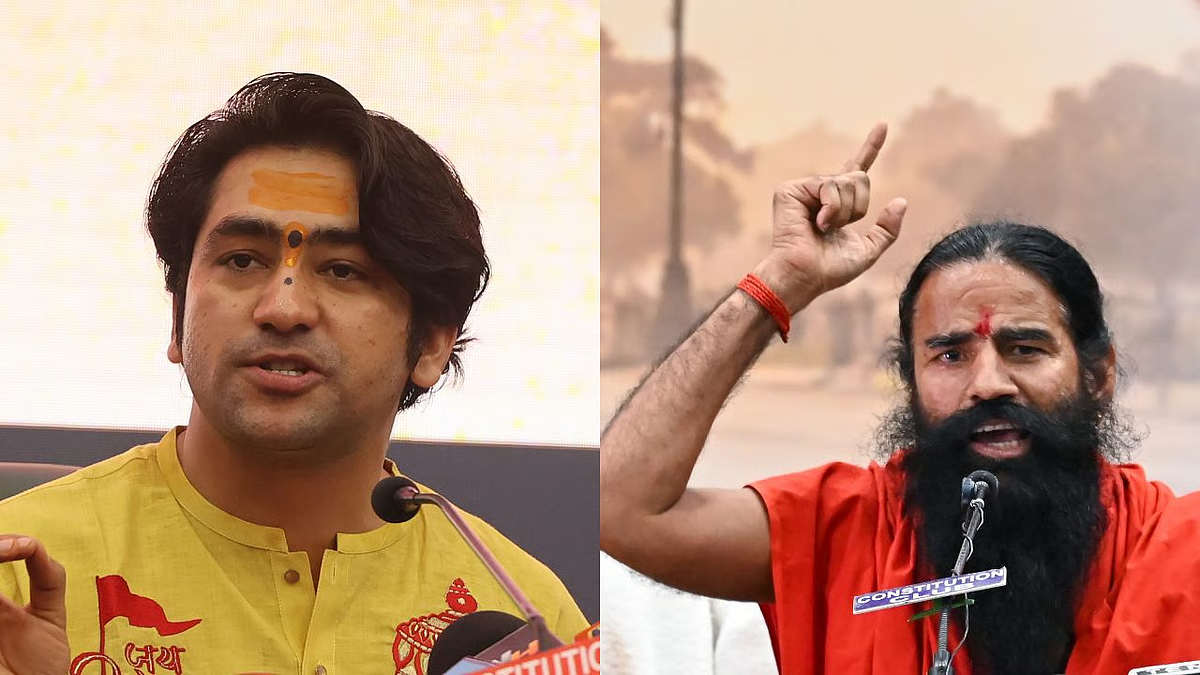
Kunda Ram Katha: The Religious Gathering That Added a Political Dimension
The Kunda Ram Katha is another important part of this entire episode.
Organised by Raja Bhaiya in Pratapgarh, Uttar Pradesh, the three-day religious gathering beginning November 17 brought together several prominent religious personalities, politicians and public figures.
Apart from Baba Ramdev and Dhirendra Shastri, the event witnessed the presence of former BJP MP Brij Bhushan Sharan Singh, BJP MP Nishikant Dubey and several other political personalities.
What made the gathering particularly noteworthy was the diversity of political figures and communities represented at the event.
Religious congregations have traditionally served as spaces for spiritual engagement. However, the Kunda gathering also demonstrated how such events can become important platforms for public networking, political visibility and social mobilisation.
The presence of influential political personalities alongside prominent religious leaders attracted considerable attention, especially with the 2027 Uttar Pradesh Assembly elections approaching.
The event also brought issues such as Krishna Janmabhoomi in Mathura into the political conversation, with political figures using the religious platform to raise broader ideological and cultural questions.
Against this backdrop, Ramdev and Shastri's subsequent disagreement became more than a personal exchange of words.
Why the Controversy Has Political Implications for the BJP in Uttar Pradesh
The political dimension of the Ramdev-Dhirendra Shastri controversy is difficult to ignore.
Both personalities have, in different ways, developed public associations with the BJP's broader religious and cultural ecosystem.
Baba Ramdev's political visibility dates back to his prominent anti-corruption campaigns against the Congress-led UPA government before the 2014 Lok Sabha elections. Over the years, his public positions and association with Prime Minister Narendra Modi have kept him in the political spotlight.
Dhirendra Shastri, meanwhile, has emerged as an influential religious personality with a substantial following among younger audiences. His religious discourses frequently address Sanatan Dharma, Hindu unity and cultural identity. His public interactions with prominent BJP leaders have also contributed to his political visibility.
However, the Lord Ram-Krishna controversy has created an uncomfortable political situation, particularly in Uttar Pradesh.
The reason is Lord Krishna's significance to the Yadav community, which forms an important part of the Samajwadi Party's traditional political support base.
Samajwadi Party president Akhilesh Yadav used the controversy to criticise Shastri and question the conduct of religious personalities perceived to have political backing. His party also opposed Shastri's programmes following the controversial remarks.
The episode therefore provided the Opposition with an opportunity to challenge the BJP over its perceived proximity to influential religious figures.
For the BJP, the challenge is more complicated than simply responding to criticism. The party must navigate religious sensitivities, community equations and its wider political messaging without becoming directly entangled in a controversy involving religious personalities.
Lord Krishna, Yadav Politics and the 2027 UP Assembly Elections
The timing of the controversy is particularly significant.
With the 2027 Uttar Pradesh Assembly elections approaching, political parties are increasingly attentive to community identities, religious sentiments and the influence of prominent public personalities.
Lord Krishna occupies an important place in the cultural and religious identity of the Yadav community, which is politically significant in Uttar Pradesh.
Consequently, remarks perceived as disrespectful towards Krishna can acquire political implications beyond their original religious context.
For the Samajwadi Party, the controversy offers an opportunity to position itself as a defender of religious sentiments associated with its support base. It also allows the party to question the BJP's relationship with religious personalities whose statements attract public criticism.
The BJP, on the other hand, faces the challenge of managing the political consequences without allowing the controversy to undermine its broader religious messaging.
The renewed emphasis on the Krishna Janmabhoomi issue in Mathura adds another layer to the discussion.
However, it would be premature to conclude that the controversy will directly translate into electoral gains or losses for any political party. Its actual impact will depend on how political organisations use the issue and whether it continues to resonate with voters.
Beyond the 'Two Babas' Clash: What Does the Episode Reveal About Religious Influence?
Perhaps the most interesting aspect of the entire episode is what it reveals about the growing influence of religious personalities in India's public life.
Baba Ramdev and Dhirendra Shastri represent different forms of religious outreach.
Ramdev's influence extends beyond yoga and spirituality into business, public health debates and political commentary through his association with the Patanjali business empire.
Shastri's popularity, meanwhile, has grown through religious discourses, large public gatherings, his distinctive speaking style and the considerable reach of Bageshwar Dham.
Both have built substantial public followings, but their influence also brings responsibility.
When religious personalities make statements about revered deities, those comments can quickly travel beyond the immediate audience and become subjects of widespread public debate.
The controversy also raises an important question about the distinction between religious expression, provocative rhetoric and responsible public communication.
Sanatan Dharma encompasses diverse traditions, devotional practices and philosophical interpretations. Reducing the relationship between Lord Ram and Lord Krishna to a comparison of appearances or characteristics can easily be misunderstood and generate unnecessary divisions among devotees.
Ultimately, the disagreement between Ramdev and Shastri appears to have been contained through mutual respect and reconciliation. Yet the political and religious questions it raised remain relevant.
A Personal Disagreement With Wider Political Consequences
The Baba Ramdev versus Dhirendra Shastri controversy began with remarks about Lord Ram and Lord Krishna, escalated through Ramdev's 'pakhandi' remark and eventually ended with both personalities describing their relationship in terms of affection and respect.
But the episode has exposed a much larger intersection of religion, public influence and political strategy.
The Kunda Ram Katha, the involvement of prominent political personalities, Akhilesh Yadav's criticism and the approaching 2027 Uttar Pradesh Assembly elections have all contributed to the wider significance of the dispute.
While the two religious leaders may have moved past their differences, the episode leaves behind an important question: In an environment where spiritual influence and political visibility increasingly overlap, how much responsibility should prominent religious personalities exercise when addressing sensitive matters of faith?
That question is likely to remain relevant well beyond the reconciliation between India's two prominent Babas.
© Copyright 2026. All Rights Reserved. Powered by Vygr Media.