 By

India’s political battles are rarely confined to elections, parliamentary debates or campaign rallies. They also unfold in the public imagination, where political parties and ideological organisations compete to define patriotism, national interest and the meaning of democratic participation. The recent debate over “vote chori” and “regime loot” offers a revealing example of how competing narratives can shape public opinion. It also brings an important relationship into focus: the relationship between the Bharatiya Janata Party (BJP), which operates within electoral politics, and the Rashtriya Swayamsevak Sangh (RSS), which pursues a broader social and ideological mission.
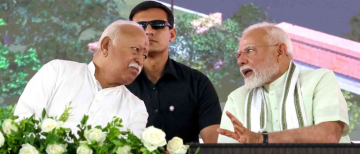
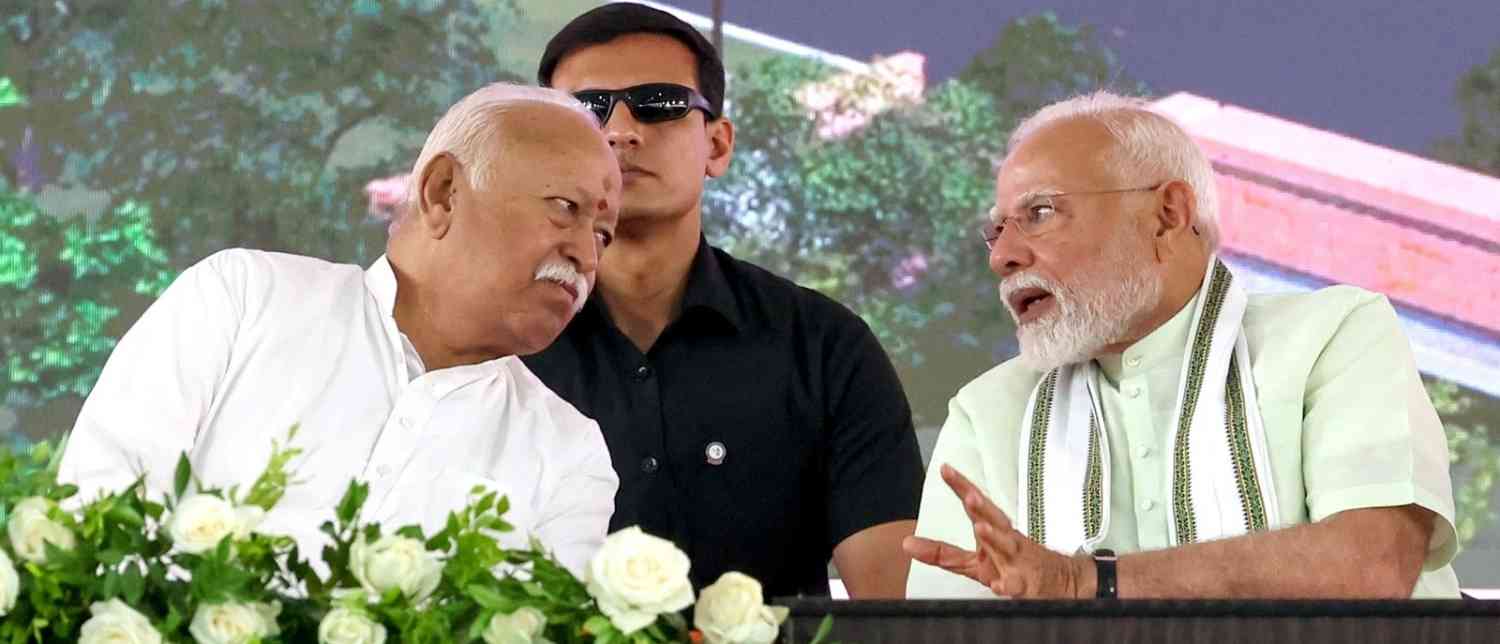
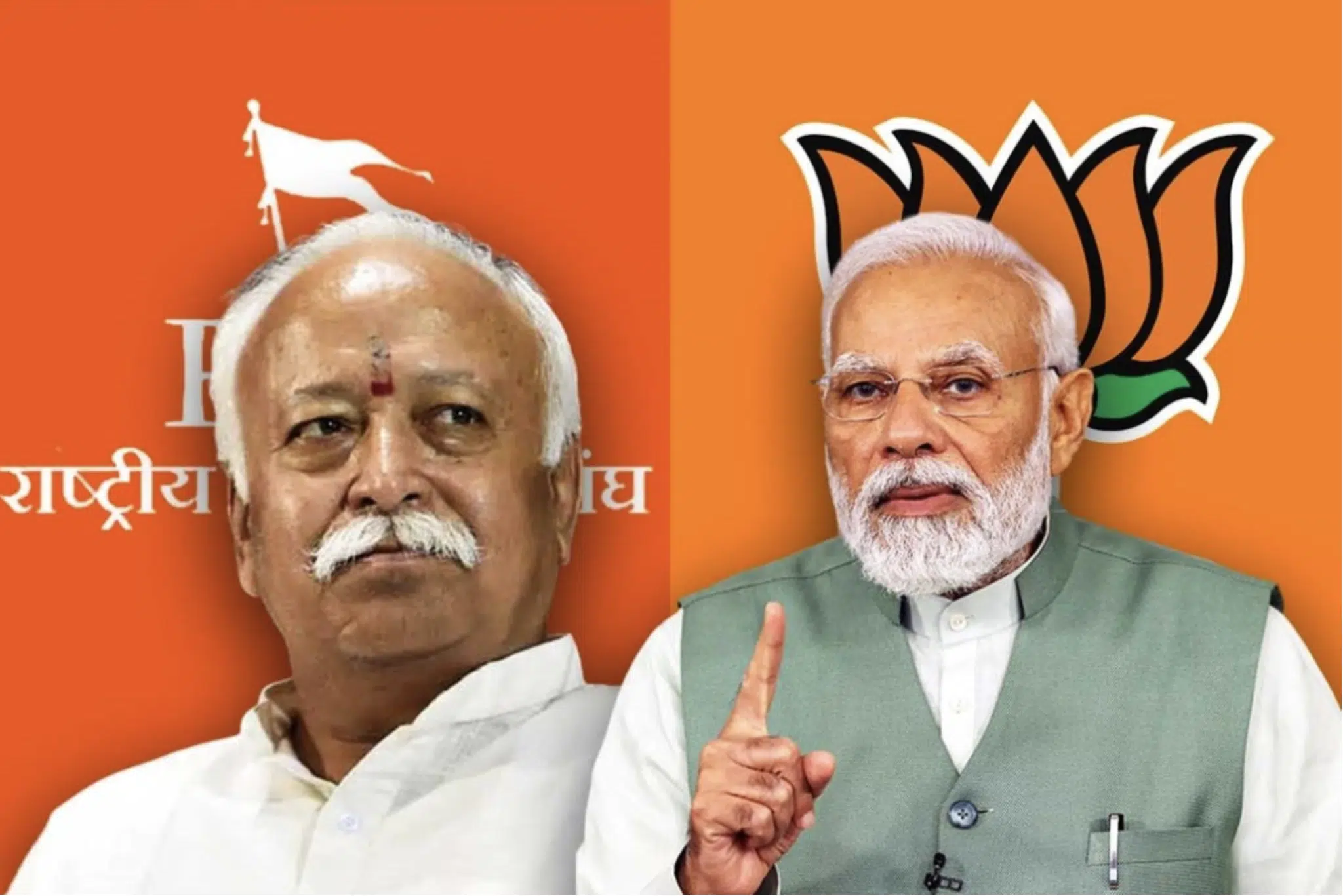
The speeches delivered by Prime Minister Narendra Modi and RSS chief Mohan Bhagwat during the Dussehra period have added another dimension to this debate. Their remarks addressed national development, cultural identity, social cohesion, protests and concerns about attempts to destabilise the country. Although the two leaders spoke from different institutional positions, their messages contained overlapping themes. The question is whether this reflects a shared political outlook, a convergence of interests or a more complex relationship between electoral strategy and ideological influence.
Understanding this distinction requires looking beyond political slogans. The BJP and RSS share historical and ideological connections, but they do not perform identical roles. One seeks public support through elections and governance; the other emphasises social organisation, cultural consciousness and long-term ideological engagement. Both seek to influence how citizens understand India, yet their methods, immediate priorities and responsibilities differ.
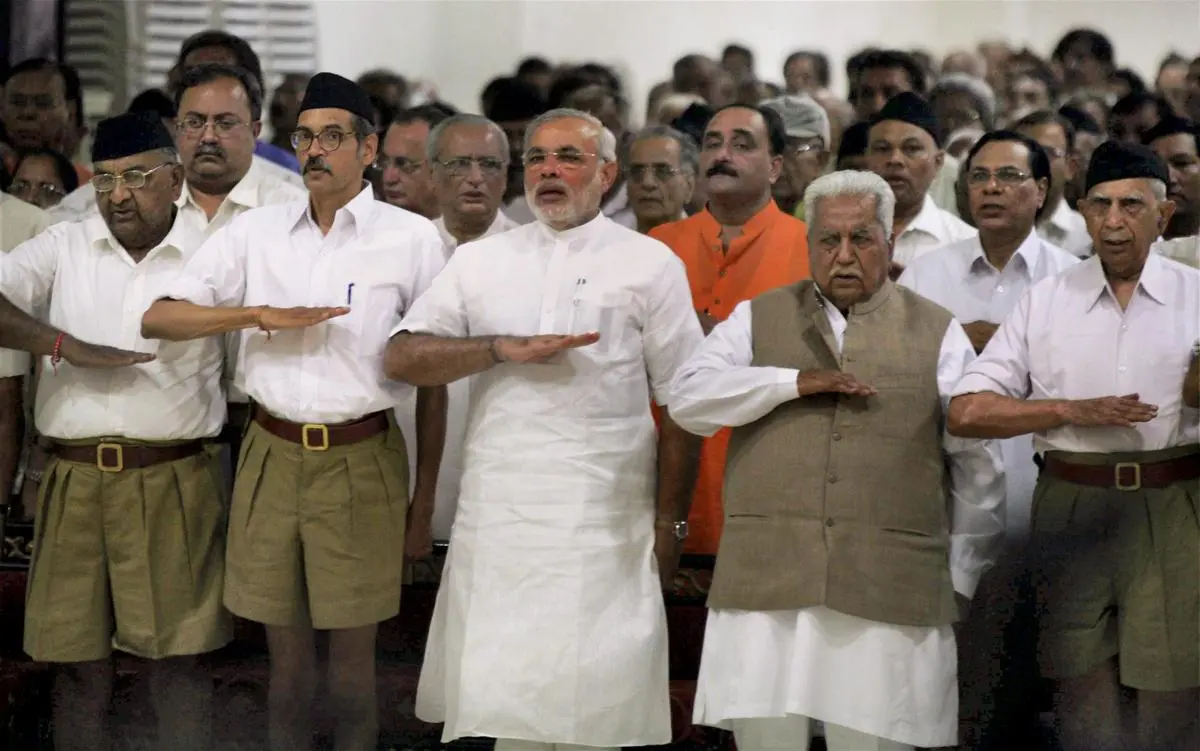
‘Vote Chori’ vs ‘Regime Loot’: Who Controls the Political Narrative?
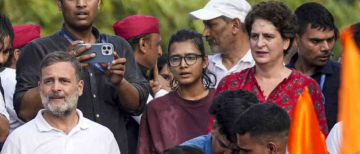
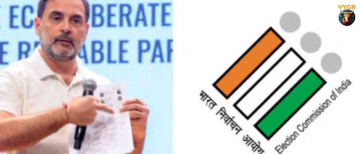
The opposition’s “vote chori” campaign has brought questions about electoral integrity, electoral-roll revisions and institutional accountability into the political spotlight. Its central concern is whether the electoral process is functioning fairly and transparently. The ruling establishment, meanwhile, faces the challenge of responding to these allegations while defending its political legitimacy.
The emerging counter-narrative of “regime loot” changes the terms of the debate. Rather than allowing the discussion to remain focused exclusively on electoral procedures, it invites citizens to consider the consequences of political upheaval, the risks of instability and the possibility that protests could be exploited by forces seeking objectives beyond the stated demands of demonstrators.
This is where political communication becomes particularly consequential. A slogan can condense a complicated dispute into a simple, memorable choice. It can help citizens understand an issue, but it can also encourage them to accept a particular interpretation before examining the underlying evidence.
Neither “vote chori” nor “regime loot” should be treated as a proven conclusion simply because it is repeated by political leaders or their supporters. Allegations of electoral wrongdoing require credible evidence and appropriate institutional scrutiny. Similarly, claims that protests are part of a foreign-backed effort to destabilise India require substantiation.
The central issue is not which slogan sounds more persuasive. It is whether the competing narratives help citizens understand the facts or turn a debate about accountability into a struggle over political loyalty.
The BJP’s Approach: Electoral Politics, Leadership and Public Support
The BJP operates in a political environment where public confidence must ultimately translate into electoral support. Its leadership must defend the government’s record, respond to opposition criticism, communicate policy priorities and maintain a credible vision of the country’s future.
National development, self-reliance, cultural heritage and strong leadership are recurring themes in the party’s public messaging. These themes connect its political programme with a larger account of India’s identity and aspirations. They also provide a framework through which the party can respond to criticism by emphasising national progress, stability and collective responsibility.
The advantage of this approach is its ability to make political communication accessible. A speech, campaign slogan or public event can connect complex questions of governance with familiar ideas about national pride and the country’s future.
However, electoral politics also imposes accountability. Citizens judge political messaging against their everyday experiences, the performance of public institutions and the government’s response to criticism. A compelling narrative cannot, on its own, resolve questions about electoral procedures, governance or public grievances.
The BJP therefore faces a recurring challenge: how to defend its political position without allowing the language of national unity to overshadow legitimate demands for transparency.
Its political character is shaped not only by the issues it chooses to highlight, but also by how it responds when citizens question its decisions. In a democracy, defending the government and answering difficult questions are not mutually exclusive responsibilities.
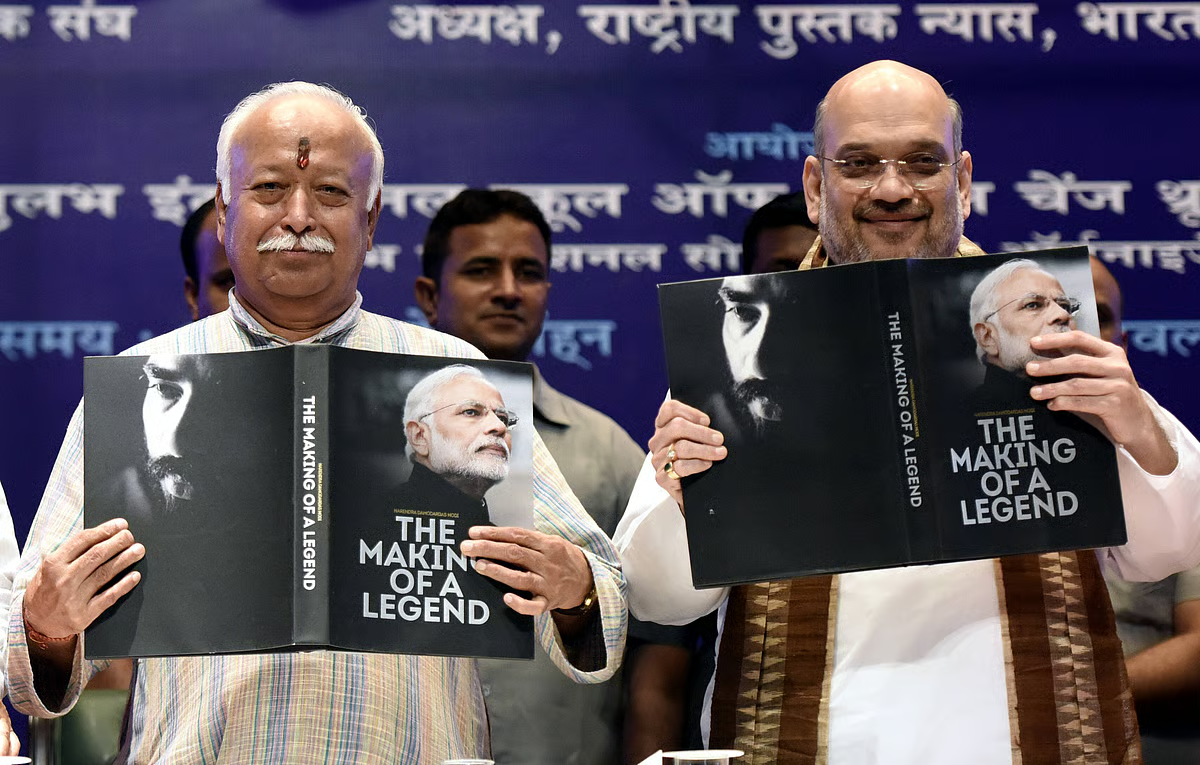
The RSS Approach: Ideological Influence Beyond Elections
The RSS occupies a different institutional position. It does not contest elections as a political party; it describes its work in terms of cultural identity, social organisation, discipline and the development of individuals through volunteer networks.
Its influence, therefore, cannot be measured solely through electoral results. Ideological engagement can take place over long periods, through community activities, organisational relationships and the repeated discussion of values associated with society and national identity.
Where the BJP must convert political messaging into votes and governing authority, the RSS places greater emphasis on cultivating a social environment in which its ideas can gain acceptance. Its approach seeks to influence how individuals understand their responsibilities, cultural inheritance and relationship with the nation.
This difference helps explain why the BJP and RSS can share broad ideological commitments while adopting different methods of public engagement. Electoral politics demands immediate responses to public controversies. Social and ideological mobilisation can operate over a longer time frame, seeking to shape attitudes that extend beyond a single election.
Bhagwat’s recent Vijayadashami address illustrates this distinction. His remarks acknowledged the existence of social problems and protests while arguing that demonstrations should pursue solutions and avoid creating hostility within society. He also raised concerns about external interference and attempts to destabilise the country.
These statements reflect the RSS chief’s stated emphasis on social cohesion and national stability. They also raise a legitimate democratic question: who determines when a protest is constructive and when it becomes a threat to public order?
Peaceful protest is a recognised form of democratic participation. Citizens have the right to question governments, demand accountability and advocate political change. At the same time, particular actions within a movement can be examined when credible evidence of violence, coercion or unlawful conduct emerges.
The distinction between dissent and destabilisation cannot be established merely by labelling a movement. It requires evidence, due process and respect for constitutional freedoms.
One Ideological Relationship, Two Different Methods
The BJP–RSS relationship is neither adequately explained by treating the organisations as identical nor by presenting them as entirely separate entities. Their historical and ideological connections are significant, but their institutional roles create different incentives and responsibilities.
The BJP must operate within the demands of electoral competition. Its decisions are exposed to parliamentary scrutiny, opposition campaigns, public criticism and the consequences of governance. The RSS, by contrast, operates primarily through social and ideological organisation, seeking to shape attitudes and behaviour beyond the electoral cycle.
These different approaches can complement one another. Political messaging can translate broad ideological ideas into campaign themes and governing priorities. Social mobilisation can provide a wider environment in which those ideas are discussed, organised and reinforced.
Yet complementarity does not mean that every action is coordinated or that the two organisations agree on every question. Their relationship has also experienced reported tensions over leadership, organisational influence and the BJP’s independence from its ideological mentor.
This makes the current debate particularly interesting. When Modi and Bhagwat emphasise similar concerns about national stability and the dangers of destabilisation, their messages may reinforce one another. But the similarity of their language does not, by itself, establish that every statement forms part of a single coordinated political plan.
The more useful question is how their respective messages interact in the public sphere, and how citizens interpret the relationship between electoral politics and ideological influence.
How Public Mobilisation Shapes Political Character
Political organisations do not build their public identities through speeches alone. They also depend on citizens who attend rallies, participate in movements, share messages, volunteer in communities and carry political ideas into everyday conversations.
Mass mobilisation can give people a sense of belonging and the confidence to participate in public life. It can draw attention to neglected issues, encourage collective action and bring pressure on institutions to respond. These benefits are not exclusive to any one party or ideology.
However, mobilisation also carries responsibilities. When political communication divides society into unquestioningly loyal supporters and supposedly disloyal critics, it can reduce the space for genuine disagreement. When a movement presents every institutional objection as evidence of conspiracy, it can weaken its own credibility.
The BJP’s electoral approach and the RSS’s ideological approach both operate within this larger environment of public persuasion. Their influence depends partly on whether citizens accept, reinterpret or challenge the ideas being presented to them.
The critical distinction is between mobilising people to participate in public life and mobilising them to accept a narrative without scrutiny.
A politically engaged citizen should be able to support a government while questioning a particular decision, appreciate an organisation’s social contribution while disagreeing with its ideology, or oppose a political party without being portrayed as hostile to the nation.
Political maturity requires the freedom to hold these positions simultaneously.
Patriotism, Protest and the Meaning of National Interest
One of the most important features of the “vote chori” versus “regime loot” debate is the way it connects political disagreement with national identity.
When leaders invoke patriotism, cultural heritage or external threats, they place political controversies within a much larger emotional framework. Questions about electoral processes or government accountability can then become part of a wider argument about who represents India and who supposedly threatens its interests.
Such messaging can encourage solidarity around shared national aspirations. But it can also create problems if disagreement with a government or organisation is treated as evidence of disloyalty.
India’s democratic institutions depend on preserving the distinction between the government and the country itself. Governments change; political parties compete; citizens disagree. None of these facts automatically represents a threat to national integrity.
Equally, legitimate concerns about external interference should not be dismissed merely because they are raised during a political controversy. They should be investigated through credible evidence and appropriate procedures rather than used as a substitute for examining the specific grievances that triggered public unrest.
The same standard should apply to electoral allegations. Concerns about voter registration, electoral administration or institutional independence deserve examination on their merits, regardless of which political party benefits from the outcome.
National interest is not served by assuming that one side is always correct. It is better served by institutions that can establish facts, protect rights and hold all public authorities accountable.
Beyond the Political Contest: What Should Citizens Expect?
The BJP and RSS may approach public engagement through different methods, but both operate within a society whose interests extend beyond organisational priorities.
For the BJP, credibility depends on the relationship between its promises, its governing record and its willingness to answer questions. For the RSS, the credibility of its stated social mission depends partly on how its ideas translate into social conduct, inclusion and the treatment of people who do not share its worldview.
Neither electoral success nor ideological influence automatically establishes that an organisation’s interpretation of the national interest is universally accepted. Both must be open to examination, debate and criticism.
This is particularly important in a diverse country such as India, where citizens have different religious beliefs, cultural traditions, political preferences and understandings of national identity. Social cohesion cannot depend on eliminating these differences. It must involve finding ways for people to coexist despite them.
The real measure of political mobilisation is therefore not simply how many people it attracts or how effectively it communicates a message. It is also whether it encourages informed participation, peaceful disagreement and respect for democratic institutions.
India Must Remain Bigger Than Any Political Narrative
The debate over “vote chori” and “regime loot” reveals how political language can influence the way citizens understand elections, protests and national identity. It also highlights the distinct but interconnected roles of the BJP and RSS in shaping public opinion.
The BJP operates through electoral politics and governance, while the RSS emphasises social organisation and long-term ideological engagement. Their approaches differ, but their messages can overlap when questions of cultural identity, national stability and political legitimacy dominate public discussion.
Recognising this relationship does not require endorsing either organisation or dismissing its stated objectives. It requires examining their claims critically, distinguishing evidence from interpretation and applying consistent standards to political actors across ideological lines.
India’s democratic strength depends on more than the ability of organisations to mobilise citizens. It depends on citizens retaining the freedom to question those organisations, evaluate their arguments and reach independent conclusions.
Ultimately, the national interest cannot be defined exclusively by a party seeking votes or an organisation seeking ideological influence. It must be assessed through the country’s institutions, constitutional principles and the lived experiences of its people.
The most meaningful test of political leadership and ideological conviction is not who can speak most convincingly in the name of India. It is who can withstand scrutiny while respecting the right of others to disagree.
Because a confident democracy does not need its citizens to think alike. It needs them to remain informed, engaged and free to decide for themselves what serving India truly means.
© Copyright 2026. All Rights Reserved. Powered by Vygr Media.