
 By
By 
India’s otherwise dependable Polar Satellite Launch Vehicle (PSLV) has suffered an unprecedented setback, with its second consecutive failure raising concerns across the country’s public and private space ecosystem. The PSLV-C62 mission, launched on January 12 from the Satish Dhawan Space Centre in Sriharikota, encountered a serious anomaly during its third stage, preventing it from placing its payload of 16 satellites into the intended orbit.
The mission, which marked the 64th flight of the PSLV and ISRO’s first launch of 2026, was intended to serve as a comeback after a similar third-stage failure in 2025. Instead, it has become the first instance in PSLV’s three-decade history where the rocket has failed twice in succession.
A Promising Start Ends in Uncertainty
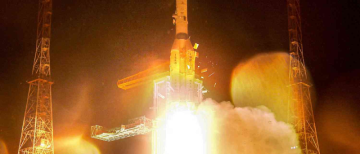
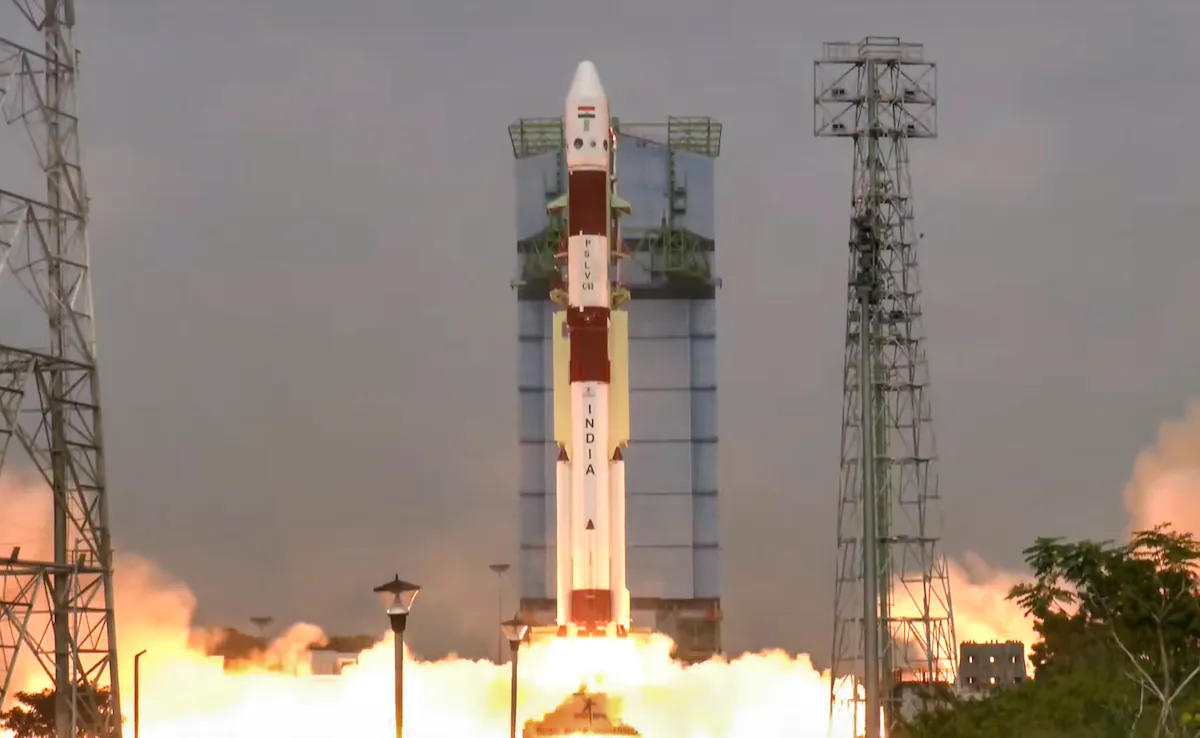
PSLV-C62 lifted off at approximately 10:17–10:18 am IST aboard the PSLV-DL variant, a 260-tonne launch vehicle equipped with two solid strap-on boosters to enhance lift capability. Early phases of the mission unfolded exactly as planned. The first and second stages performed nominally, booster separation occurred smoothly, and the vehicle appeared to be on course as it climbed skyward.
However, around eight to nine minutes after liftoff—towards the end of the third stage and during the coasting phase between engine burns—mission controllers observed unexpected disturbances. According to ISRO Chairman Dr V Narayanan, telemetry showed abnormal roll rates followed by a deviation from the planned flight trajectory.
“Close to the end of the third stage, we were seeing a little more disturbance in the vehicle roll rates and, subsequently, there is a deviation observed in the flight path,” Narayanan said, adding that flight data was being closely analysed.
ISRO has so far stopped short of formally declaring the mission either a success or a failure. However, the agency confirmed that the rocket could not proceed along its expected path, a strong indication that orbit insertion was not achieved.
Why the Third Stage Matters
The PSLV is a four-stage launch vehicle that alternates between solid and liquid propulsion systems. Any anomaly in the third stage—powered by a solid-fuel motor—is typically catastrophic, as it directly affects velocity build-up and orbital accuracy.
Historically, third-stage issues have resulted in near-total mission failure, a pattern that appears to have repeated itself with PSLV-C62. Silence in telemetry updates following third-stage ignition further reinforced fears that the vehicle lost control before payload deployment could occur.
A Failure Analysis Committee (FAC) has now been constituted, in line with standard ISRO procedures, to determine the root cause.
The PSLV-C62 mission encountered an anomaly during end of the PS3 stage. A detailed analysis has been initiated.— ISRO (@isro) January 12, 2026
A Mission Packed with Strategic and Commercial Payloads
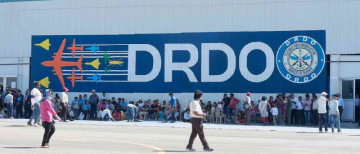
PSLV-C62 was carrying 16 satellites in total, making the setback particularly consequential. The primary payload was EOS-N1, also referred to as Anvesha—an advanced Earth observation and surveillance satellite developed by the Defence Research and Development Organisation (DRDO).
Equipped with sophisticated hyperspectral imaging technology, EOS-N1 was designed to capture hundreds of light bands per pixel, far beyond standard primary colours. This capability would have enabled detailed monitoring of crop health, soil moisture, mineral resources, environmental changes, urban expansion, and strategic maritime and border surveillance.
Alongside EOS-N1 were 15 co-passenger satellites from India and abroad. These included:
-
Anvesha (EOS-N1) – DRDO’s primary Earth observation and surveillance satellite
-
Kestrel Initial Technology Demonstrator (KID) – a Spanish startup’s re-entry vehicle prototype intended to return to Earth and splash down in the South Pacific
-
MOI-1 – developed by Hyderabad-based startups TakeMe2Space and Eon Space Labs
-
Seven satellites from Dhruva Space, another Hyderabad-based space startup
-
Five satellites from Brazil
-
Earth observation satellites from the United Kingdom and Thailand
-
A technology demonstration satellite from Nepal
-
AayulSAT, built by Bengaluru-based OrbitAID Aerospace, conceptualised as a “petrol pump in space” to enable in-orbit satellite refuelling
All payloads were meant to be placed into a Sun-synchronous polar orbit at altitudes ranging between approximately 505 km and 597 km.
Innovative Payloads Lost Mid-Mission
Among the most notable payloads was MOI-1, which featured an orbital artificial intelligence image laboratory capable of processing data directly in space rather than transmitting raw data back to Earth. Marketed as a “space cybercafé,” the platform would have allowed users to rent processing time for as little as ₹180 per minute.
MOI-1 also carried MIRA, the world’s lightest space telescope at roughly 502 grams, manufactured as a single solid piece for enhanced durability.
The loss of these payloads represents not just a financial setback, but also a blow to India’s rapidly expanding private space innovation landscape.
Liftoff!
PSLV-C62 launches the EOS-N1 Mission from SDSC-SHAR, Sriharikota.
Livestream link: https://t.co/fMiIFTUGpf
For more information Visit:https://t.co/3ijojDaYB2
#PSLVC62 #EOSN1 #ISRO #NSIL— ISRO (@isro) January 12, 2026
A Rare Double Failure for PSLV
The failure of PSLV-C62 closely mirrors what happened during the PSLV-C61 mission in May 2025, when the rocket failed to place the EOS-09 Earth observation satellite into orbit following a third-stage anomaly. That incident occurred during ISRO’s only PSLV launch of 2025.
Although a Failure Analysis Committee was formed after the C61 failure, its findings were never made public. Dr Narayanan later revealed that the earlier failure was caused by an unexpected and sudden drop in pressure inside the rocket’s pressure chamber.
Whether a similar issue is responsible for the C62 anomaly remains unclear.
This back-to-back failure is particularly striking given PSLV’s long-standing reputation as ISRO’s most reliable launch vehicle. Since its debut in 1993, the PSLV has conducted 64 missions, with only five failures—including the most recent one—bringing its overall success rate down to approximately 94 per cent.
A Workhorse That Built India’s Space Legacy
The PSLV has played a foundational role in India’s space journey. It has successfully launched landmark missions such as Chandrayaan-1, the Mars Orbiter Mission (Mangalyaan), Aditya-L1, and AstroSat. In 2017, it set a global record by deploying 104 satellites in a single mission.
The vehicle’s reliability made it the backbone of India’s commercial launch services, particularly for small and medium satellites, and positioned ISRO as a cost-effective global launch provider.
That legacy makes the recent failures all the more concerning.
Ripple Effects Across India’s Space Ecosystem
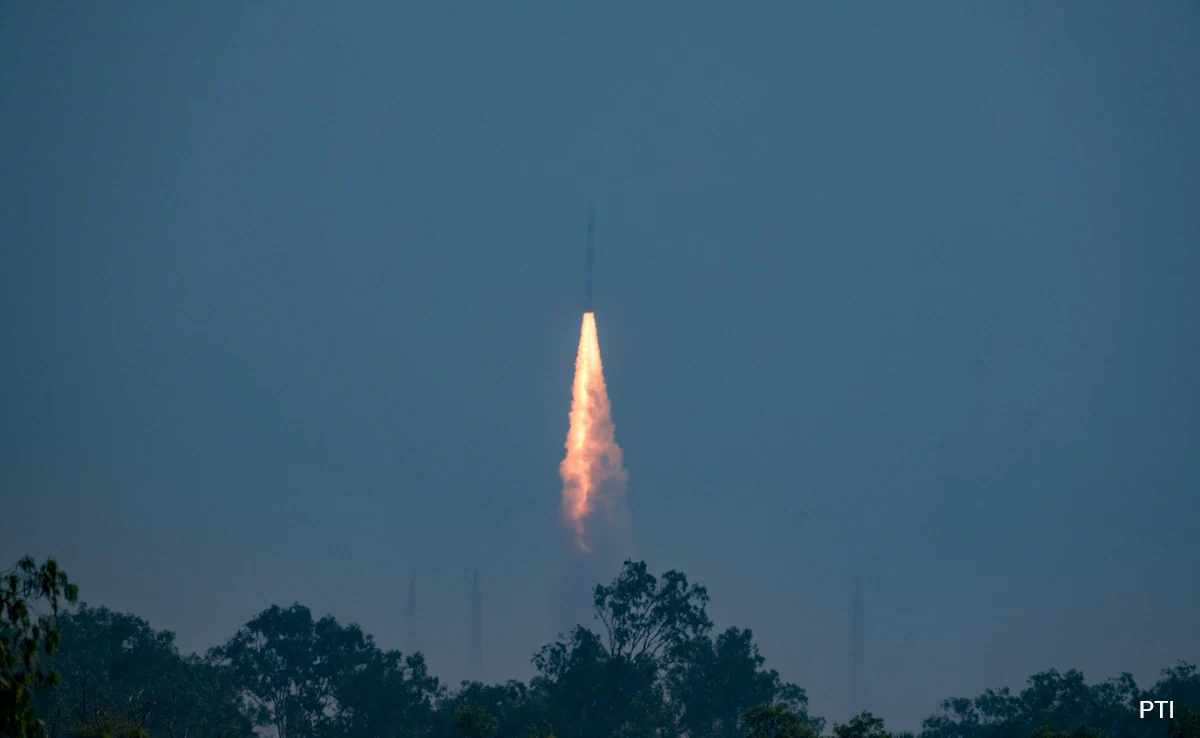
If PSLV-C62 is officially declared a failure, the impact will extend far beyond ISRO. The mission was conducted by NewSpace India Limited (NSIL), ISRO’s commercial arm, and marked its ninth mission.
Several foreign customers—including entities from Brazil, Nepal, Spain, the UK, and Thailand—lost satellites in the incident. Indian startups, especially Dhruva Space, which had seven satellites aboard, stand to face commercial and operational setbacks.
The timing is also critical. India is preparing to launch its first industry-manufactured PSLV through a consortium led by Hindustan Aeronautics Limited (HAL) and Larsen & Toubro (L&T). Consecutive failures could prompt scrutiny of production processes, quality assurance, and timelines.
Broader Implications for ISRO’s 2026 Roadmap
ISRO has set ambitious goals for 2026, including the launch of more than 100 satellites, expansion of the NavIC navigation constellation, and preparations for future human spaceflight missions. The agency is also advancing work on Gaganyaan, India’s human spaceflight programme, which relies on the heavier LVM3 launch vehicle.
While PSLV issues do not directly affect LVM3, repeated anomalies raise concerns about systemic reliability, transparency, and scheduling pressures.
This is also the second consecutive year in which ISRO’s first launch of the year has failed. In January 2025, a GSLV mission carrying the NVS-02 navigation satellite encountered problems during orbit-raising manoeuvres.
What Happens Next
ISRO has stated that it is analysing all available flight data and will share detailed findings once the Failure Analysis Committee completes its investigation. Chairman V Narayanan has assured that corrective measures will be implemented swiftly.
Despite the setback, PSLV’s modular design allows for relatively quick identification and rectification of faults. However, experts note that greater transparency around failure reports may be essential to maintaining confidence among international partners and private investors.
For now, the silence surrounding the fate of all 16 satellites underscores the gravity of the situation. Whether this episode becomes a temporary stumble or a turning point for India’s space programme will depend on how swiftly—and openly—ISRO responds.
What remains unquestioned is the high stake: not just the success of a rocket, but the credibility of a launch system that has long been the backbone of India’s ascent as a global space power.
With inputs from agencies
Image Source: Multiple agencies
© Copyright 2025. All Rights Reserved. Powered by Vygr Media.