 By
By 
There is a dream scenario that administrators at the International Cricket Council (ICC), global broadcasters, and commercial partners quietly hope for whenever an ICC event rolls around: India versus Pakistan in a knockout. Preferably a final. Ideally, a title clash in early March with a global television audience that stretches across continents and time zones.
In the ongoing ICC T20 World Cup 2026, that dream remains alive. Both India and Pakistan have qualified for the Super Eights stage, keeping open the tantalising possibility of a semifinal or even a final showdown. For the tournament’s stakeholders, that would be the perfect crescendo.
For Indian fans, however, the road to that crescendo has become a logistical and emotional maze — thanks largely to the so-called “Hybrid Model.”
The Hybrid Model: A Diplomatic Compromise, A Fan’s Nightmare
Under the agreed Hybrid Model, if either India or Pakistan hosts a global or continental event, the other will play all its matches at a neutral venue. On paper, it is a workable diplomatic compromise. In practice, it is a logistical headache — especially for supporters trying to plan travel.
Take this World Cup as a case study.
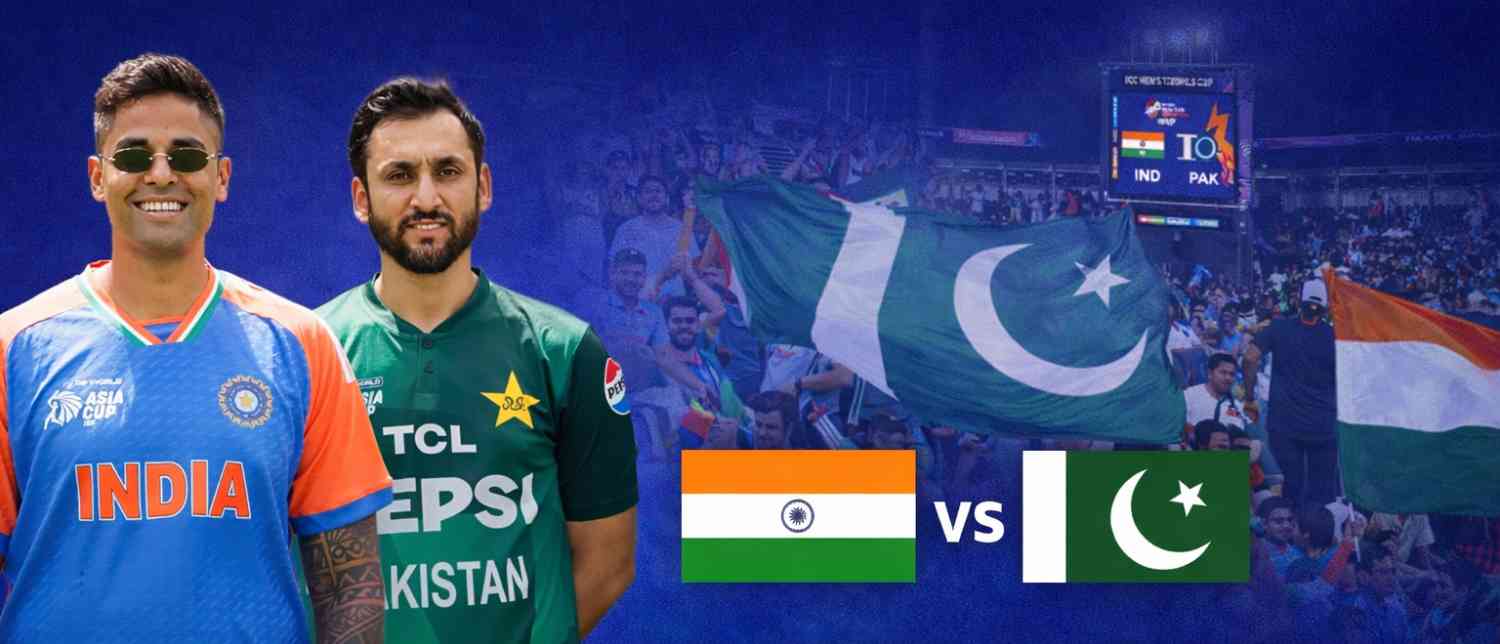
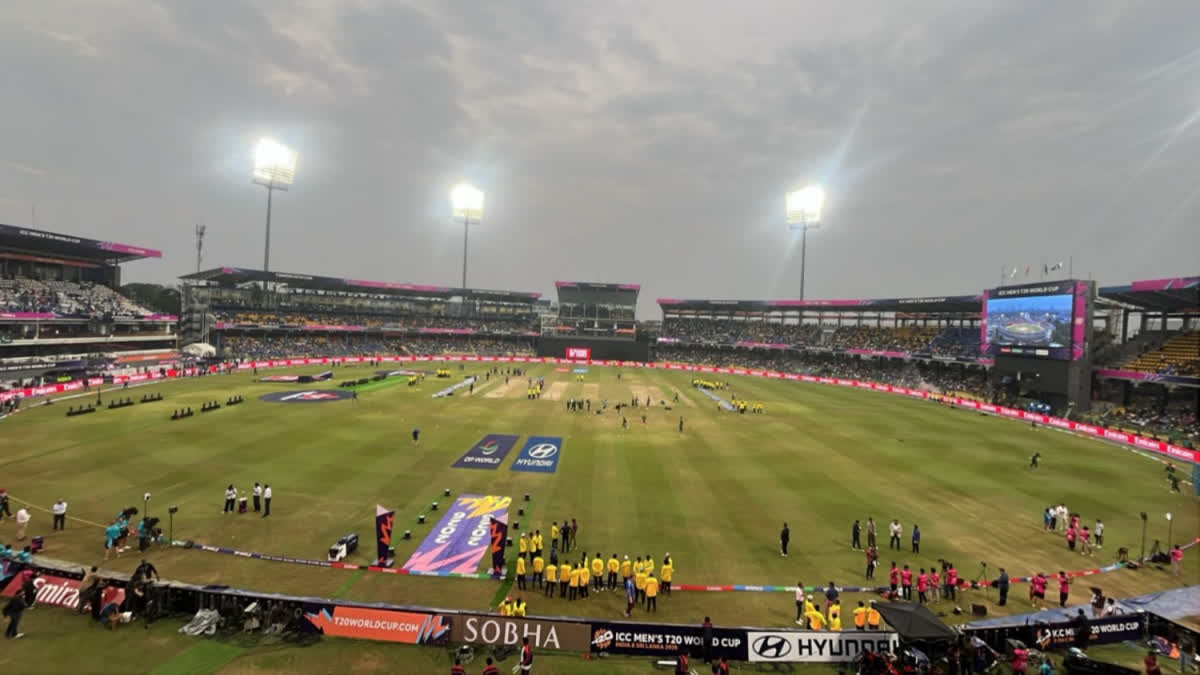
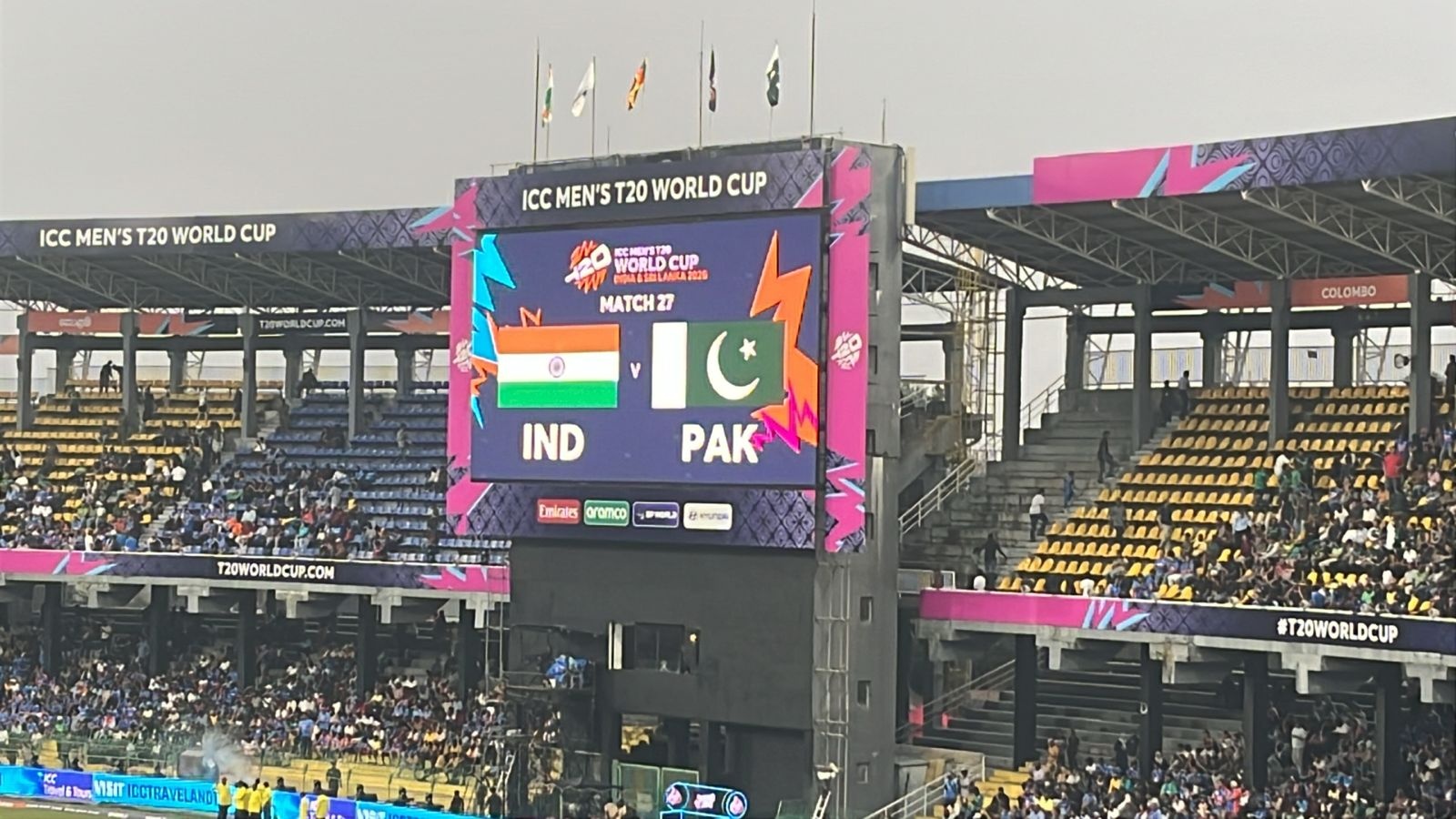
The Group A fixture between India and Pakistan on February 15 was not problematic. It had been decided well in advance that the match would be staged at the R. Premadasa Stadium in Colombo. Fans could book tickets, flights, and accommodation with reasonable foresight.
The complications begin once we look beyond the group stage.
India have been slotted in Group 1 alongside South Africa, West Indies and Zimbabwe. Pakistan are in Group 2 with England, New Zealand and co-hosts Sri Lanka. If India top their group and Pakistan finish second — or vice versa — the two arch-rivals will meet in the first semifinal on March 4 in Colombo.
If India win that semifinal, they will then fly to Ahmedabad for the final on March 8. If India lose, or if Pakistan reach the final, the title clash will be staged in Colombo.
And that’s just one scenario.
If Pakistan fail to make the knockouts and India advance, Kolkata will host the first semifinal on March 4, while India would play in Mumbai the next day. Mumbai, notably, is guaranteed to host the March 5 semifinal irrespective of which teams qualify.
The Super Eights conclude on March 1. Which means fans may not know where India will play — or even whether a potential India-Pakistan knockout is on the cards — until barely three days before the semifinal.
For a global event, this is not just uncertainty. It is chaos.
The Financial Gamble: Book Now, Regret Later?
The problems are layered.
First, there is the brutal economics of last-minute travel. Airline fares follow dynamic pricing. Hotel tariffs surge based on demand. Once the semifinal or final venue is confirmed, prices will skyrocket.
Fans are left with two imperfect choices:
-
Wait for clarity — and risk paying exorbitant prices.
-
Book in advance — opting for refundable tickets at a premium, gambling that their predictions align with reality.
Neither option is fair to the “common man” — the very fan base that forms the heart and soul of cricket.
Adding to the uncertainty, tickets for the semifinals and final have not yet been listed on the official ticketing partner website, BookMyShow, due to scheduling ambiguities. Even those willing to gamble on travel do not know whether they will secure stadium access.
Contrast this with the upcoming FIFA World Cup in the United States, Canada and Mexico, where tickets for all matches — including the final — went on sale for the general public from December 11, 2025. The clarity there stands in stark contrast to the ambiguity here.
In ICC events, host associations typically wield greater influence over ticket sales. In this multi-venue hybrid scenario, coordination appears to have added complexity rather than efficiency.
The Human Cost of Uncertainty
For many, this is not theoretical inconvenience — it is lived experience.
M. Manjuanth, a PhD scholar at the Indian Institute of Science and a devoted supporter of the Men in Blue, describes the predicament with frustration.
He and his friends have already booked flights and accommodation to Ahmedabad, mindful of the suffering fans endured in 2023 when hotels reportedly charged 10 to 20 times their usual rates. Back then, return airfares from Ahmedabad were so steep that they took a train to Mumbai and flew to Bengaluru from there.
Even now, with logistics seemingly sorted, uncertainty persists. If India reach the final, will tickets be available? No one knows.
“It’s a sad state,” he says, “but with this hybrid model, we have no choice.”
Aditya Bharadwaj, a corporate employee and member of the RCB Fan Army, echoes that anxiety. He has opted for refundable tickets — a luxury not available to all. Some of his friends are waiting for clarity. Others have already booked in anticipation of an India final in Ahmedabad.
If the final is instead staged in Colombo, they stand to lose substantial sums. And if they wait until the last minute to book Sri Lanka routes? Dynamic pricing will make it nearly impossible.
The likely outcome: many will simply give it a miss.
For a tournament meant to celebrate cricket’s biggest rivalry, this is an uncomfortable irony.
A Neutral Venue: Orderly, Efficient — And Emotionally Muted
Beyond logistics, the Hybrid Model has altered something more intangible: atmosphere.
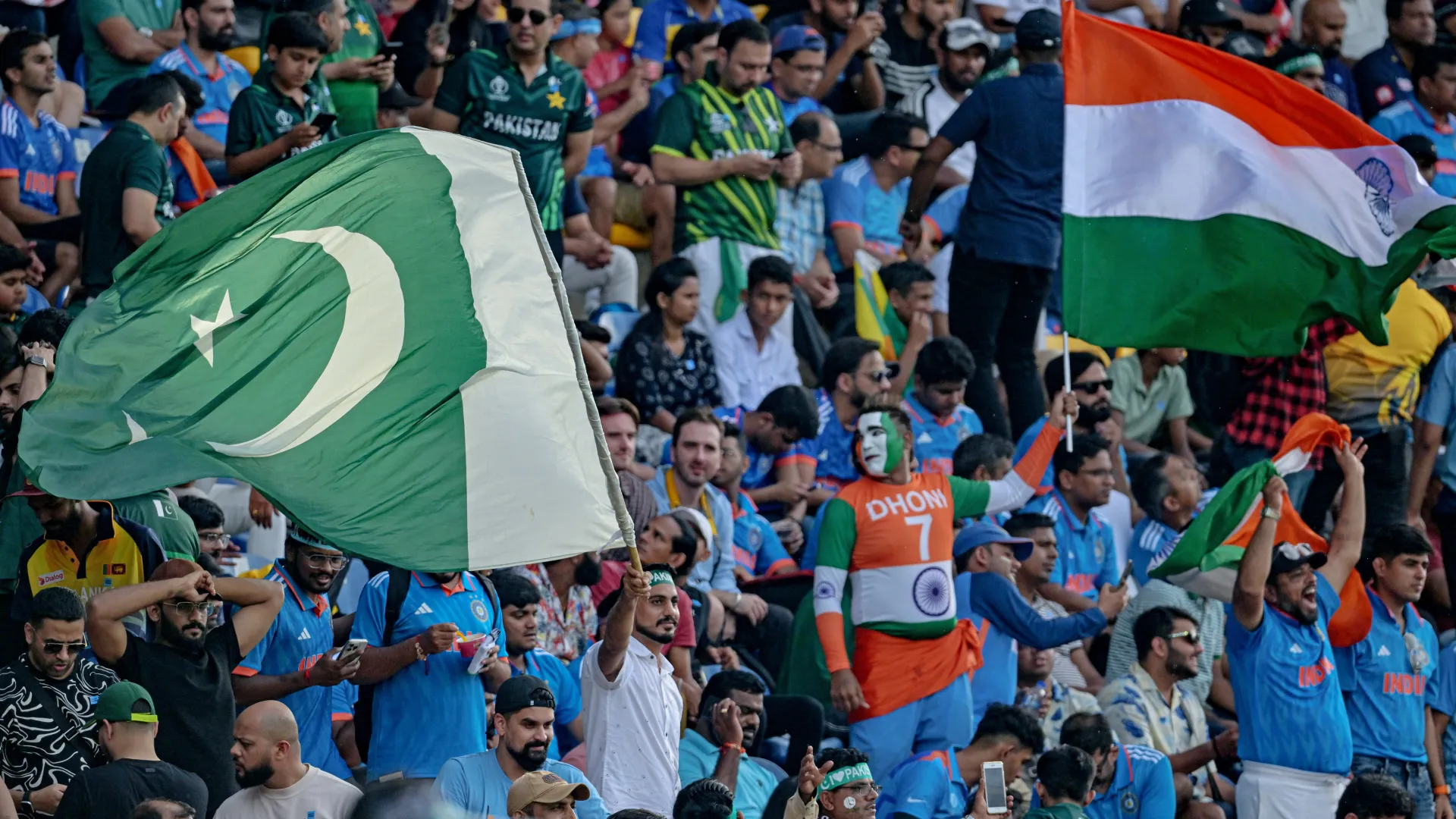
An India-Pakistan match at a neutral venue is a strange experience. The colours are there. The flags are up. The stands are full. The names on the scorecard carry decades of rivalry.
And yet, something feels contained.
Colombo hosts with courteous efficiency. The roads hum rather than throb. Blue and green mingle with Sri Lanka’s yellow and the whites of neutral cricket enthusiasts. Vendors sell Indian and Pakistani jerseys side by side, flags clipped together like diplomatic symbols.
There is no overwhelming roar announcing India versus Pakistan. Instead, there is a steady, well-mannered buzz.
Inside the stadium, the stands form gradients rather than battalions. Pockets of blue. Clusters of green. Wide swathes of neutral spectators applauding timing and pace rather than national pride.
Children switch chants freely. The atmosphere is civil, accessible, comfortable.
And in that comfort lies subtraction.
This rivalry has never thrived on comfort. It feeds on edge — on travel barriers, visa anxieties, siege-like security, the sense that something larger than cricket is at stake.
A rough estimate suggests close to 3,000 Pakistani fans have flown in full flights — something unimaginable if the match were staged in India. Neutrality makes participation possible. It makes it safe. It makes it shared.
But it also smoothens the spikes.
The DJ fills silences with borrowed energy — a Sinhala hook, a Bollywood chorus — as if reminding the crowd it is allowed to be louder. Occasionally, voltage flickers.
A searing cover drive from Babar Azam lifts a wave of green to its feet. A toe-crushing yorker from Jasprit Bumrah draws an answering surge of blue.
For seconds, the rivalry remembers what it can become. Then politeness reclaims it.
On paper, this was only a group-stage encounter — not do-or-die. In a neutral setting, it played like one: professional, engaging, occasionally tense, rarely overwhelming.
The monkey on the back of every India-Pakistan fixture — the need for it to feel bigger than anything else — was gently restrained.
When the lights dimmed at the R. Premadasa Stadium and the ocean breeze reclaimed the night, there lingered a faint sense of something held back.
In bits and pieces, the rivalry tried to break free. The fans tugged at the leash.
For a moment, they almost succeeded.
Is Colombo Truly Neutral? Five Competitive Edges for India
Ironically, even as neutrality softens atmosphere, it may tilt competitive balance.
Here are five ways Colombo arguably favours India.
1. A Home Away From Home
Geography matters. Colombo is a short flight from Chennai and Bengaluru. Indian supporters — including the Bharat Army — can travel in large numbers with relative ease.
Pakistani fans face more complex travel logistics and visa hurdles. The result? A stadium that often feels like a sea of blue.
For a team, crowd support is not cosmetic. It energises. It intimidates. It shifts momentum.
2. The Spin Factor
The Premadasa pitch is known to slow as games progress, offering turn to spinners who give the ball air.
India’s spin trio — Kuldeep Yadav, Varun Chakravarthy and Axar Patel — thrive on such surfaces. Pakistan’s recent emphasis on pace may prove less effective on dead tracks that offer little bounce.
Pressure builds in T20 cricket not only through wickets, but through dot balls. Colombo’s conditions suit India’s spin strategy.
3. The Ghost of 2023
History casts shadows.
India’s 228-run demolition of Pakistan at this venue during the 2023 Asia Cup remains a psychological marker. Returning to the site of such defeat can weigh heavily — particularly on senior figures.
India, conversely, draw confidence from familiarity and dominance.
4. Dew and the Chasing Bias
Evening dew at Premadasa often favours teams batting second. A wet ball becomes difficult to grip; defending totals becomes fraught.
Indian batters have demonstrated surgical precision in pacing chases. If captain Suryakumar Yadav wins the toss, bowling first could be the logical play: restrict Pakistan on a dry pitch, then chase under dewy advantage.
5. Stability Versus Distraction
Preparation is critical in tournament cricket.
India enter with a settled squad and clear plans. Pakistan, meanwhile, have faced political noise and even boycott talk linked to regional solidarity issues.
Uncertainty drains focus. Players cannot concentrate solely on yorkers and field placements if participation itself appears in question.
In elite sport, mental clarity often proves decisive.
Fans Deserve Better
All told, the Hybrid Model was designed to preserve participation and avoid diplomatic impasses. In that sense, it works. India and Pakistan can compete. Broadcasters get their marquee clash. The ICC protects commercial interests.
But fans are absorbing the shock.
They are gambling with flights. Paying refundable premiums. Watching ticket portals without clarity. Trying to anticipate semifinal permutations three days before the event.
Cricket administrators often describe supporters as stakeholders. If that is true, their experience must be central to decision-making.
The World Cup is meant to be a festival — a smooth ride. Instead, it feels like a puzzle whose pieces shift until the last possible moment.
Neutral venues may ensure safety and inclusivity. They may even tilt competitive edges in subtle ways. But they cannot replace the raw electricity that makes India versus Pakistan cricket’s most compelling spectacle.
As March approaches and permutations swirl, administrators would do well to reflect: in solving political stalemates, have they created a fan crisis?
The Hybrid Model may be a necessary compromise. But unless logistical clarity and ticketing transparency improve, it risks leashing not just rivalry — but the very passion that sustains the game.
And for cricket, that would be a far costlier loss than any semifinal.
With inputs from agencies
Image Source: Multiple agencies
© Copyright 2025. All Rights Reserved. Powered by Vygr Media.