 By

Nvidia, the company that has become synonymous with the artificial intelligence revolution, is facing one of the most consequential leadership crises in its history. After building the semiconductor giant into a global technology powerhouse, co-founder Jensen Huang's sudden departure as CEO has exposed tensions that extend far beyond an ordinary corporate succession battle.
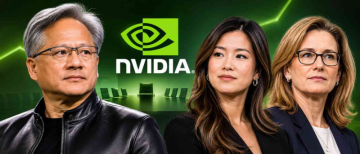
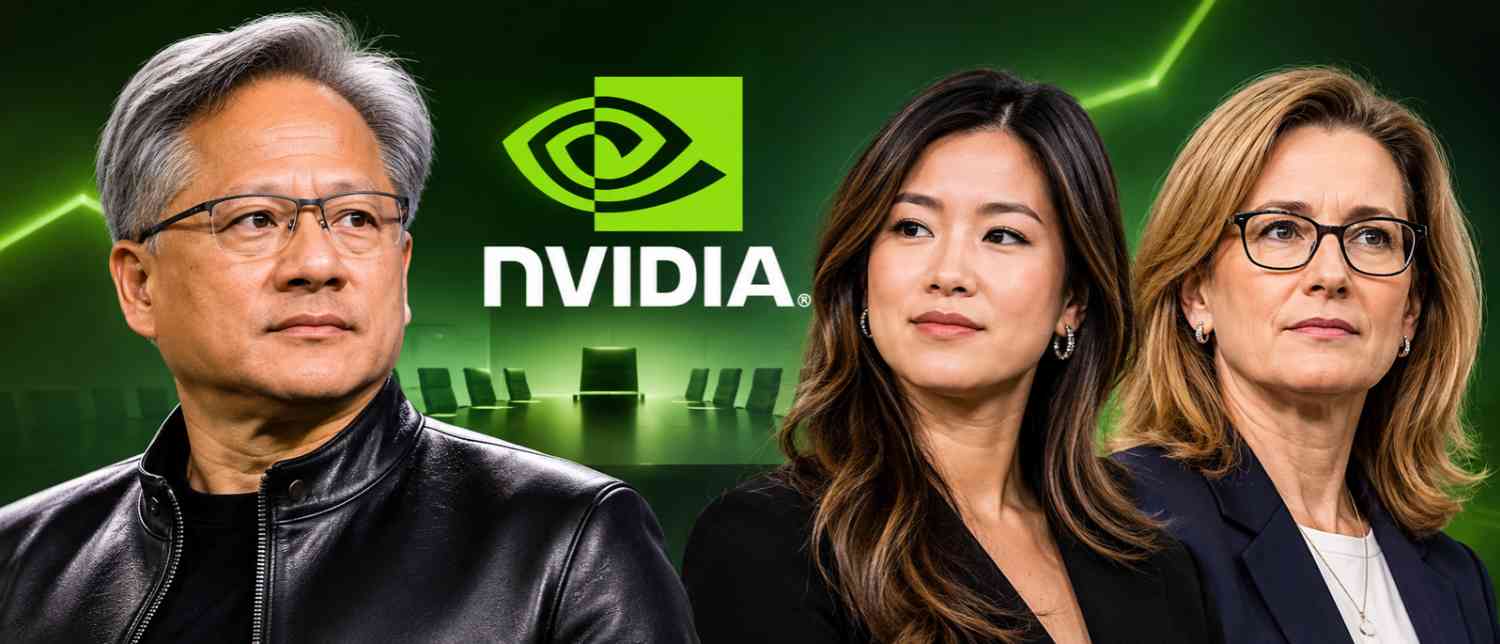
At the centre of the unfolding Nvidia power struggle are three influential figures: former CEO Jensen Huang, his daughter Madison Huang, and longtime finance chief Colette Kress, who has stepped in as interim CEO. Their competing positions raise an important question: who will shape Nvidia's future now that the person who built the company is no longer running it?
The controversy also brings renewed attention to the influence of the Huang family, questions surrounding corporate governance, disagreements over multibillion-dollar AI investments, and growing concerns about the international movement of advanced AI chips.
What initially appeared to be a leadership transition has developed into a much wider corporate, financial and geopolitical crisis. And with Nvidia playing such a central role in the global AI industry, the consequences could extend well beyond Silicon Valley.
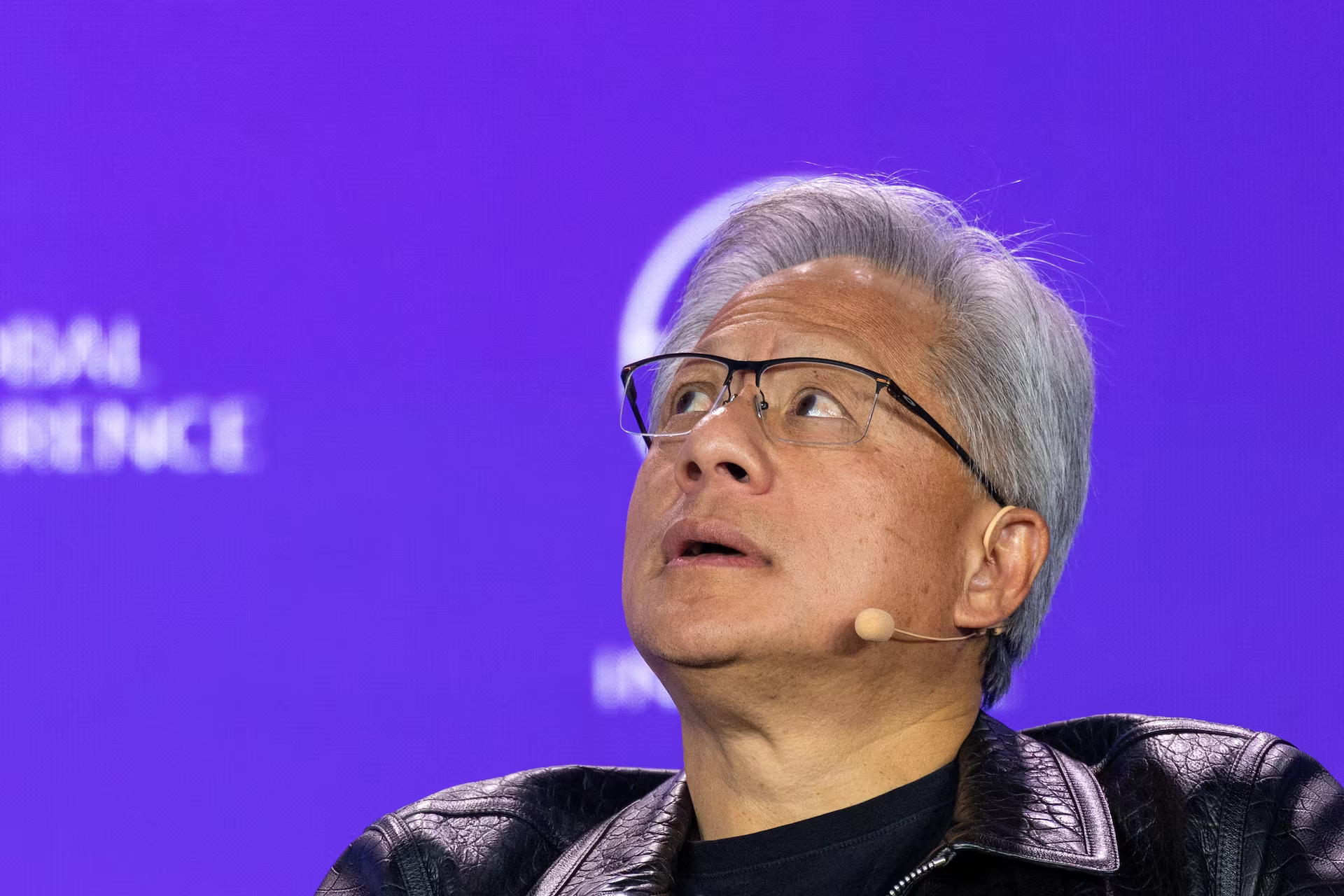
Jensen Huang's Exit Changes Nvidia's Power Structure
Jensen Huang's departure marks an extraordinary turning point for Nvidia. Having co-founded the company in 1993, he spent more than three decades transforming it from a graphics processing unit manufacturer into one of the most influential businesses in artificial intelligence.
Under his leadership, Nvidia's GPUs became essential components of modern AI infrastructure, powering everything from generative AI applications and advanced research to hyperscale data centres.
However, on November 12, 2026, Nvidia announced that Huang had resigned as president, CEO and a member of its board of directors. The company's announcement followed reports concerning his personal relationships and questions about possible national-security implications involving a Singapore-based businesswoman connected to a cloud-computing company.
The developments prompted an independent board investigation and intensified scrutiny of Nvidia's corporate governance.
Colette Kress, who had served as Nvidia's chief financial officer since 2013, was appointed interim CEO. Harvey C. Jones was appointed the company's first-ever independent board chair.
For Nvidia, this was more than replacing a chief executive. It meant separating the company's institutional leadership from a founder whose personal authority had influenced almost every major strategic decision.
Huang's departure also created uncertainty about how much influence he and his family would retain over the company.
Although he was no longer CEO or a board member, his substantial shareholding continued to give him certain shareholder rights. His ownership of approximately 3.5% of Nvidia also makes him eligible, under the company's shareholder nomination rules, to nominate up to two directors for inclusion in proxy materials, subject to applicable requirements and shareholder voting.
This distinction is important: leaving the executive office does not automatically eliminate a founder's financial influence or connections within a business.
Madison Huang: The Family Influence Question
One of the most closely watched aspects of Nvidia's leadership transition is the position of Jensen Huang's daughter, Madison Huang.
Madison joined Nvidia in 2020 as an intern and subsequently rose to become a senior director of product marketing, with responsibilities connected to physical AI. However, reports suggest that her influence within the organisation extended beyond her formal job description.
She was reportedly involved in executive discussions, board briefings, communications strategy and decisions concerning her father's public image.
Some employees allegedly regarded her as a de facto chief of staff because of her access to Jensen Huang and her involvement in matters affecting senior management.
Such influence became a source of concern among sections of Nvidia's workforce. Reports described disagreements between Madison and senior executives, with some employees reportedly raising concerns about her management style.
The situation also raises broader questions about the boundaries between family relationships and professional authority in large corporations.
A founder's relatives can certainly hold important positions in a company, particularly when they possess the necessary experience and expertise. However, their influence becomes more complicated when employees believe that access to the founder gives them authority beyond their official responsibilities.
Madison's position is particularly significant because her father is no longer CEO. Without Jensen Huang occupying the executive office, her ability to influence decisions through direct access to him could change.
Nevertheless, Nvidia has not announced that Madison will lose her position or that her responsibilities will be reduced.
The question is therefore not simply whether Madison will remain at Nvidia. It is whether the company will establish clearer boundaries between executive authority, family influence and formal reporting structures.
Colette Kress vs Madison Huang: The Growing Leadership Tension
Colette Kress now faces the difficult task of establishing her authority while managing a company accustomed to Jensen Huang's highly centralised leadership.
The reported tensions between Kress and Madison Huang have attracted particular attention because they represent two very different approaches to corporate decision-making.
Kress is a finance professional known for her focus on financial discipline, risk assessment and capital allocation. Madison, meanwhile, reportedly enjoyed considerable influence over strategic communications, executive discussions and initiatives connected to the founder's priorities.
Their disagreements were reportedly not limited to internal management issues.
According to accounts of the tensions, the two differed over certain business decisions, including investments involving a robotics company and commercial arrangements connected to Madison's husband, Nico Caprez.
Caprez joined Nvidia in 2024 and was promoted to vice-president in January 2026. His responsibilities included relationships with cloud-computing providers and international AI infrastructure opportunities.
These developments have intensified questions about the influence of Jensen Huang's family within Nvidia and whether that influence could continue under a different CEO.
For Kress, the challenge is particularly delicate. She must establish clear decision-making authority without creating unnecessary disruption among senior executives or undermining the relationships that have helped Nvidia expand.
Her leadership will also be judged by whether she can maintain the company's competitive momentum while addressing concerns about governance and internal accountability.

Why Colette Kress Challenged Jensen Huang's AI Investment Strategy
The reported disagreement between Kress and Huang was not simply about management styles. It also reflected a fundamental difference in how the company should approach financial risk.
Jensen Huang built Nvidia's success partly through an aggressive willingness to invest in the infrastructure supporting the AI revolution. His strategy involved strengthening relationships with AI developers, cloud providers and companies building large-scale data centres.
However, some of these arrangements raised concerns about financial exposure and the possibility of an increasingly circular AI economy.
This is where Kress reportedly played an important role.
As CFO, she and her finance team questioned certain large financing commitments involving AI infrastructure companies and customers, including arrangements connected to OpenAI and Lambda.
One particularly ambitious proposal reportedly involved up to $250 billion in credit support for an OpenAI data-centre project in Ohio. The proposal was subsequently reduced to approximately $120 billion.
Kress reportedly pushed for closer examination of the financial risks, expected returns and long-term implications of such commitments.
The disagreement highlights a significant challenge facing Nvidia.
On one side is the argument that aggressive investment is necessary to secure the company's leadership in an industry expanding at extraordinary speed. On the other is the concern that financing customers and infrastructure partners too extensively could expose Nvidia to risks if AI spending slows or expected returns fail to materialise.
Kress's approach favours greater financial scrutiny. Huang's approach placed greater emphasis on accelerating the AI ecosystem and securing Nvidia's position within it.
Neither strategy is without risks.
If Nvidia becomes too conservative, competitors could gain opportunities to strengthen their positions. However, excessive financial commitments could create vulnerabilities if the AI investment boom loses momentum.
Kress must now find a balance between these competing priorities.
Nico Caprez and the Questions Surrounding Nvidia's Family Connections
Madison Huang is not the only member of Jensen Huang's family whose position has attracted attention.
Her husband, Nico Caprez, has also become an influential figure within Nvidia. His responsibilities reportedly involve cloud-computing relationships and international business opportunities, particularly across Asia.
His rapid rise through the organisation, combined with Madison's access to senior leadership, has reportedly created unease among some employees.
Concerns have also emerged about potential conflicts of interest involving business relationships and family connections.
The issue became more prominent following scrutiny of Nvidia's relationship with Megaspeed, a Singapore-based cloud-computing company connected to Alice Huang.
Reports suggested that Madison played a significant role in shaping Nvidia's public response to questions surrounding the relationship.
However, these developments need to be understood carefully. Reports of internal disagreements and governance concerns do not, by themselves, establish wrongdoing by Madison or Caprez.
Nvidia has not publicly announced any changes to their positions following Jensen Huang's departure.
Nevertheless, the situation places additional pressure on Kress to establish transparent decision-making procedures and ensure that important commercial decisions are evaluated through appropriate corporate channels.
The Nvidia Scandal Goes Beyond Corporate Politics
While the internal leadership battle has attracted considerable attention, the wider controversy involves an issue with much greater geopolitical significance: the movement of advanced AI chips across international markets.
The controversy surrounding Megaspeed has raised questions about whether advanced American technology could have been diverted through intermediaries to destinations subject to US export restrictions.
Singaporean authorities began investigating Megaspeed-related transactions in February 2025, focusing on suspected inaccurate declarations involving server purchases.
American export-control officials also conducted verification activity in June 2025.
However, it is important to distinguish between an export-control investigation and an espionage investigation. Singapore's government stated that Alice Huang was not investigated for espionage. Its investigation into suspected inaccurate declarations did not establish sufficient evidence to prove the suspected offences, although authorities issued her a stern warning over inaccurate information provided to police.
Investigations involving Megaspeed and other individuals have continued.
The distinction matters because allegations concerning chip diversion, corporate leadership conduct and possible intelligence connections are separate issues. Evidence relating to one does not automatically establish the others.
For Nvidia, however, the controversy has created a serious reputational and regulatory challenge.
Advanced AI chips are no longer simply commercial products. They are strategic assets with implications for national security, military capabilities and international technological competition.
Consequently, Nvidia's relationships with overseas customers and cloud infrastructure providers are attracting increasing scrutiny from policymakers.

Washington's Divided Approach to Nvidia and China
The controversy also exposes competing priorities within the US government.
Washington wants to preserve America's technological advantage over China by restricting access to the most advanced semiconductor technologies. At the same time, American technology companies argue that maintaining commercial influence in international markets can help prevent competitors from building independent alternatives.
Jensen Huang had repeatedly defended the importance of allowing American semiconductor companies to compete globally.
His argument was that excluding China entirely from advanced American technology could accelerate the development of domestic Chinese alternatives, potentially weakening America's long-term influence over the global AI ecosystem.
However, national-security officials and lawmakers have raised concerns about the possibility that advanced chips could reach restricted end users through complicated international supply chains.
The Megaspeed controversy has brought these disagreements into sharper focus.
US officials have reportedly disagreed over how aggressively to restrict companies suspected of creating risks involving advanced semiconductor technology. Congressional scrutiny has also intensified, with lawmakers seeking greater clarity about Nvidia's export-control practices and relationships with overseas intermediaries.
This creates another challenge for Nvidia's next leadership team.
The company must protect its international business opportunities while complying with increasingly complicated export regulations.
A more cautious approach under Kress could improve Nvidia's relationship with regulators, but excessive restrictions could also affect its global competitiveness.
Jensen Huang Still Has a Path to Influence Nvidia's Boardroom
Although Jensen Huang has left Nvidia's executive leadership, his relationship with the company is far from over.
His substantial shareholding gives him certain rights under Nvidia's corporate governance framework. In particular, shareholders meeting the relevant ownership and holding-period requirements can nominate directors for inclusion in the company's proxy materials.
Huang's approximately 3.5% ownership makes him eligible to nominate up to two candidates, subject to the company's rules and the required shareholder voting process.
However, this does not mean he can independently appoint directors or control the board.
Huang also publicly indicated that he would be willing to return as CEO if the board concluded that doing so would benefit shareholders, employees and the company.
That possibility, however, appears to have been firmly rejected.
Board chair Harvey C. Jones stated during Nvidia's November 17 earnings call that the board did not intend to reinstate Huang as CEO. The board had unanimously accepted his resignation.
This is an important development because it demonstrates that Nvidia's directors intend to exercise their authority independently of the former CEO's personal wishes.
Huang may retain shareholder influence, industry relationships and considerable public support, but these factors do not give him the power to reverse the board's decision.
What Nvidia's Leadership Crisis Means for Investors and the AI Industry
The Nvidia power struggle comes at a particularly sensitive time for the global technology industry.
Nvidia remains central to the development of AI infrastructure, and investors are closely watching whether its leadership transition will affect its ability to deliver products, maintain customer relationships and sustain growth.
The company's November 17 earnings call provided an early test of Kress's leadership.
She sought to reassure investors that Nvidia's operations, management and supplier relationships remained strong, emphasising disciplined capital allocation and continuity in business operations.
The company also delivered financial guidance that helped support investor confidence, with shares rising in extended trading following the results.
Nevertheless, several important questions remain unanswered.
Can Kress preserve the aggressive innovation culture that helped Nvidia become an AI powerhouse? Will the company reduce its exposure to large financing arrangements? How will it address concerns about family influence and internal governance? And will tighter export controls change its international business strategy?
For investors, these questions are particularly important because Nvidia's valuation reflects expectations of continued growth in AI infrastructure spending.
Any disruption to its leadership, investment strategy or international supply chain could influence market confidence.
For the broader AI industry, the stakes are even higher. Nvidia's products and partnerships are deeply embedded in the infrastructure supporting modern artificial intelligence. Changes in its strategy could affect chip availability, data-centre development, cloud-computing investments and the competitive balance between American and Chinese technology companies.
Nvidia's Next Chapter Will Be About More Than Replacing Jensen Huang
Nvidia is entering a defining period in its corporate history.
Jensen Huang's departure has created an opportunity for the company to reconsider how authority is distributed, how major investments are evaluated and how closely family relationships should intersect with corporate decision-making.
Colette Kress now has to demonstrate that she can lead one of the world's most important technology companies without sacrificing the ambition that made it successful.
Madison Huang's future influence remains uncertain, while Jensen Huang's shareholding and long-standing relationships mean that his departure does not erase his connection to the company.
At the same time, the controversy surrounding advanced AI chip exports has placed Nvidia at the centre of a much larger debate about technology, national security and America's competition with China.
Ultimately, the biggest question is not simply who controls Nvidia's boardroom or who has the strongest relationship with its former CEO.
It is whether Nvidia can build a governance structure that supports accountability, financial discipline and technological ambition at the same time.
The company has spent decades helping shape the future of artificial intelligence. Its next challenge will be proving that its success can continue even when the person who built it is no longer in charge.
© Copyright 2026. All Rights Reserved. Powered by Vygr Media.