 By

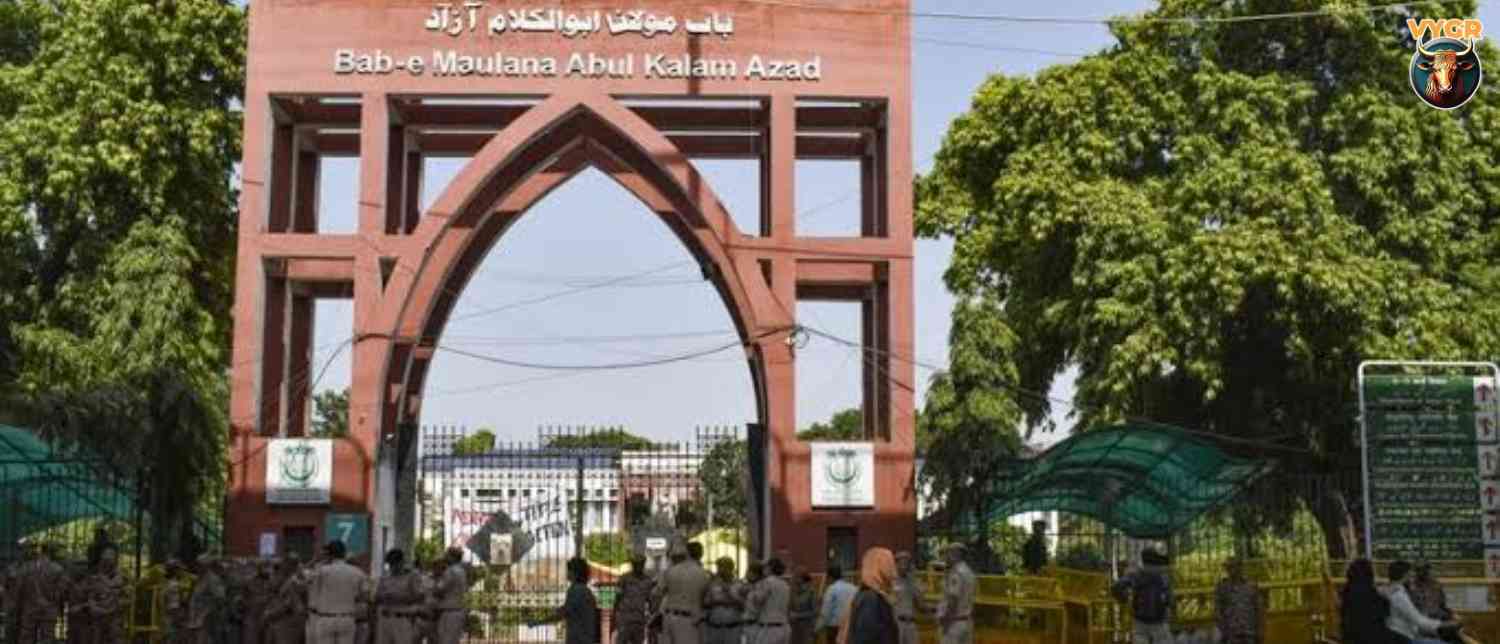
On Thursday, November 5, thousands of students at Aligarh Muslim University will walk into their faculties and cast ballots for a student union for the first time in nearly eight years. Some will not remember the last time it happened. They were in school when the last election took place in 2018. Their campus has been shaped, for most of their time at AMU, by the absence of an elected body to speak for them.
Across Delhi, at Jamia Millia Islamia, students have won a written commitment that is, in some ways, even more striking. The university’s elected union was dissolved in 2006. Almost twenty years on, Jamia has put dates in writing for the constitution and the polls that would bring it back.
Together, the two campuses tell a story about how student democracy in India disappears, how it comes back and why it keeps being fought over.
The Aligarh Election at a Glance
| Item | Details |
|---|---|
| Polling day | Thursday, November 5, 2026 |
| Hours | 9 am to 5 pm, with a lunch break from 1 pm to 2 pm |
| Venue | Respective faculties |
| Counting | Scheduled to begin at 7 pm the same day; the counting venue was to be notified |
| Chief Election Officer | Professor Javaid Talib of the Department of Law |
| Women’s College | Separate undergraduate union election, with Professor Nazia Hasan as Chief Election Officer |
| Voter lists | Displayed across faculties from October 26 |
| Nominations | October 29, with scrutiny and withdrawal on October 30 and the final list on October 31 |
| Presidential candidates’ speeches | November 3, from the Union Hall terrace |
How AMU’s Union Lost Its Voice
The Aligarh Muslim University Students’ Union, universally known as AMUSU, is one of the oldest student bodies in the country. It dates from the university’s early days as the Muhammadan Anglo-Oriental College and was set up on the model of the Cambridge Union Society, with an elected cabinet, a debating tradition and a Union Hall that has hosted speeches by public figures for generations.
Elections were held regularly in the early twenty-first century. They took place in 2007 and 2011, among others, and the last one was held in November 2018 for the 2018-19 session. After that, polling stopped. By 2024, a public interest petition before the Allahabad High Court noted that no elections had been held for six years, even though the Lyngdoh Committee guidelines call for annual student elections.
The university had at times given assurances. It indicated that polls would be held in December 2025, but that date passed. A campus strike in January 2026 led to another promise, again without an election.
The Hunger Strike That Changed the Calendar
The turning point came on September 21, 2026. Yasir Fahad, a first-year MA Urdu student, began an indefinite hunger strike at Duck Point, a historic spot on campus associated with Sir Syed Ahmad Khan’s last message. His single demand was the restoration of AMUSU. Students blocked the campus gates, boycotted classes and held protests. They also pressed for the withdrawal of disciplinary action against Fahad and the removal of the university’s then proctor.
For 19 days, the protest grew. Direct talks between the students and the administration picked up only in the final days. On October 9, the registrar issued two notifications naming the election officers, and the schedule for a November 5 poll was announced. The university also appointed a new proctor, Professor Mohd Nafees Ahmad Ansari, for two years. The strike ended, with a written election schedule in the students’ hands.
Jamia’s Longer Wait
At Jamia, the silence has lasted longer. The last student union election was held in 2005, and the elected body was dissolved on March 31, 2006, after a series of violent confrontations on campus. For nearly two decades the university functioned without an elected students’ union.
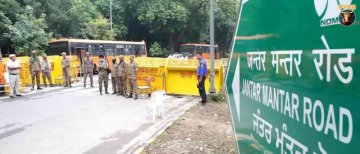
Inspired in part by the events in Aligarh, Jamia students began an indefinite hunger strike on October 12, with demands for the restoration of the Jamia Millia Islamia Students’ Union, a fixed election schedule and an end to disciplinary action against protesters. The 18-day agitation saw detentions of some demonstrators, disciplinary notices, a heavy police presence and classes shifted online. An October 26 order, which students found insufficient because it set no deadline for approval of the union’s constitution, was followed by three days of negotiations.
On October 29, Jamia’s Foundation Day, the university issued a fresh order. It committed to approve and implement the union’s constitution by May 15, 2027, to hold elections within six weeks of the start of the 2027 academic session under the Lyngdoh guidelines and to revoke all disciplinary actions related to the protest. More than 1,000 students marched on the main road to celebrate.
What Are the Lyngdoh Guidelines?
Both universities have bound themselves to the Lyngdoh Committee recommendations, which come up repeatedly in this story. The committee was set up after the Supreme Court took up the issue of campus elections, and in a September 2006 judgment in University of Kerala v. Council of Principals of Colleges, the Court directed institutions to follow its recommendations.
The guidelines are meant to keep campus elections clean and orderly. They typically set limits on candidates’ age and on election spending, require minimum attendance and a clean academic record, bar candidates with criminal cases and restrict campaign methods. The idea is to keep elections free of money and muscle power while preserving the right of students to elect representatives. That framework is also why students at both campuses cite Lyngdoh as a legal basis for their demands: it requires elections, and it also regulates them.
Why Do Students Say It Matters?
On both campuses, students make the same basic argument. Without an elected union, there is no formal channel for the everyday concerns that shape student life: academics, hostel conditions, food quality, hygiene and fees. Students also argue that an elected body can hold administrators to account in ways that individual complaints cannot, and that campus politics is a school for democratic citizenship, where students learn to organise, negotiate and accept defeat.
For these two universities in particular, there is a heritage argument. AMU and Jamia were founded to build leaders, and both played significant roles in India’s freedom movement. Students say that to deny them elections contradicts their founding purpose.
What Do Sceptics Worry About?
Concerns on the other side are real and have a history.
- Violence and disorder. Jamia’s union was dissolved after violent confrontations, and campus elections elsewhere have seen clashes and intimidation.
- Party politics on campus. Some administrators and teachers fear that national political parties use student wings to fight proxy battles, which can distract from studies.
- Academic disruption. Frequent protests and election seasons can affect classes and exams.
Supporters of elections answer that banning them does not remove politics; it only pushes it out of sight, and that clear rules, independent election officers and strict enforcement can manage the risks. The Lyngdoh framework is designed to do exactly that.
A Wider Pattern Across India
The two universities are not isolated cases. Students at Banaras Hindu University have not seen a union election for almost three decades, Allahabad University’s last polls were in 2018, and students at Maulana Azad National Urdu University have joined the demand for elected bodies. After AMU announced its date, students at Lucknow and Gorakhpur universities raised similar calls. A Karnataka cabinet decision on the subject has added to the discussion. Student groups elsewhere are now watching to see whether Aligarh and Jamia can hold orderly elections.
What Happens Next?
-
At AMU: Polling takes place on November 5 and counting begins that evening. The new office-bearers will take over a union building that has been closed for years. Students will also watch whether the administration honours other assurances made during negotiations, including those concerning disciplinary action.
- At Jamia: The constitution must be approved by May 15, 2027, election officials must be appointed and polls notified, with voting due within six weeks of the 2027 session. Students say they will watch each deadline.
- Beyond these campuses: The outcomes will likely be cited by students elsewhere as evidence for or against restoring unions.
The Larger Point
A hunger strike by one student in Aligarh and another by a handful of students at Jamia have, in the space of five weeks, put campus democracy back on the agenda of two of India’s most historic universities. What they have won is not an outcome but a process: the right to vote, and to be held to the rules that govern voting. How well the two campuses use it will decide whether the revival becomes a model or a cautionary tale.
© Copyright 2026. All Rights Reserved. Powered by Vygr Media.