 By

Amaravati, November 3: Severe cyclonic storm Murasu made landfall along the south Andhra Pradesh coast early Tuesday, unleashing powerful winds reaching 120 kmph, torrential rainfall and widespread flooding. The cyclone has claimed at least two lives, damaged thousands of hectares of agricultural land, uprooted trees and disrupted transport services across several districts. With electricity infrastructure and hundreds of homes also affected, authorities have intensified rescue, relief and restoration operations as the state grapples with the aftermath of the powerful storm.
The cyclone crossed the coastline near Ongole in Prakasam district between 3:30 am and 5:30 am on November 3, according to the India Meteorological Department (IMD). The landfall process began during the early hours, bringing intense rainfall and destructive gusts across coastal areas. Although the weather system has started weakening after crossing the coast, officials have warned that heavy rainfall, strong winds and waterlogging continue to pose significant risks.
The situation has placed several parts of Andhra Pradesh on high alert, with emergency teams working to restore essential services and ensure the safety of residents.
Cyclone Murasu Landfall: 120 kmph Winds Batter Andhra Pradesh Coast
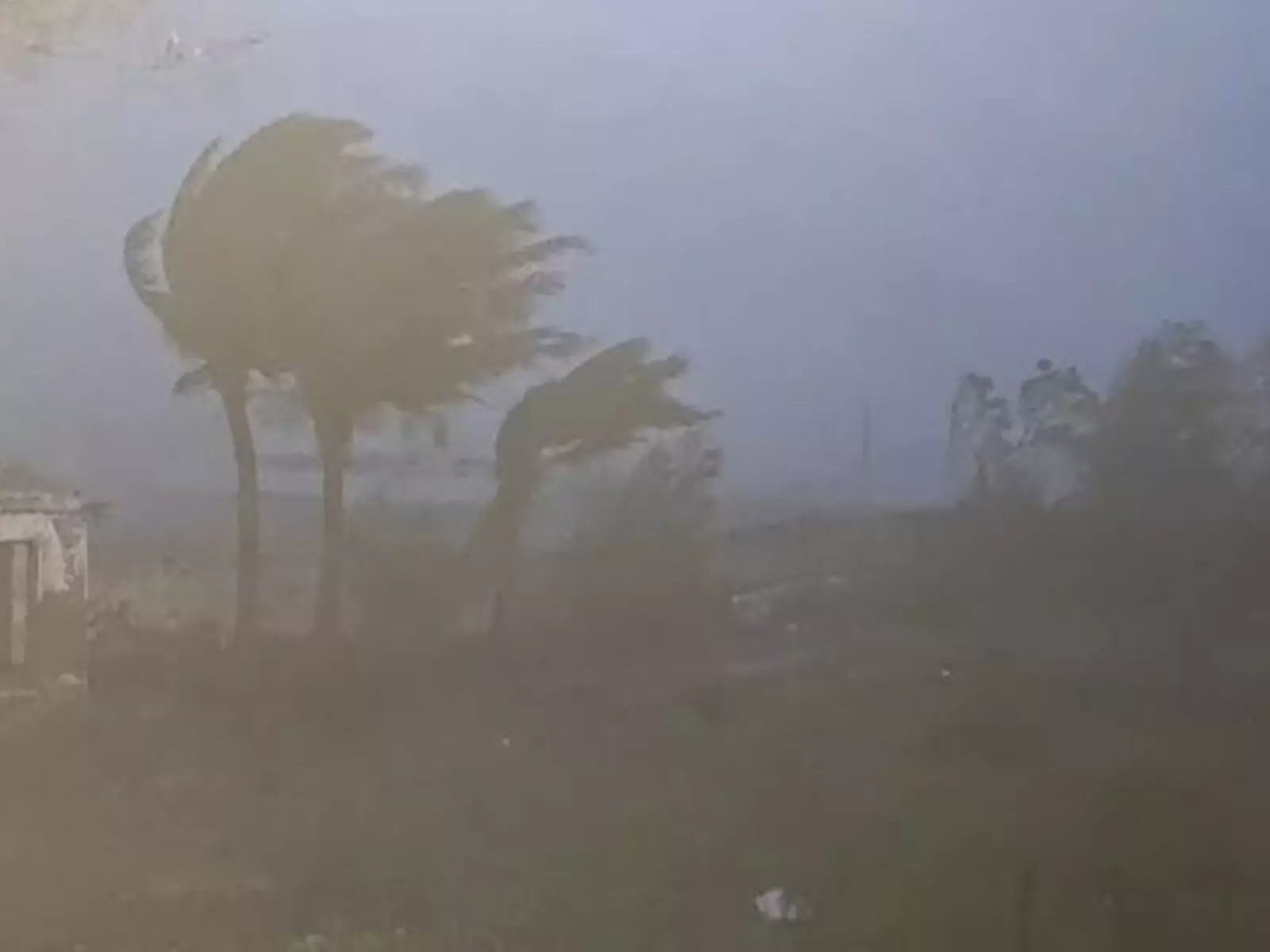
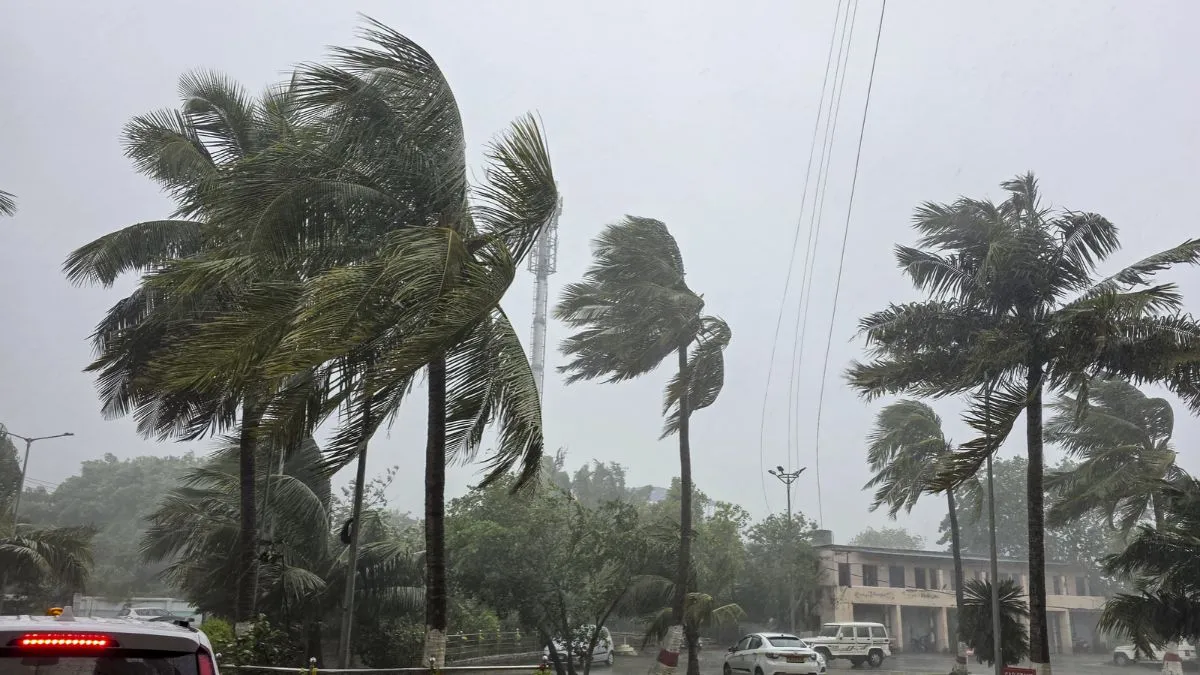
Cyclone Murasu crossed the south Andhra Pradesh coastline between Nellore and Narasapur, close to Ongole, during the early hours of Tuesday. The IMD recorded sustained wind speeds of 100–110 kmph, with gusts reaching up to 120 kmph.
The storm developed over the west-central Bay of Bengal before moving north-northwestwards towards the Andhra Pradesh coast. As it approached land, extremely strong winds and heavy rainfall battered coastal settlements, particularly around Ongole and Kothapatnam.
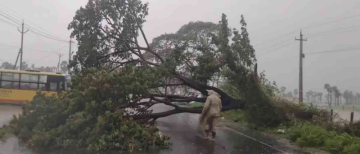
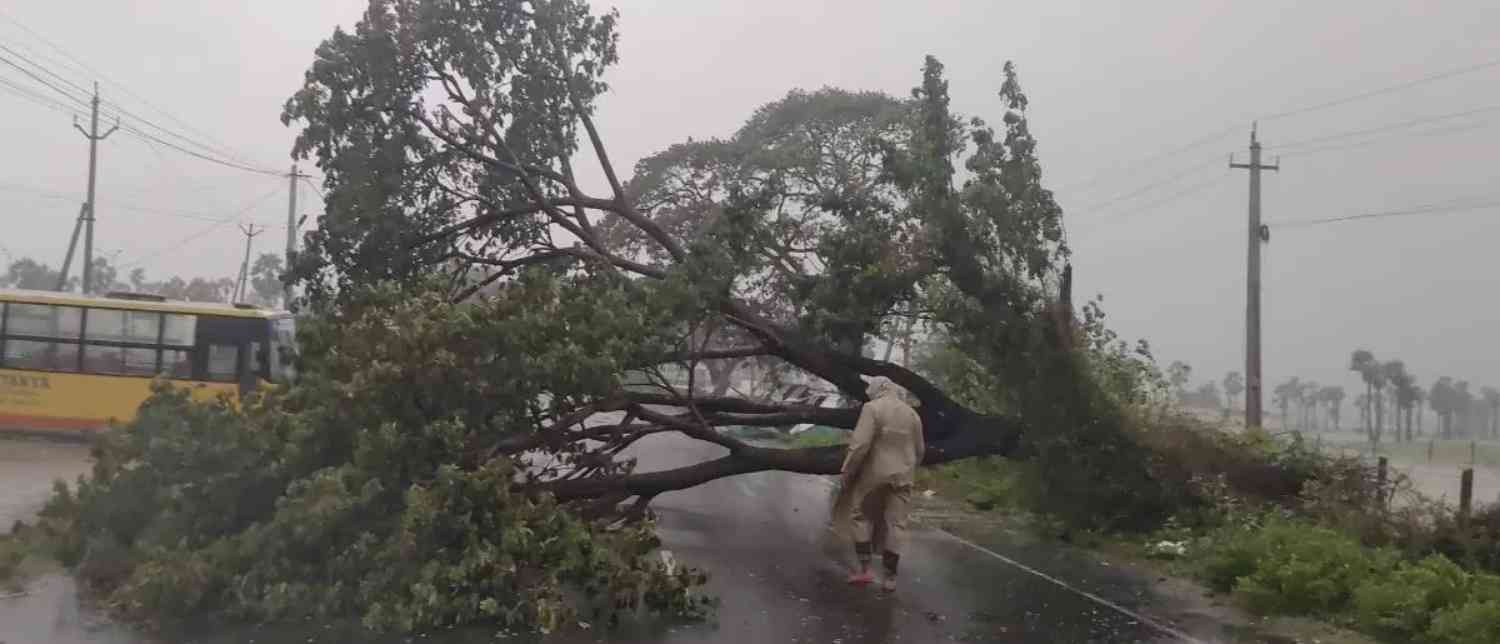
The cyclone's impact was visible across several locations, where uprooted trees, damaged structures and rough sea conditions disrupted normal life. Fishing boats were also damaged, while vulnerable coastal settlements faced the threat of flooding and inundation.
Weather officials indicated that Murasu would gradually weaken into a cyclonic storm and subsequently a deep depression by midnight on November 3. However, the weakening system was expected to continue producing heavy rainfall and gusty winds across parts of the state.
Two Dead, Over 50,000 Hectares of Crops Affected
The human and economic cost of Cyclone Murasu has become increasingly evident as preliminary damage assessments emerge.
At least two people have died in cyclone-related incidents, while hundreds of households have suffered damage. According to state disaster management officials, approximately 312 houses were affected by the storm.
Agriculture has emerged as one of the worst-hit sectors. Preliminary assessments indicated that standing crops across 52,459 hectares had been affected, with losses estimated at approximately Rs 344 crore.
The cyclone's impact extended across 15 districts, affecting 132 mandals. Krishna, Bapatla and Nandyal were among the worst-affected areas, with paddy, cotton and maize crops bearing the brunt of the heavy rainfall and strong winds.
Earlier field assessments had also reported substantial agricultural damage, highlighting the scale of destruction across the region. For thousands of farmers, the storm has brought fresh uncertainty at a time when damage to standing crops can translate directly into lost income and mounting financial pressure.
In addition to agricultural losses, several fishing boats were wrecked in Prakasam district, further affecting coastal communities dependent on fishing for their livelihoods.
Power Infrastructure Severely Damaged, Thousands of Trees Uprooted
Cyclone Murasu has also caused extensive damage to Andhra Pradesh's electricity infrastructure.
Strong winds and heavy rainfall brought down thousands of trees and damaged approximately 2,750 electricity poles. Transmission lines, substations and essential power distribution equipment were also affected, with Prakasam and Bapatla reporting significant damage.
The disruption has complicated restoration efforts, particularly in areas where fallen trees and waterlogging have obstructed access to damaged infrastructure.
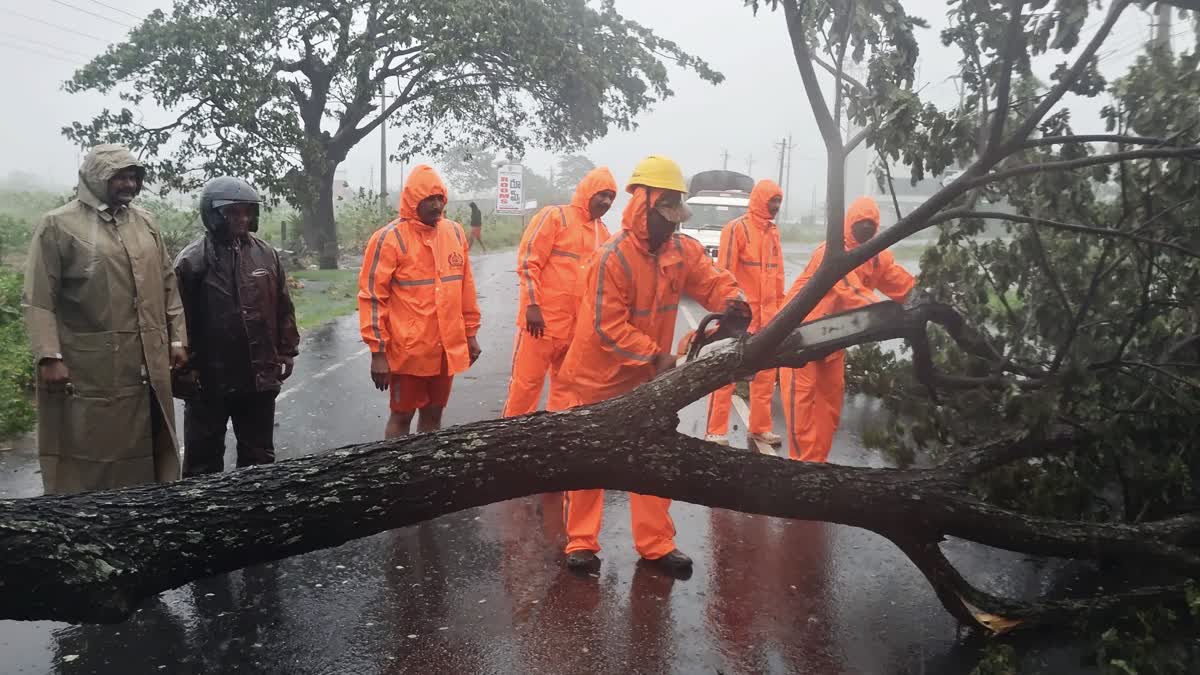
Authorities have deployed emergency teams to remove uprooted trees, clear roads and drain accumulated rainwater. More than 185 teams have been engaged in these operations, while additional resources have been arranged to support electricity restoration.
The widespread infrastructure damage has made it necessary for multiple government departments to coordinate their response, with priority being given to restoring essential services and ensuring that affected communities receive immediate assistance.
Train, Flight and Road Services Hit by Cyclone Murasu
Transport services across Andhra Pradesh have faced considerable disruption as heavy rain, strong winds and poor visibility affected road and rail connectivity.
More than 35 trains were cancelled, 14 diverted and eight rescheduled as a precautionary measure. Several flights were also cancelled, leaving passengers facing uncertainty over their travel plans.
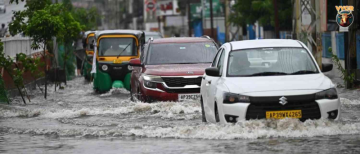
On national highways, waterlogged roads and reduced visibility left vehicles stranded at multiple locations. Commuters experienced difficulties navigating flooded stretches, while fallen trees and debris further affected road movement.
The disruption has also extended to local religious and public infrastructure.
In Vijayawada, authorities closed the ghat road leading to the Sri Durga Malleswara Swamy Varla Devasthanam atop Indrakeeladri following the cyclone's impact. The decision was taken as a precautionary measure amid unfavourable weather conditions and concerns over public safety.
Temple officials said the road would remain closed until conditions were considered safe for movement. Devotees have been advised to follow official instructions, with the reopening decision dependent on a fresh safety assessment.
The closure highlights how Cyclone Murasu has affected not only essential transport networks but also everyday activities and access to important public places.
Red Alert Issued in Several Districts as Heavy Rainfall Continues
Even after Cyclone Murasu crossed the coast, the threat of extreme weather remained a major concern.
The IMD issued red alerts for Krishna, Guntur, Bapatla, Palnadu, Markapuram and Prakasam districts, warning of extremely heavy rainfall at isolated locations. Several neighbouring districts, including Nandyal, Nellore, Tirupati, Eluru, West Godavari and East Godavari, were also expected to experience heavy to very heavy rainfall.
Bapatla recorded the highest district-average rainfall of 40.02 mm between 8:30 am on November 2 and 5 am on November 3. Prakasam received 26.56 mm, followed by West Godavari at 23.36 mm, Krishna at 23.15 mm and Guntur at 19.09 mm.
Individual locations recorded significantly higher rainfall. Bapatla received around 22 cm, while Narasapur recorded 20 cm during the 24-hour reporting period ending at 8:30 am on November 3.
Meteorologists cautioned that the continued presence of strong winds and intense rain could lead to further damage. Flooded roads, overflowing water bodies, damaged power lines and weakened structures remain potential hazards.
Fishermen have also been advised to stay away from the sea until conditions improve, with rough sea conditions continuing to pose risks along the coastline.
171 Relief Camps Set Up, Thousands Shifted to Safety
The Andhra Pradesh government has stepped up its disaster response, deploying specialised rescue teams and establishing temporary shelters for affected residents.
A total of 171 relief camps have been established across the state, with thousands of people moved to safer locations. More than 12,000 people were reported to be staying in cyclone shelters, while emergency food distribution was underway. Around 14,810 food packets had been distributed to affected communities.
The National Disaster Response Force (NDRF) deployed 11 teams, while 13 State Disaster Response Force (SDRF) teams were involved in rescue and relief operations.
Special attention has been given to vulnerable groups. As a precaution, 3,066 pregnant women and 1,008 nursing mothers were shifted to hospitals and safer locations ahead of the cyclone.
The Health Department also deployed 725 medical teams across 13 districts and placed 362 ambulances on standby to handle medical emergencies.
Authorities have additionally arranged generators and emergency equipment to support restoration work in areas where electricity infrastructure has been damaged.
The state administration has continued coordinating with central agencies to accelerate rescue, relief and recovery efforts.
Odisha and Tamil Nadu Also Feel Cyclone Murasu's Effects
Although Andhra Pradesh bore the brunt of Cyclone Murasu, neighbouring states, including Odisha and Tamil Nadu, also experienced its wider weather impact.
The movement of the cyclonic system and associated rain-bearing clouds increased the possibility of heavy rainfall in adjoining regions. Weather authorities continued monitoring conditions along the eastern coastline, with warnings issued for areas potentially exposed to intense rainfall and strong winds.
The broader impact of the storm has reinforced concerns about weather-related disruptions across coastal states, particularly in regions vulnerable to flooding and extreme rainfall.
Cyclone Murasu Weakens, but Restoration Challenges Remain
With the severe cyclonic storm weakening after landfall, the immediate focus has shifted towards damage assessment, infrastructure restoration and rehabilitation of affected families.
The preliminary loss estimate of Rs 344 crore, extensive agricultural damage and disruption to electricity and transport networks underline the scale of the challenge facing the state administration.
For farmers who have lost standing crops, fishing communities dealing with damaged boats and families whose homes have been affected, recovery is likely to take longer than the passage of the storm itself.
Officials continue to monitor rainfall and wind conditions, while emergency personnel work to clear roads, restore electricity and provide assistance to displaced residents.
Although Cyclone Murasu is expected to weaken further, authorities have urged people not to assume that the danger has completely passed. Residents in vulnerable areas have been advised to remain indoors, avoid flooded roads, stay away from fallen power lines and follow official weather alerts.
As Andhra Pradesh begins its recovery, the priority remains clear: protecting lives, restoring essential services and ensuring that the communities worst affected by Cyclone Murasu receive timely assistance.
© Copyright 2026. All Rights Reserved. Powered by Vygr Media.