 By
By 
Muzaffarnagar, Uttar Pradesh: Around 100 murder cases pending before Additional District and Sessions Judge Ravi Kumar Diwakar in Muzaffarnagar have been transferred to the court of District and Sessions Judge Virendra Kumar Singh, following an unusually high number of death sentences handed down by Diwakar over the past four months.
The administrative move covers cases involving offences punishable with death or life imprisonment. It comes after Judge Diwakar’s fast-track court sentenced 22 people to death in 10 separate cases since April, drawing attention to the frequency with which capital punishment was being awarded.
The cases were transferred through an administrative order issued on Tuesday. The decision has sparked wider discussion around the pace of criminal trials, judicial discretion and the application of the “rarest of rare” standard governing the death penalty in India.
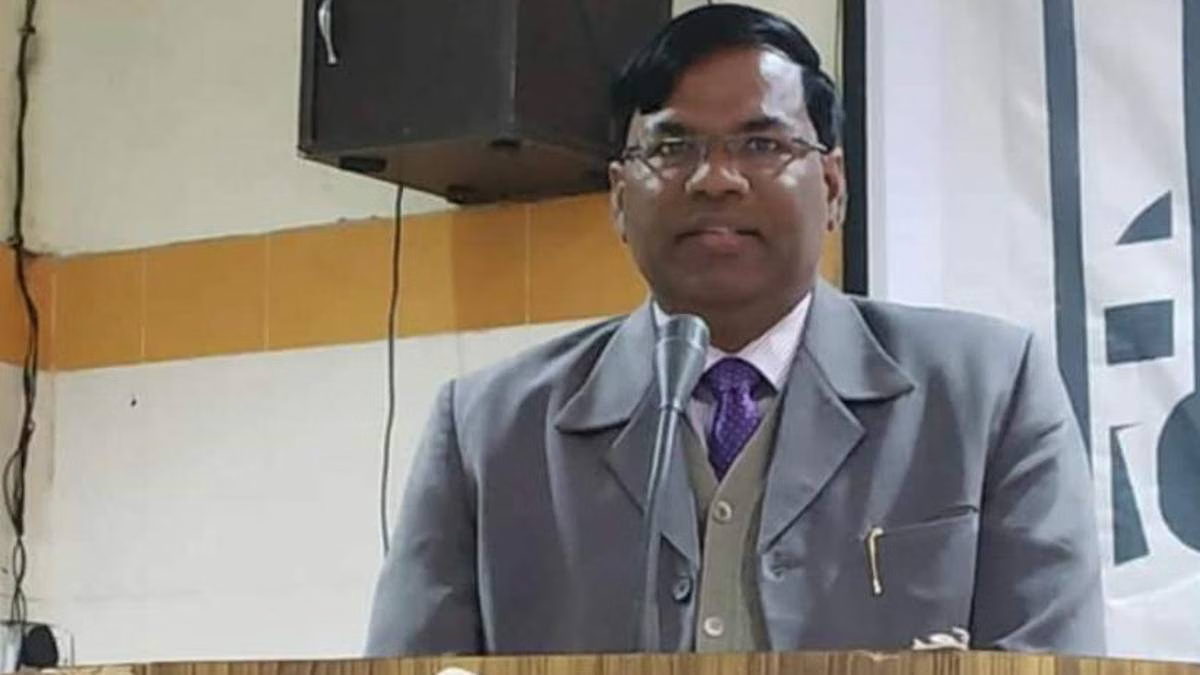
Why were 100 murder cases transferred?
The cases were moved from Judge Diwakar’s court to the court of District and Sessions Judge Virendra Kumar Singh. The transfer was not described as a reversal or review of any individual verdict. Rather, it was an administrative reassignment of pending cases.
According to Muzaffarnagar District Bar Association president Pramod Tyagi, lawyers and litigants had developed apprehensions about the possibility of capital punishment being awarded in cases before Diwakar’s court. Government counsel Kuldeep Kumar also confirmed the transfer of the cases.
The development is particularly significant because the matters shifted were not ordinary civil or criminal disputes. They involved murder and other serious offences carrying the possibility of either life imprisonment or the death penalty.
The transfer therefore places a large batch of sensitive criminal trials before the district judge, while cases already decided by Diwakar remain subject to the applicable legal process.
22 death sentences in 10 cases
Judge Ravi Kumar Diwakar’s recent record is at the centre of the controversy.
Between April and August 2026, his court handed down 22 death sentences across 10 murder cases. The verdicts involved a range of crimes, including murders linked to monetary disputes, old rivalries, robbery, ransom and attacks on people performing public duties.
The sequence began on April 6, when three people were sentenced to death for the kidnapping and murder of lawyer Mohammad Sameer. The prosecution case was that Sameer was abducted in October 2019 over a monetary dispute involving Rs 45 lakh and was subsequently killed. His body was later recovered from a forest area in Sikri village.
On April 28, a woman and her three sons were awarded the death penalty in another 2019 murder case.
The court continued to impose capital punishment in subsequent months. On May 30, a 50-year-old man was sentenced to death for the murder of a woman and her six-year-old son in a case dating back to 2011. The court considered the matter to fall within the “rarest of rare” category.
On June 20, two people were sentenced to death for the murder of Rajendra Saini, with the court again holding that the circumstances warranted the maximum punishment.
July saw a series of death sentences
The number of capital punishment verdicts increased further in July.
On July 2, Diwakar sentenced a man to death for killing home guard Ratiram while he was on duty. According to the prosecution case, Ratiram had intervened after the accused allegedly assaulted his mother. The accused then stabbed the home guard to death. The court classified the crime as falling within the “rarest of rare” category.
Four days later, on July 6, a former village head and his associate were sentenced to death for the 2010 murder of Rajbir Singh. The victim, aged 60, was allegedly killed amid hostility connected with panchayat elections.
On July 17, four men received death sentences for the murder of farmer Raj Singh during an attempted robbery in Shamli district. Raj Singh was travelling on a motorcycle with his friend Bijendra when they were intercepted. He was shot after resisting the robbery, while his companion was tied up and thrown into a sugarcane field.
The pace continued into August.
On August 12, Diwakar awarded the death penalty to Shahnawaz for the kidnapping and murder of wood trader Saleem in a case dating back to 1999. Saleem had allegedly been abducted for a ransom of Rs 5 lakh before being killed.
A day later, on August 13, four people were sentenced to death for the 2014 murder of Pawan Kumar in Shamli district. The court also imposed a total fine of Rs 1.70 lakh on the convicts.
These verdicts account for a substantial portion of the 22 death sentences delivered by the court during the four-month period.
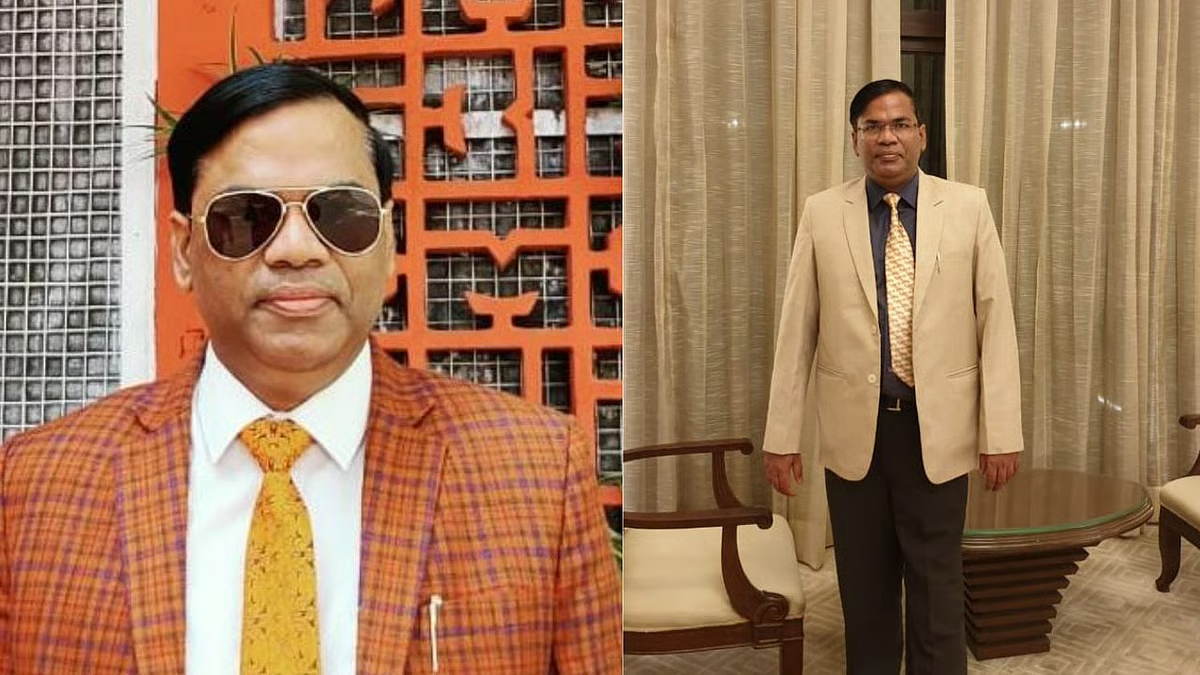
The numbers stand out
The frequency of the Muzaffarnagar court’s death sentences becomes clearer when compared with the broader picture in Uttar Pradesh.
Trial courts across Uttar Pradesh awarded 28 death sentences in 20 cases during the entire calendar year 2025, according to the Death Penalty in India: Annual Statistics Report 2025. By contrast, Diwakar’s court alone awarded 22 death sentences in just four months in 2026.
That comparison does not, by itself, establish whether individual sentences were legally justified. Each death penalty case has to be assessed on its own facts and evidence. However, the sharp concentration of capital punishment verdicts in a single court has inevitably drawn attention to the judicial approach being taken.
It has also brought the “rarest of rare” doctrine back into focus.
What does the “rarest of rare” doctrine mean?
Indian courts have repeatedly held that the death penalty is an exceptional punishment and should be imposed only in the most extraordinary cases. A sessions court can award a death sentence, but the punishment cannot be carried out automatically.
Under Indian law, a death sentence passed by a sessions court must be submitted to the concerned High Court for confirmation. This means the sentences handed down by Diwakar’s court are not immediately enforceable.
The High Court can examine the evidence, legal reasoning and circumstances of each case before deciding whether the death sentence should be confirmed, altered or otherwise dealt with according to law.
This distinction is important because the administrative transfer of pending murder cases does not mean that the 22 death sentences have been finally upheld. Those cases continue through the judicial process applicable to capital punishment.
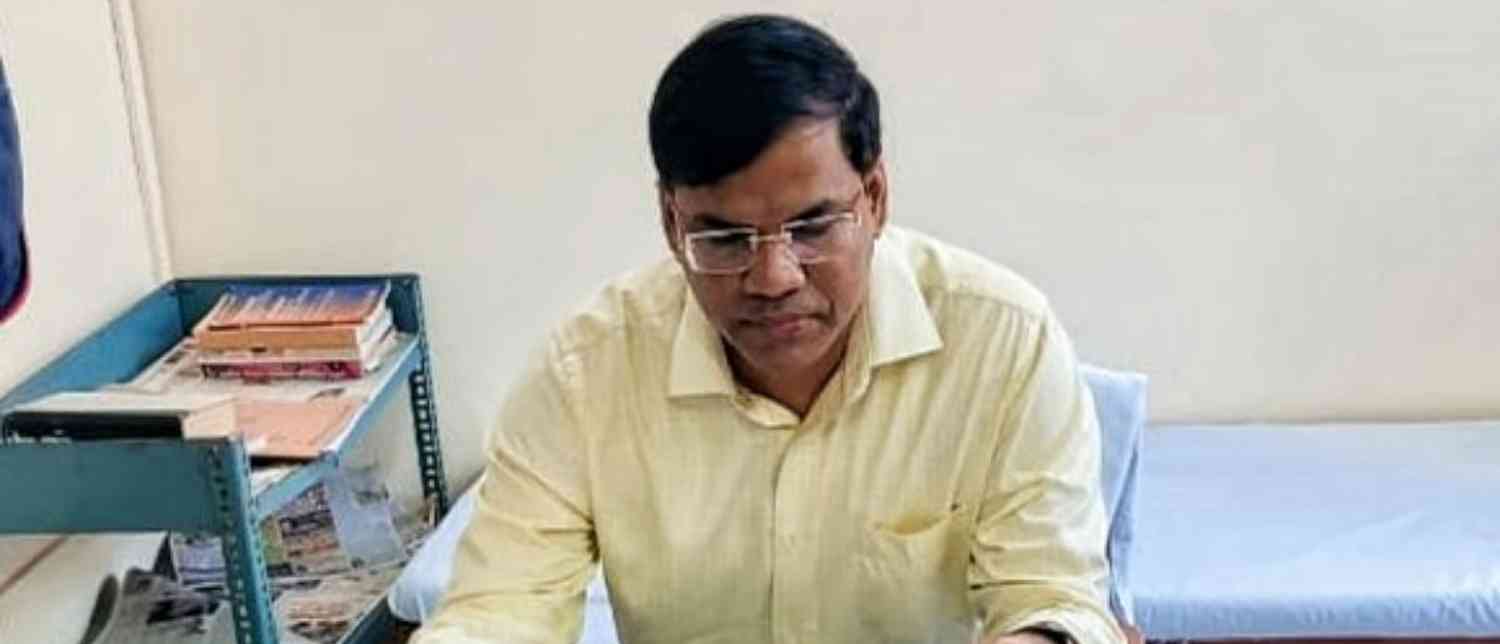
Who is Judge Ravi Kumar Diwakar?
Ravi Kumar Diwakar, born in July 1980, has been serving as an Additional District and Sessions Judge in Muzaffarnagar since November 2025. He entered the judiciary in 2009 and has served in several districts of Uttar Pradesh, including Azamgarh, Sultanpur, Budaun, Varanasi and Bareilly. He holds BCom and LLM degrees.
His name had already attracted national attention before the recent death penalty verdicts.
In 2022, while serving as a civil judge in Varanasi, Diwakar ordered a videographic survey of the Gyanvapi mosque complex. Following the order, he reported receiving death threats and malicious calls from international numbers.
He was again in the spotlight in 2024 after making remarks referring to Uttar Pradesh Chief Minister Yogi Adityanath as an example of Plato’s “philosopher king” in an order concerning the 2010 Bareilly riots. The Allahabad High Court subsequently expunged those remarks.
What happens to the transferred cases?
The immediate consequence of the administrative order is that roughly 100 pending murder cases will now be handled by District and Sessions Judge Virendra Kumar Singh instead of Diwakar’s fast-track court.
For lawyers and litigants, the transfer means future proceedings in those cases will take place before a different judicial officer. The reassignment also separates the pending caseload from the judge whose recent sentencing pattern had generated concern among members of the local legal community.
At the same time, the transfer should not be interpreted as a finding that Diwakar acted improperly in the cases he had already decided. The available reports describe the move as an administrative order, prompted by concerns among lawyers and litigants about the possibility of capital punishment.
The development is therefore less about one verdict than about the larger question of how India’s criminal justice system handles cases in which the ultimate punishment is on the table.
For now, the 100 transferred murder cases will move forward under a new judge, while the 22 death sentences already handed down remain subject to confirmation by the High Court. The unusual sequence of verdicts in Muzaffarnagar has, however, ensured that Judge Ravi Kumar Diwakar’s courtroom approach—and the wider question of when the death penalty should be imposed—will remain under close scrutiny.
With input from agencies
Image Source: Multiple agencies
© Copyright 2026. All Rights Reserved. Powered by Vygr Media.