 By
By 
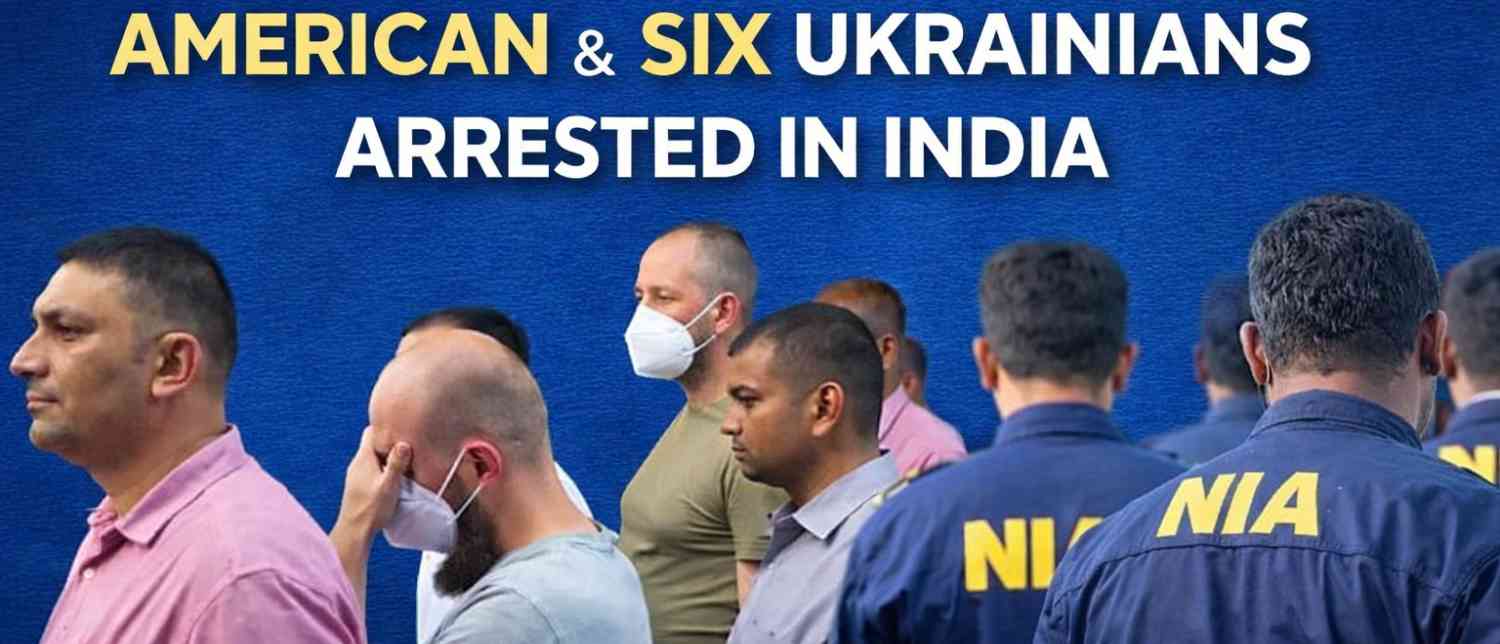
The arrest of seven foreign nationals—including American citizen Matthew VanDyke and six Ukrainian citizens—has triggered a complex international investigation that stretches from India’s northeast to the conflict zones of Myanmar. What initially appeared to be a routine counter-terror operation has rapidly evolved into a case involving alleged drone warfare training, cross-border insurgency links, and the shadowy world of foreign fighters operating in volatile regions.
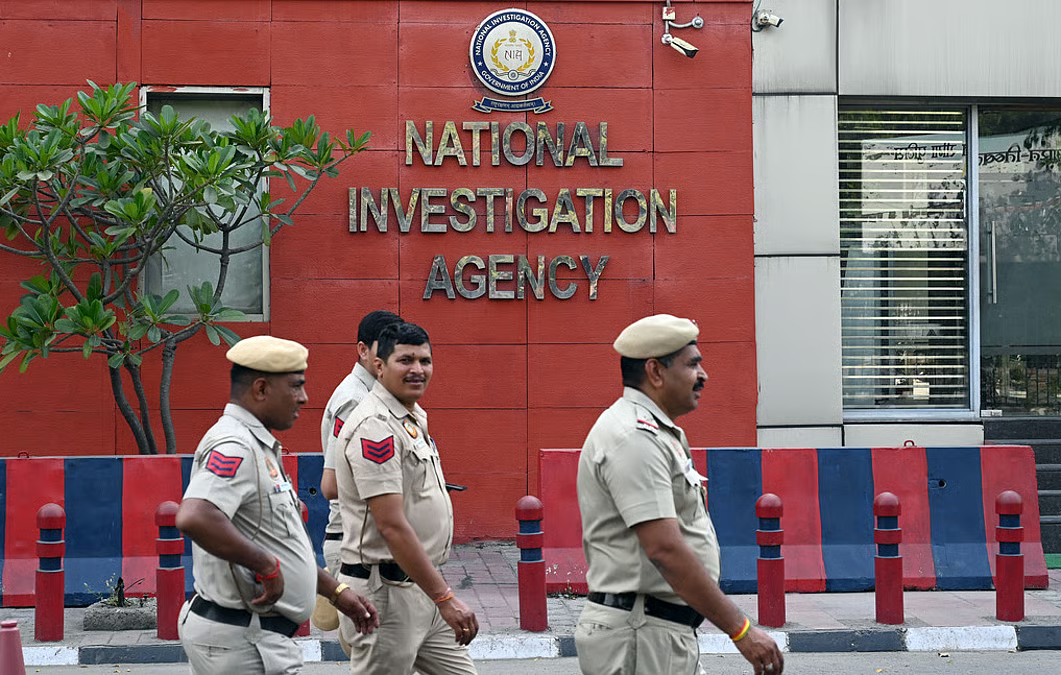
At the centre of the case is India’s premier counter-terror agency, the National Investigation Agency (NIA), which has accused the group of using Indian territory as a launchpad for activities that could threaten national security.
The Arrest and Immediate Fallout
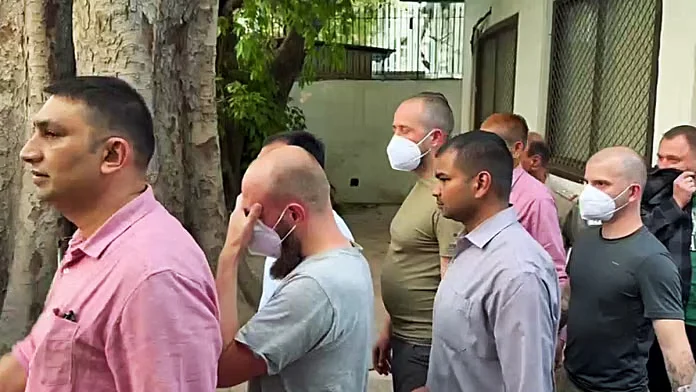
A Delhi court granted the NIA 11 days of custody for all seven accused, who were booked under India’s stringent anti-terror law, the Unlawful Activities (Prevention) Act (UAPA).
The arrests were made after investigators uncovered what they describe as a conspiracy to train ethnic armed groups in Myanmar in advanced drone warfare techniques. According to the NIA, the accused had allegedly used India as a transit route to illegally enter Myanmar and establish contact with insurgent groups operating there.
Authorities further allege that the group was not just providing training but may have been involved in supplying equipment, including drones sourced from Europe, to armed groups with potential links to insurgencies affecting India’s northeast.
The case has drawn diplomatic attention. The United States embassy acknowledged awareness of the arrest but declined detailed comment citing privacy concerns related to American citizens. Meanwhile, the Ukrainian embassy has remained in touch with the families of those detained and is monitoring the legal proceedings.
The Myanmar Connection
The investigation points to a deeper geopolitical layer involving Myanmar, a country currently engulfed in civil conflict involving the military junta and multiple ethnic armed groups.
According to NIA findings and court submissions, the accused entered India legally on visas but later travelled to restricted border areas such as Mizoram before crossing into Myanmar without authorization.
Their objective, investigators claim, was to conduct “pre-scheduled training” for Myanmar-based ethnic armed groups, focusing on drone operations, assembly, and even jamming technologies—skills that could significantly alter battlefield dynamics.
Additional findings suggest that the accused allegedly supported certain proscribed Indian insurgent groups by supplying weapons, hardware, and technical training, thereby directly impacting India’s internal security.
This aligns with broader regional concerns. The spillover of Myanmar’s civil war has already affected India’s northeastern states, with insurgent groups operating across porous borders and leveraging new technologies like drones.
Who Is Matthew VanDyke?
The presence of Matthew VanDyke has drawn particular global attention—not just because he is an American citizen, but due to his long and controversial history in international conflict zones.
Born in Baltimore in 1979, VanDyke is a political science graduate who later pursued security studies at Georgetown University. Over the years, he has evolved from a documentary filmmaker into a self-styled foreign fighter and security consultant.
His résumé reads like a map of modern conflict: Libya, Syria, Iraq, Afghanistan, Ukraine, and even covert operations linked to Venezuela. He fought against Muammar Gaddafi’s regime during the Libyan civil war, where he was captured and imprisoned for nearly six months before being released amid the regime’s collapse.
Undeterred, he continued to embed himself in war zones. He reported from Iraq and Afghanistan, travelled extensively across the Middle East and Africa on a motorcycle expedition, and later founded a non-profit organisation called Sons of Liberty International (SOLI). The group claims to provide training, equipment, and advisory support to vulnerable populations facing insurgencies.
VanDyke has also been involved in training forces against ISIS, supporting Ukrainian troops after Russia’s invasion, and allegedly running covert operations with Venezuelan rebels since 2019.
This extensive background—part activist, part mercenary, part media personality—has made him both a celebrated and controversial figure. In the current case, investigators believe his expertise in unconventional warfare and drone operations may have played a central role.
Drone Warfare and the Changing Face of Insurgency
One of the most striking aspects of the case is its focus on drone warfare—a rapidly evolving tool in modern conflicts.
According to investigators, the accused were training armed groups in drone deployment, assembly, and countermeasures such as jamming.
Such capabilities can significantly enhance the operational effectiveness of insurgent groups, allowing them to conduct surveillance, deliver payloads, or disrupt enemy communications. The alleged procurement and transfer of drones from Europe further point to an organised supply chain that crosses multiple international jurisdictions.
For India, this raises serious concerns. The use of drones by insurgent groups in the northeast or by hostile actors across borders could redefine security challenges, making traditional counter-insurgency methods less effective.
Legal Framework and Charges
The accused have been booked under the Unlawful Activities (Prevention) Act (UAPA), a law designed to prevent activities that threaten India’s sovereignty and integrity.
The Act allows authorities to take stringent action against individuals and organisations suspected of involvement in terrorism, including extended custody for investigation. In this case, the NIA has invoked provisions related to conspiracy, support to terrorist organisations, and involvement in activities that could destabilise national security.
Investigators are now focusing on uncovering the full extent of the network, including funding sources, logistical routes, and potential collaborators within and outside India.
Arrests Across Locations and Movement Patterns
The operation that led to the arrests appears to have been coordinated across multiple locations. Reports indicate that the foreign nationals were intercepted at key transit points, including airports in Delhi, Kolkata, and Lucknow, before being brought under NIA custody.
VanDyke himself was reportedly stopped at Kolkata airport by immigration authorities before being handed over to the NIA.
These details suggest that Indian agencies had been tracking the group’s movements for some time, possibly through intelligence inputs related to cross-border activities.
Diplomatic Sensitivities and Global Implications
The involvement of foreign nationals—particularly from the United States and Ukraine—has added a diplomatic dimension to the case.
While the US has maintained a cautious stance, Ukraine’s engagement with families and monitoring of the case indicates the sensitivity of the situation.
More broadly, the case highlights the increasingly global nature of modern conflicts, where individuals from one country can participate in insurgencies in another, often using third countries as transit points.
It also raises questions about the role of non-state actors and freelance fighters in international conflicts. Figures like VanDyke blur the line between activism, private military engagement, and alleged unlawful activities—making regulation and accountability more complex.
What Lies Ahead
As the investigation progresses, the NIA is expected to delve deeper into the alleged network behind the operation. Key questions remain unanswered: Who funded the activities? How extensive was the drone supply chain? Were there local collaborators?
The answers could have far-reaching implications—not just for India’s internal security, but for how countries address the growing phenomenon of transnational insurgency support.
For now, the case stands as a stark reminder of how rapidly evolving technologies, porous borders, and globalised conflict networks are reshaping the security landscape. And at its centre is a figure whose life has been defined by war zones—now facing scrutiny in one of the world’s most complex counter-terror investigations.
With inputs from agencies
Image Source: Multiple agencies
© Copyright 2025. All Rights Reserved. Powered by Vygr Media.