 By
By 
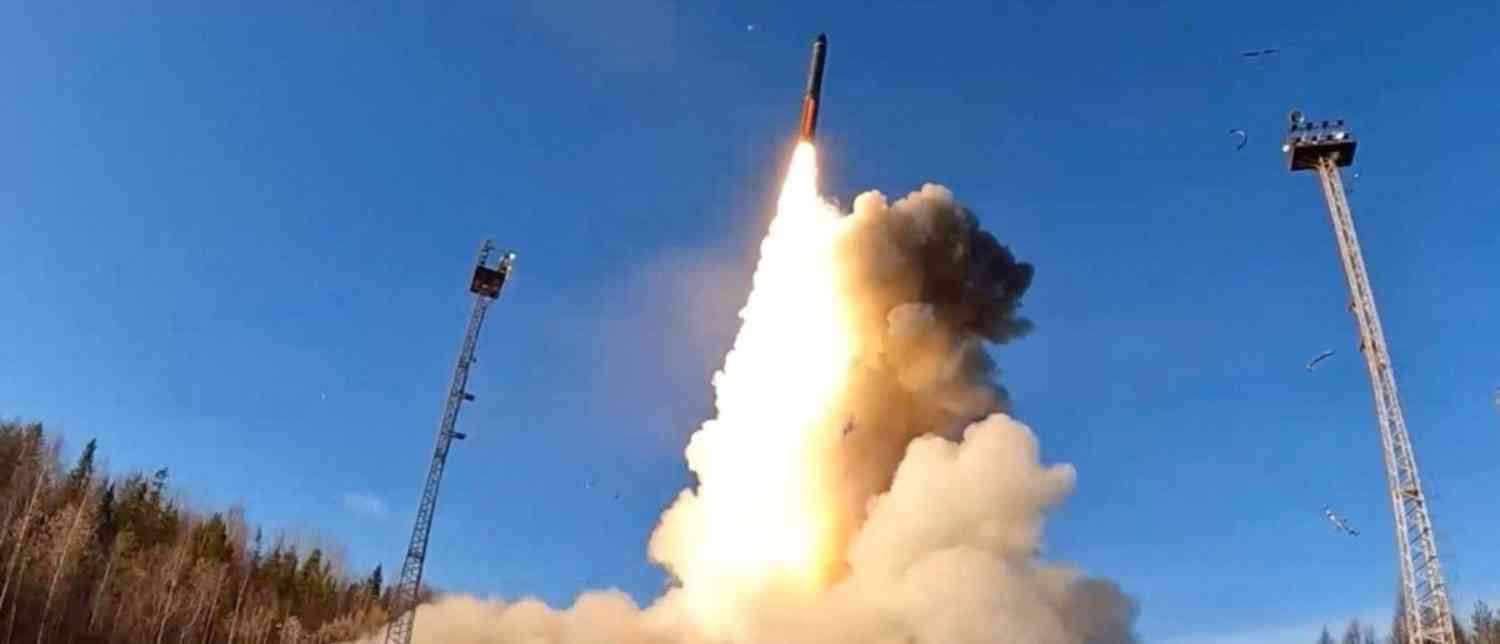
Russia has once again thrust its strategic nuclear arsenal into global focus after President Vladimir Putin announced the successful test launch of the RS-28 Sarmat intercontinental ballistic missile (ICBM), a weapon Moscow describes as the most powerful missile ever created. The launch, conducted amid continuing tensions between Russia and the West over the war in Ukraine, has reignited fears of a renewed global arms race and intensified scrutiny of Russia’s nuclear modernization programme.
Known in the West by the NATO designation “Satan II,” the Sarmat missile is designed to replace the aging Soviet-era R-36M Voyevoda system and serve as the backbone of Russia’s land-based nuclear deterrent for decades to come. Russian officials claim the missile possesses unprecedented range, destructive capability, and the ability to evade modern missile defense systems.
Putin praised the missile after the latest launch, saying it would significantly strengthen Russia’s security and force adversaries to reconsider what he described as “hostile plans” against Moscow. According to Russian military officials, the missile is expected to enter broader deployment by the end of 2026.
What Is the RS-28 Sarmat?
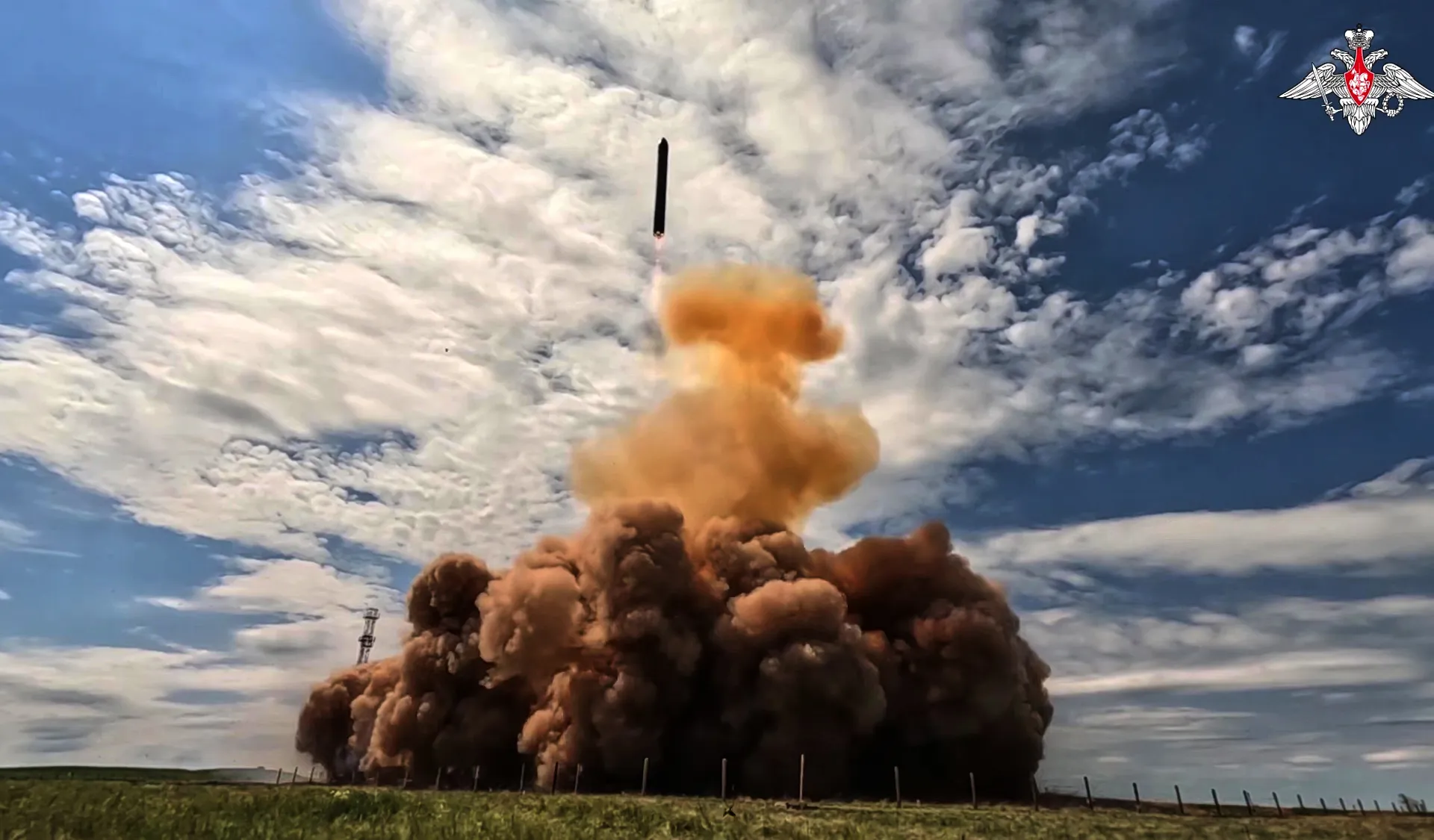
The RS-28 Sarmat is a super-heavy, liquid-fueled intercontinental ballistic missile developed by the Makeyev Rocket Design Bureau as part of Russia’s strategic weapons modernization effort. It was first unveiled publicly by Putin in 2018 alongside several next-generation nuclear systems that he claimed could bypass American missile defense shields.
The missile is among the heaviest and longest-range nuclear delivery systems ever built. According to available data, the Sarmat weighs more than 208 tonnes, stretches over 35 meters in length, and is capable of carrying multiple nuclear warheads. Russian officials say the missile can deliver up to 10 tonnes of payload, including MIRVs, multiple independently targetable reentry vehicles, enabling a single missile to strike numerous targets simultaneously.
Russian state media and military officials claim the Sarmat can carry between 10 and 16 nuclear warheads, or alternatively deploy Avangard hypersonic glide vehicles capable of maneuvering at extreme speeds. Such systems are intended to make interception by missile defense systems extremely difficult.
Putin’s Claim: “Most Powerful Missile in the World”
Following the test launch, Putin declared the Sarmat to be the “most powerful missile in the world.” Russian authorities claimed the missile’s range exceeds 35,000 kilometers under certain flight paths, far beyond estimates commonly cited by Western analysts.
The Kremlin says the missile can travel through both traditional ballistic and suborbital trajectories, including potential routes over the South Pole. This capability is strategically significant because many Western missile defense systems are primarily oriented toward threats approaching from the north.
Russian military experts further claim that the missile’s short boost phase reduces the time available for enemy satellites to detect and track it after launch. Moscow also insists the Sarmat can penetrate “all existing and future” missile defense systems, a claim that Western analysts have treated cautiously.
General Sergei Karakayev reportedly informed Putin that the missile would substantially increase the effectiveness of Russia’s nuclear deterrent.
Timing of the Missile Test Raises Global Attention
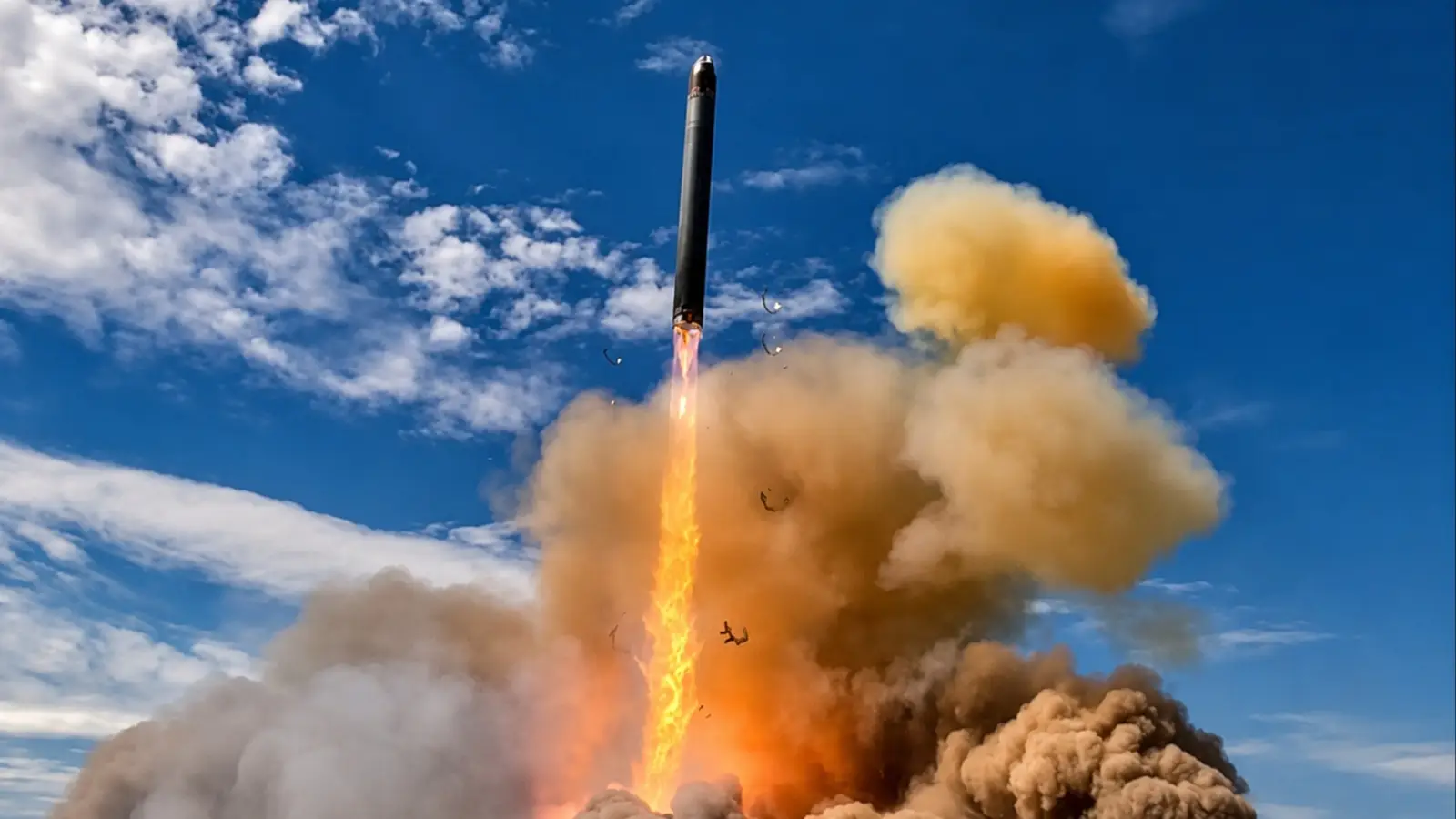
The missile launch comes at a highly sensitive geopolitical moment. Russia’s war in Ukraine continues to strain relations between Moscow and Western nations, particularly the United States and NATO allies. Since the start of the conflict in 2022, Russia has repeatedly highlighted its nuclear arsenal as a warning against deeper Western military involvement.
The latest test also follows the expiration of the New START treaty, the last remaining major nuclear arms control agreement between Russia and the United States. The treaty’s collapse has heightened concerns among arms control experts that the world could enter a new era of unconstrained nuclear competition.
Analysts note that the announcement serves both military and political purposes. Domestically, the Kremlin portrays advanced weapons systems like the Sarmat as proof of Russia’s technological and military strength despite economic sanctions and the prolonged Ukraine conflict. Internationally, the missile acts as a strategic signal aimed at Washington and NATO.
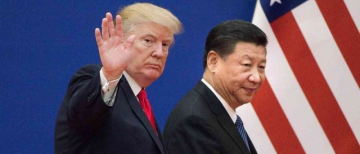
Some reports, including commentary in Russian media, suggested the launch was intended as a message to US President Donald Trump and Western powers regarding Russia’s continuing nuclear capabilities.
Capabilities and Strategic Importance
Military analysts regard the Sarmat as a key element of Russia’s effort to preserve parity with the United States in strategic nuclear forces. Russia maintains one of the world’s largest nuclear arsenals, with thousands of deployed and reserve warheads spread across land-based missiles, submarines, and strategic bombers.
The Sarmat is intended to become a cornerstone of Russia’s land-based nuclear triad. Unlike many modern solid-fuel missiles, the Sarmat uses liquid fuel, which allows it to carry a heavier payload over longer distances.
The missile is also reportedly capable of carrying hypersonic glide vehicles such as Avangard, which can maneuver unpredictably during flight. Hypersonic systems travel at speeds exceeding Mach 5 and are considered particularly difficult to intercept using existing missile defense technologies.
Russia has presented the Sarmat as part of a broader suite of next-generation strategic weapons unveiled by Putin in 2018. These include the Poseidon nuclear-powered underwater drone, the Burevestnik nuclear-powered cruise missile, the Kinzhal hypersonic missile, and the Zircon anti-ship missile.
Past Failures and Delays
Despite Moscow’s triumphant tone, the Sarmat programme has faced multiple setbacks over the years. The missile has experienced repeated delays, technical difficulties, and failed tests since development began more than a decade ago.
Reports indicate that earlier test launches encountered major problems, including explosions and failed trajectories. One failed launch in 2024 reportedly caused significant damage to a launch site, while another in late 2025 allegedly showed the missile losing control shortly after launch before crashing near the testing area.
These issues led to speculation among Western analysts about whether the programme was progressing as rapidly as Russia claimed. Nevertheless, Moscow insists the latest launch demonstrates that the missile is now ready for operational deployment.
Concerns Over a Renewed Arms Race
The Sarmat launch has intensified concerns among international observers about the future of global nuclear stability. Experts warn that increasingly sophisticated strategic weapons systems on both sides could undermine decades of arms control efforts and increase the risk of miscalculation between nuclear powers.
Russia argues that its new weapons are necessary to counter expanding US missile defense programmes. Putin has repeatedly accused Washington of upsetting the strategic balance through advanced defense systems capable of intercepting traditional ballistic missiles.
Western governments, however, view Russia’s nuclear rhetoric and repeated strategic weapons demonstrations as deeply destabilizing, especially during the ongoing Ukraine conflict. NATO officials have repeatedly stressed the need to avoid escalation while continuing support for Ukraine.
What Happens Next?
Russia says deployment preparations for the Sarmat missile system are already underway, with the first operational regiments expected to become fully combat-ready by the end of the year.
Whether the missile lives up to Moscow’s sweeping claims remains uncertain. Western analysts continue to debate the true extent of the Sarmat’s capabilities, especially regarding its reported range and ability to bypass all missile defenses. Still, there is broad agreement that the system represents one of the most formidable additions to Russia’s nuclear arsenal in decades.
At a time when arms control frameworks are weakening and geopolitical tensions remain high, the successful test of the RS-28 Sarmat serves as another reminder that nuclear competition among major powers is entering a dangerous new phase.
With inputs from agencies
Image Source: Multiple agencies
© Copyright 2026. All Rights Reserved. Powered by Vygr Media.