 By
By 
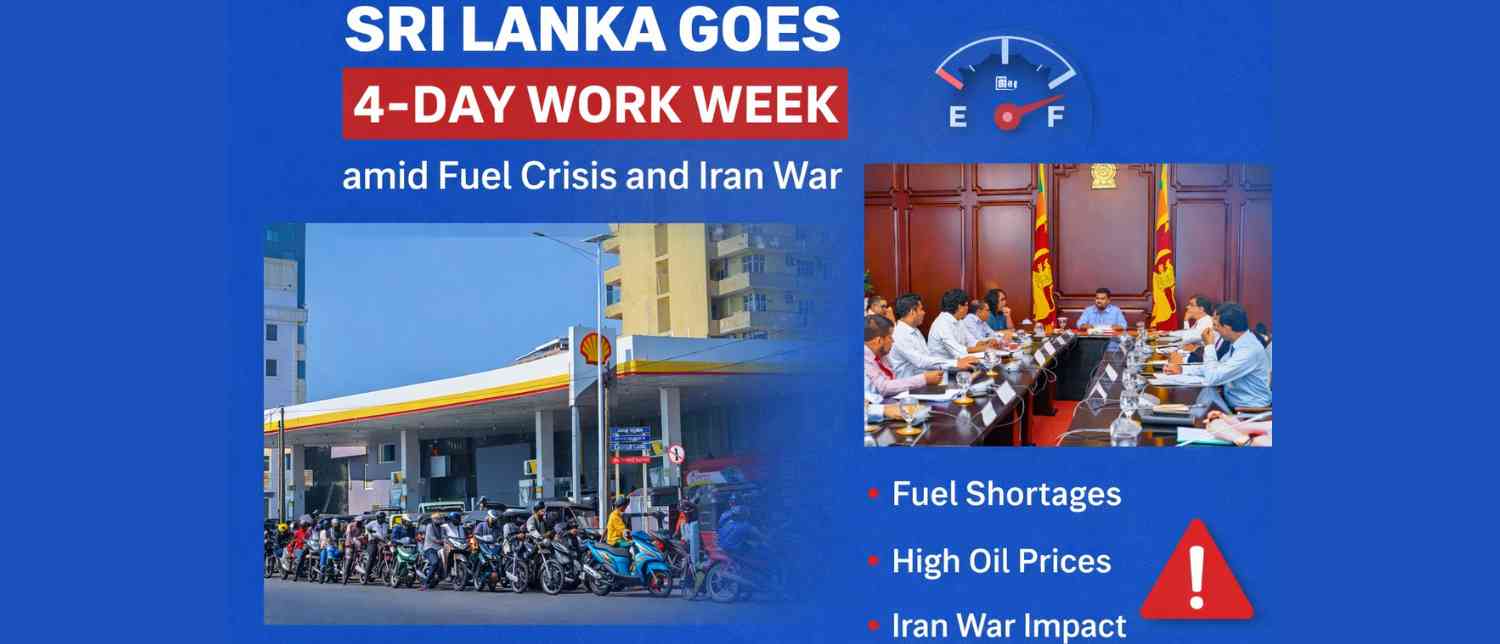
Sri Lanka has introduced a four-day work week for its public sector, an extraordinary policy move aimed at conserving fuel as the country braces for potential shortages triggered by escalating geopolitical tensions in the Middle East. The decision reflects not only immediate energy concerns but also deeper vulnerabilities in Sri Lanka’s economic and energy systems.
Why Sri Lanka Shifted to a 4-Day Work Week
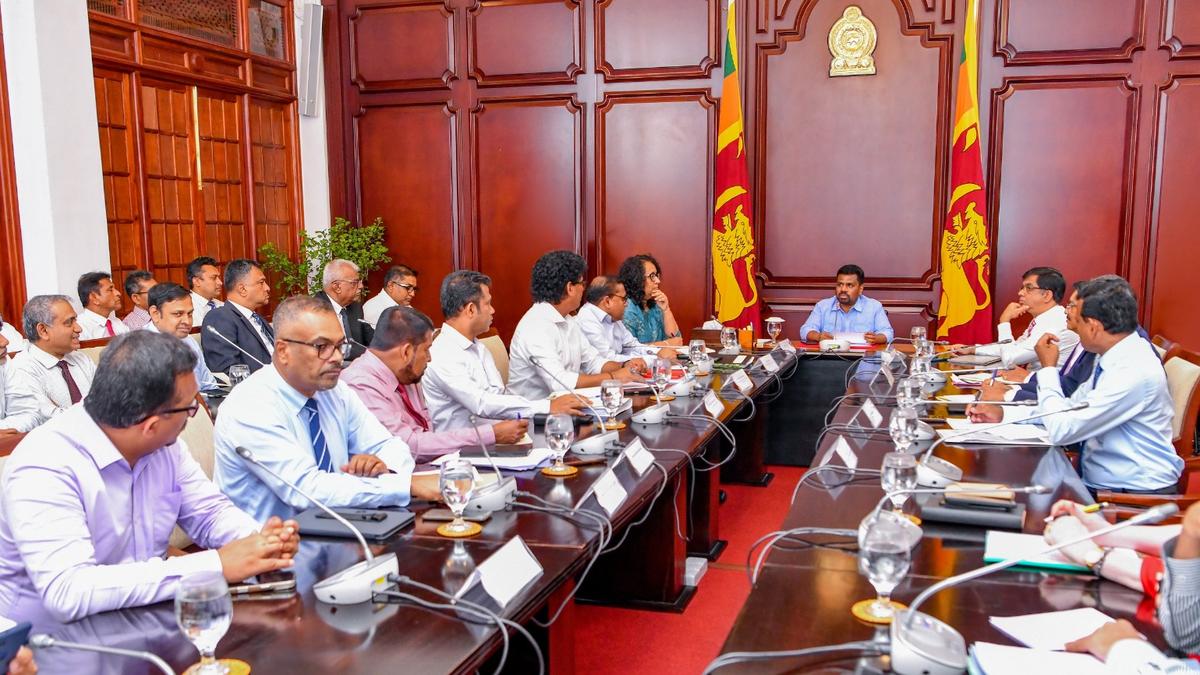
The Sri Lankan government announced that every Wednesday will be a public holiday, effectively reducing the workweek to four days for public-sector institutions. This measure, which takes effect on March 18, is designed to reduce fuel consumption, particularly in transportation and government operations.
The policy applies broadly across government offices, schools, universities, and even parts of the judiciary. However, essential services such as healthcare, ports, water supply, and customs are exempt, ensuring that critical operations continue uninterrupted.
Authorities have also encouraged the private sector to adopt similar measures, signalling a nationwide effort to conserve fuel and prepare for a prolonged crisis.
The Iran War and Its Global Energy Shock
At the heart of Sri Lanka’s decision lies the ongoing conflict involving Iran, the United States, and Israel, which has significantly disrupted global oil and gas supply chains.
A key flashpoint is the Strait of Hormuz, one of the world’s most vital shipping routes for oil and gas. The strait has been effectively blocked for weeks by Iranian actions, severely disrupting fuel supplies to South Asia.
This disruption has triggered a sharp spike in global oil prices, with crude crossing $100 per barrel and, in some cases, surging even higher.
For countries like Sri Lanka, heavily dependent on imported fuel, this has created an urgent need to ration energy use and reduce consumption wherever possible.
Fuel Rationing and Austerity Measures
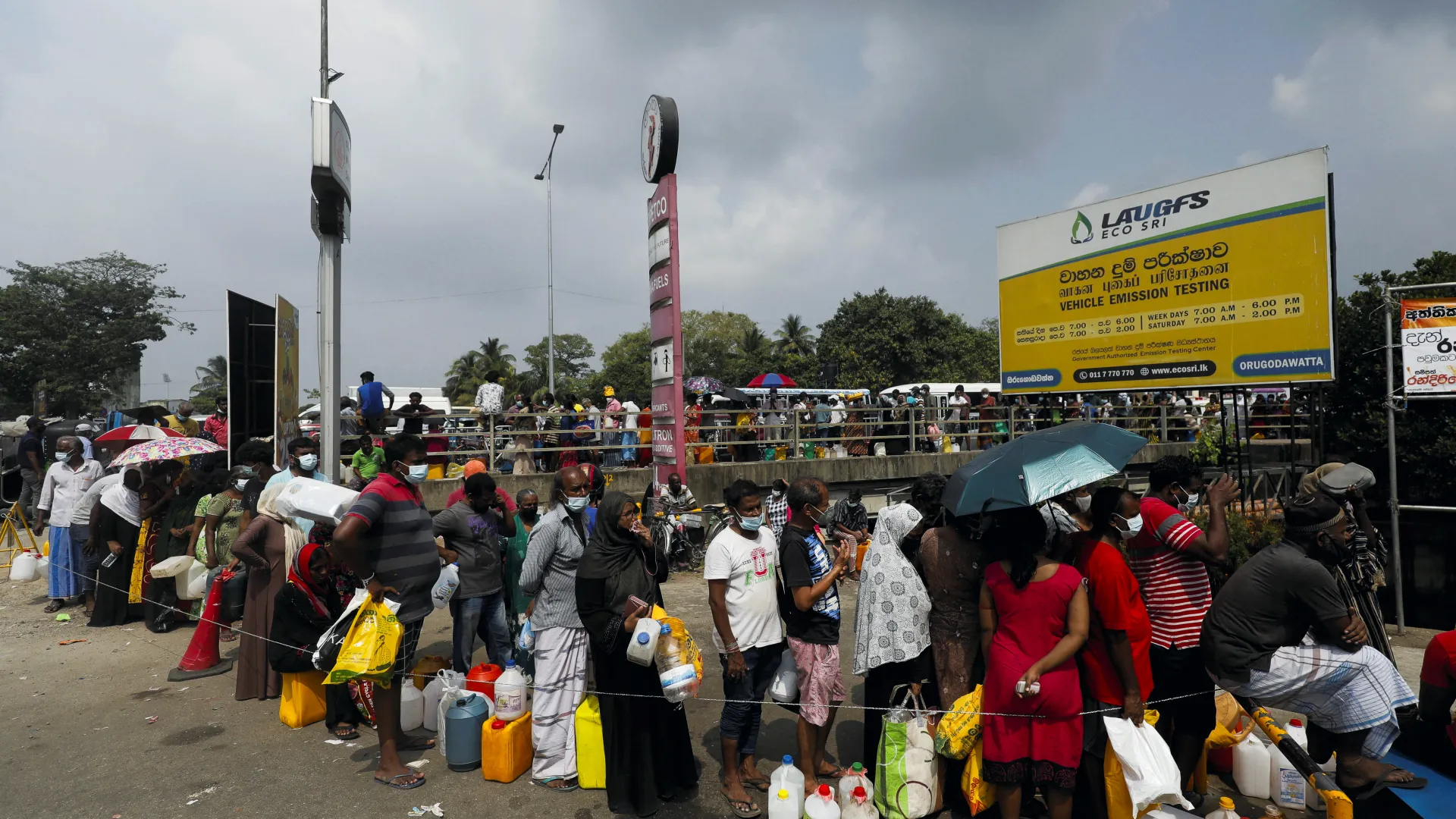
The four-day work week is just one component of Sri Lanka’s broader strategy to manage dwindling fuel reserves.
The government has introduced strict fuel rationing, limiting:
-
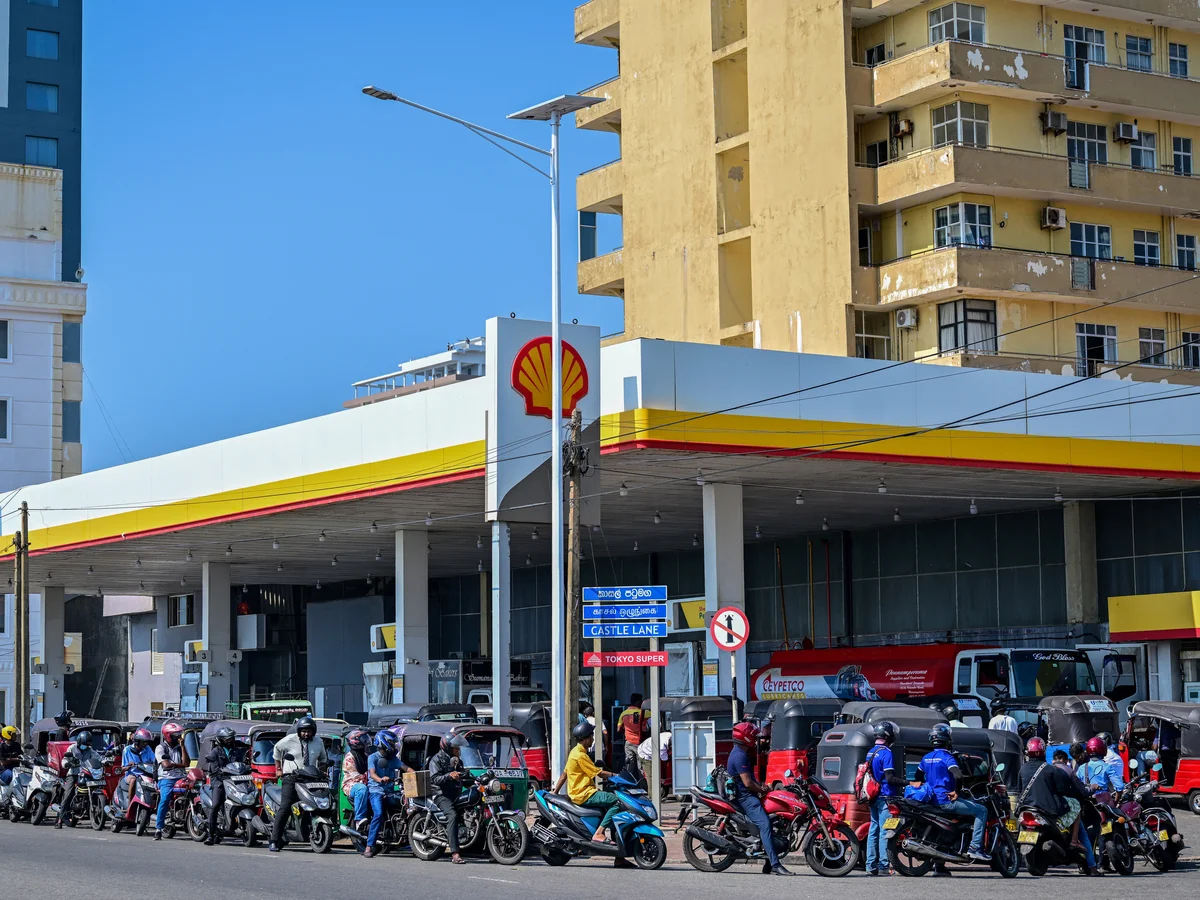
Private motorists consume around 15 litres per week
-
Public transport vehicles to higher but capped allocations (up to 200 litres)
In addition, authorities have:
-
Encouraged remote work for civil servants
-
Reduced operational days for educational institutions
-
Urged citizens to minimise travel
These steps are intended to extend available fuel supplies while global markets remain volatile.
A Nation Still Recovering from Economic Crisis
Sri Lanka’s vulnerability to the current fuel crisis is rooted in its recent economic history.
The country is still recovering from a severe economic crisis (2019–2024) marked by:
-
Foreign exchange shortages
-
High inflation
-
Fuel and electricity shortages
-
Long queues for essential goods
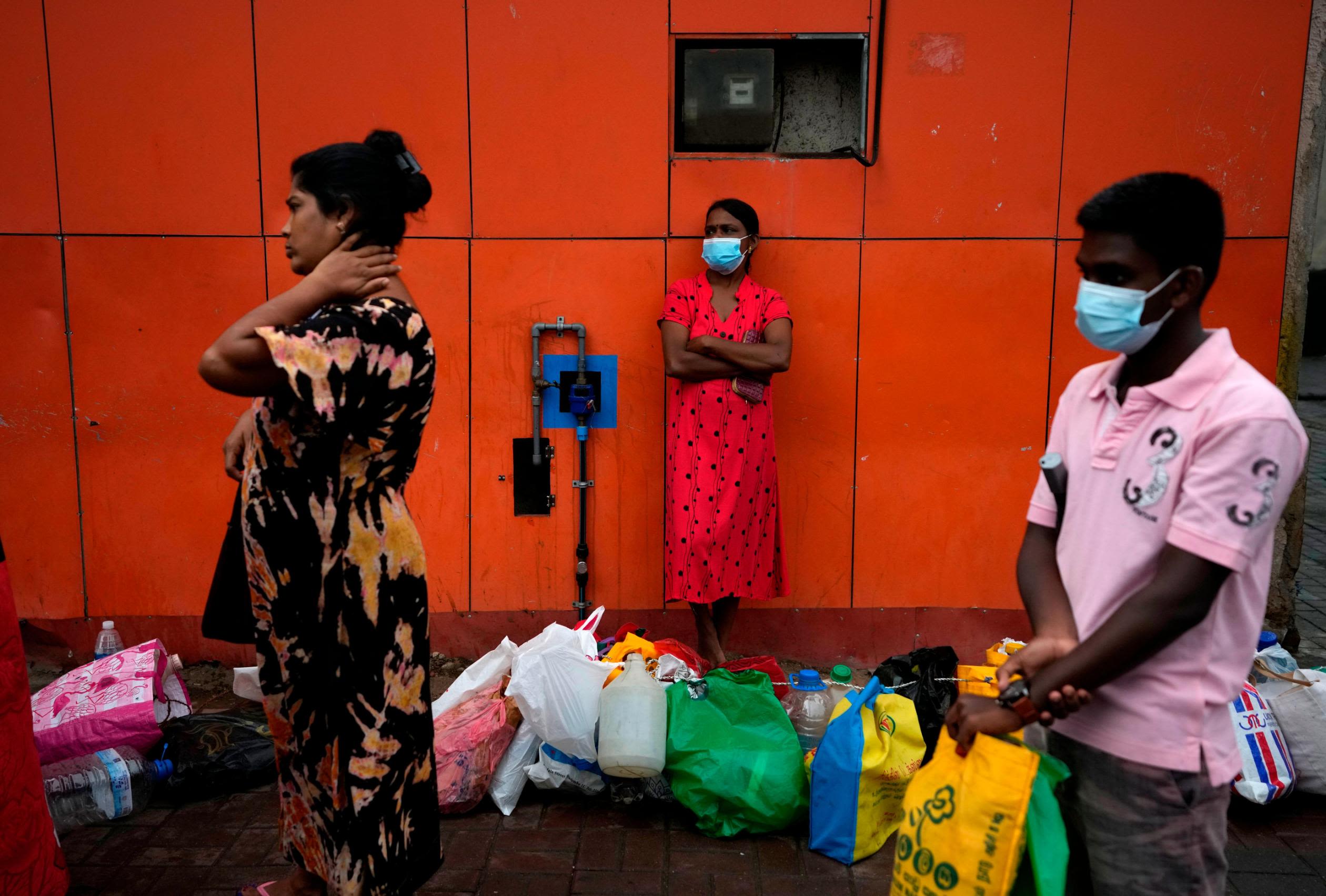
The memory of that crisis remains fresh. In fact, recent developments have already triggered panic buying and long queues at fuel stations, as citizens fear a repeat of past shortages.
Although authorities have reassured the public about current stock levels, the limited fuel storage capacity and reliance on imports make the country highly sensitive to global disruptions.
Regional Ripple Effects Across South Asia
Sri Lanka is not alone in facing the fallout from the Iran conflict. Across South Asia, governments are adopting similar austerity measures to cope with rising energy costs and supply disruptions.
-
Pakistan has implemented a four-day workweek, temporarily closed schools, and raised fuel prices.
-
Bangladesh has closed universities, shifted to online education, and reduced gas supply for non-essential uses.
-
India has taken emergency steps to secure LPG supplies while managing public anxiety over shortages.
These coordinated responses highlight the region’s heavy dependence on Middle Eastern energy imports and the widespread impact of the crisis.
A Broader Global Trend: Energy Conservation Measures
Sri Lanka’s move also reflects a wider global trend, particularly in Asia, where several countries are adopting energy-saving strategies such as:
-
Shortened work weeks
-
Remote work policies
-
Carpooling initiatives
These measures aim to reduce fuel demand without severely disrupting economic activity.
However, experts warn that prolonged disruptions could lead to inflationary pressures, fiscal strain, and slower economic growth, especially in developing economies.
The Geopolitical Dimension: Sri Lanka at a Strategic Crossroads
Sri Lanka’s situation is further complicated by its strategic location in the Indian Ocean, which has drawn it closer to the geopolitical tensions of the Iran war.
A recent incident involving a US submarine attack on an Iranian warship near Sri Lanka’s coast underscored how the conflict is spilling into the region.
The country has had to navigate a delicate diplomatic balance, maintaining neutrality while managing relations with both Western nations and Iran—both key trade partners.
This geopolitical exposure adds another layer of uncertainty to Sri Lanka’s already fragile recovery.
Impact on Daily Life and Economy
The shift to a four-day work week is expected to have wide-ranging implications:
1. Reduced Commuting and Fuel Savings
Fewer working days mean less travel, which directly reduces fuel consumption—one of the government’s primary objectives.
2. Changes in Education and Public Services
Schools and universities operating fewer days may:
-
Shift toward online learning
-
Compress academic schedules
3. Economic Adjustments
While the measure helps conserve fuel, it may also:
-
Slow down administrative processes
-
Affect productivity in the short term
However, the government appears to view these trade-offs as necessary to avoid a more severe energy crisis.
Public Response and Concerns
The policy has been met with a mix of cautious acceptance and concern.
On one hand, many citizens understand the need for preventive action, especially given the country’s recent economic struggles. On the other hand, there are fears that:
-
The crisis could deepen
-
Fuel shortages could worsen
-
Economic recovery could be derailed
The government itself has warned that prolonged disruptions in global energy supply could jeopardise Sri Lanka’s recovery efforts.
What Lies Ahead?
Sri Lanka’s four-day workweek is currently a contingency measure, and its duration will largely depend on how the global situation evolves.
If the Iran conflict continues to disrupt oil shipments and keep prices elevated, the country may need to:
-
Extend or expand energy-saving measures
-
Tighten fuel rationing further
-
Seek alternative energy sources or diplomatic solutions
At the same time, the crisis serves as a reminder of the urgent need for:
-
Energy diversification
-
Improved fuel storage infrastructure
-
Reduced dependence on imports
Final Thoughts
Sri Lanka’s decision to implement a four-day work week is a pragmatic response to an unfolding global energy crisis. Triggered by geopolitical tensions in the Middle East, the move underscores the interconnectedness of global energy systems and the vulnerability of import-dependent economies.
While the measure may help conserve fuel in the short term, it also highlights deeper structural challenges that Sri Lanka—and many other nations—must address to build long-term resilience.
As the situation evolves, the world will be watching closely to see whether such unconventional policies become a temporary necessity or a new normal in times of global crisis.
With inputs from agencies
Image Source: Multiple agencies
© Copyright 2025. All Rights Reserved. Powered by Vygr Media.