 By
By 
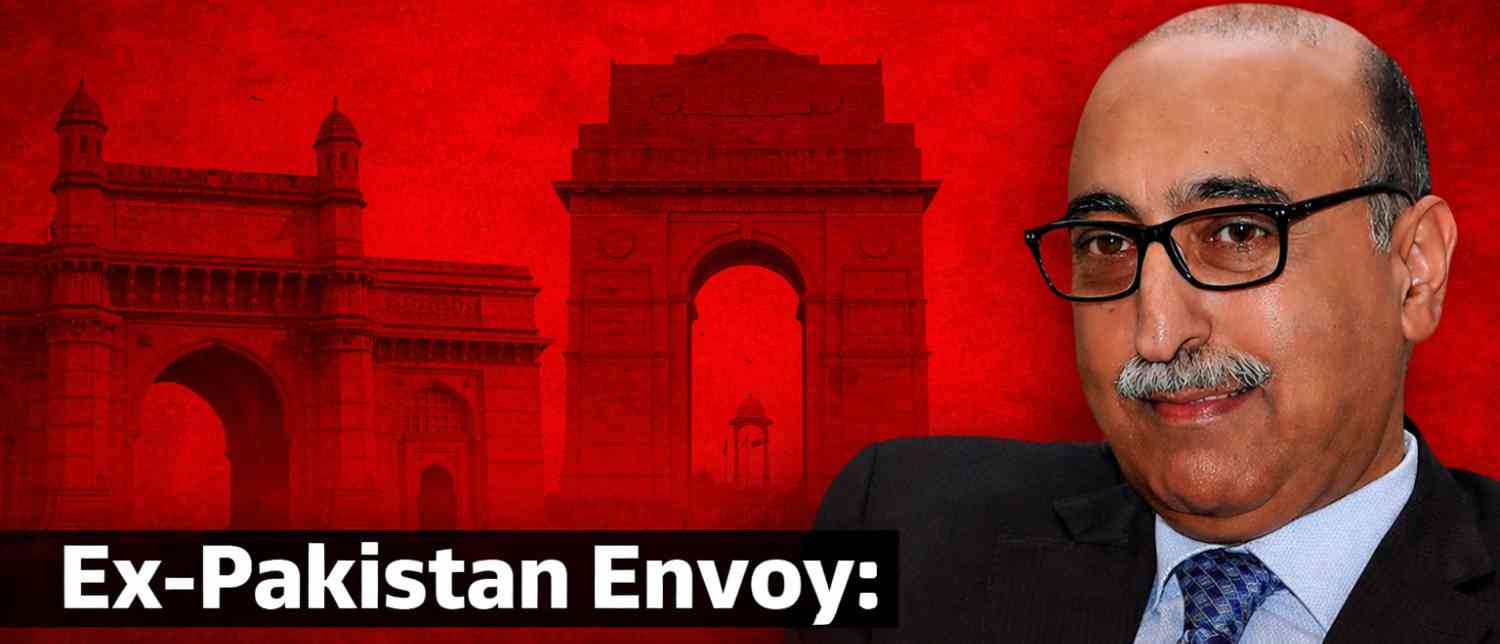
A fresh diplomatic controversy has erupted in South Asia after former Pakistani High Commissioner to India Abdul Basit made a series of provocative remarks suggesting that Pakistan could target Indian cities such as Mumbai and New Delhi in a hypothetical conflict scenario involving the United States. The comments, delivered during a televised discussion, have triggered widespread alarm, political backlash, and renewed scrutiny of regional security dynamics.
What Abdul Basit Said—and the Context
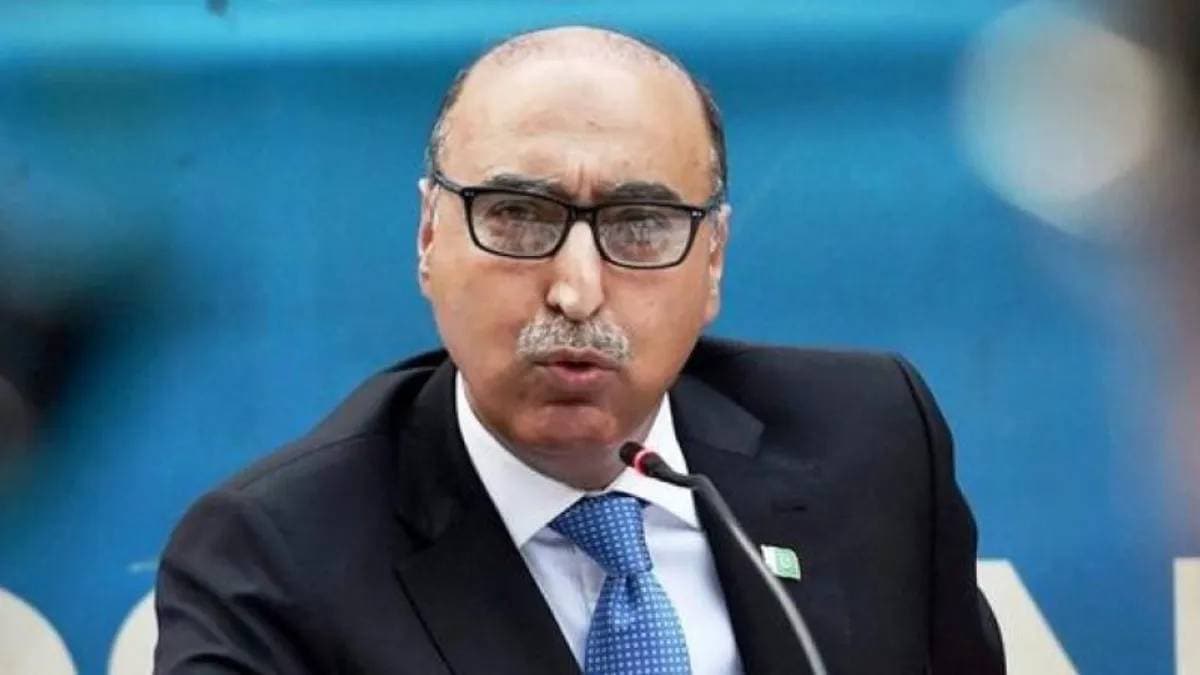
During an appearance on a Pakistani TV channel, Abdul Basit outlined what he described as a “worst-case scenario” in which the United States attempts to neutralise Pakistan’s nuclear capabilities. In that context, he argued that if Washington were beyond Pakistan’s missile range, Islamabad’s “default move” would be to strike India instead.
Basit framed his remarks as hypothetical, stressing that such a situation was “impossible” but worth considering for strategic analysis. He questioned what options Pakistan would have if it could not directly retaliate against the US due to limited missile reach, suggesting India would become the most immediate and accessible target.
He went further, stating that Pakistan “must not think twice” about hitting Mumbai and New Delhi if faced with an existential threat.
Missile Capability and Strategic Logic
A key element of Basit’s argument was Pakistan’s missile capability. He claimed that Pakistan’s deterrence system is largely “India-specific” and lacks intercontinental reach, unlike India’s advanced systems such as Agni-5 and Agni-6.
This limitation, according to him, shapes Pakistan’s strategic thinking. If the US or Israel were to act against Pakistan’s nuclear infrastructure, Islamabad might be unable to retaliate directly due to geographical and technological constraints. In such a case, Basit suggested, India would be the only viable target within reach.
He also expressed a desire for Pakistan to develop longer-range missile capabilities, stating that the country should ideally be able to target distant adversaries like Israel.
“If hypothetically, US attacks Pakistan, Pakistan would drop bombs on India.”
These are the kind of jihadi suicide bombers we are dealing with.
We must not rest till this country is pulverised - everyone there is on a suicide mission and wants to take indian down with them. pic.twitter.com/dZ8IM5T2jc— Viktor (@desishitposterr) March 21, 2026
Reference to US Threat Assessment
Basit’s comments were made in response to remarks by US Director of National Intelligence Tulsi Gabbard, who recently flagged Pakistan’s expanding missile programme in the 2026 Annual Threat Assessment.
Gabbard warned that Pakistan could develop long-range ballistic missiles capable of reaching the US homeland in the future. Basit dismissed her concerns as reflective of an “anti-Pakistan worldview” and argued that the US deliberately overlooks India’s missile advancements because of their strategic partnership.
He emphasised that Washington views India as a long-term ally, while Pakistan should not assume similar status despite occasional improvements in relations, especially under former US President Donald Trump.
“We Have Done It Earlier”: A Chilling Remark
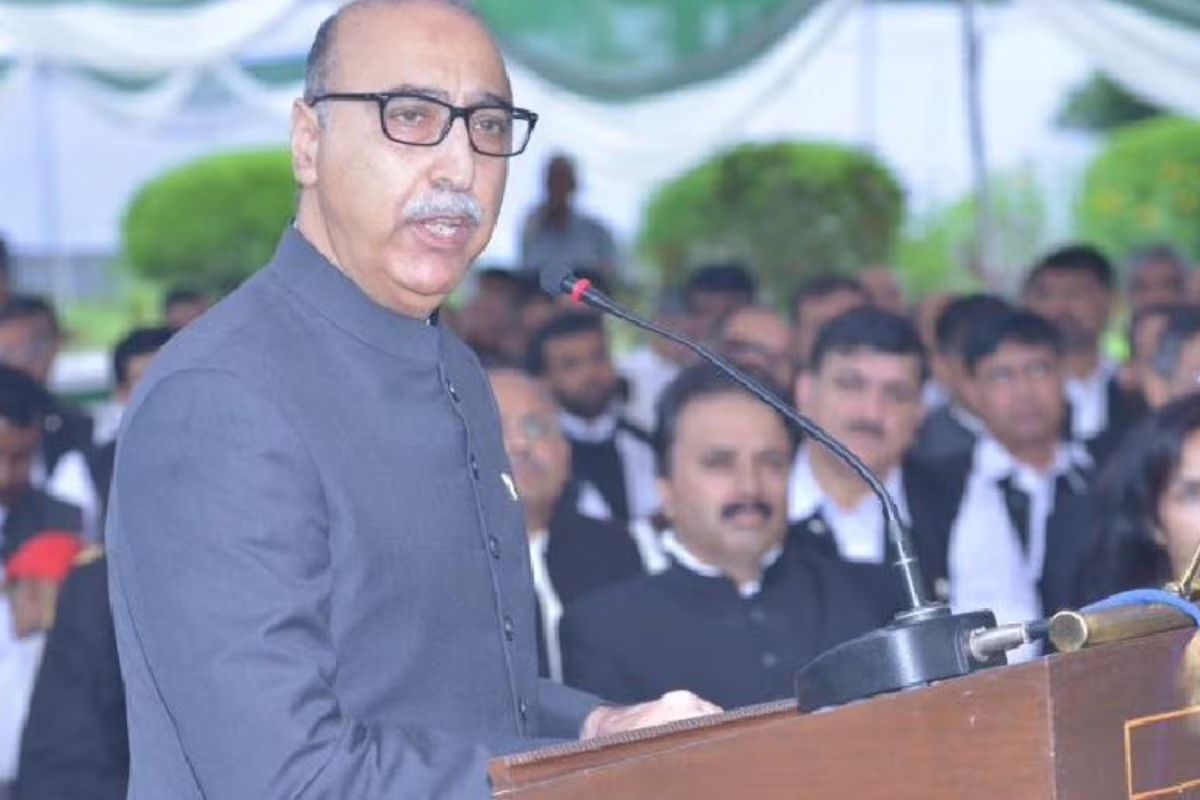
Perhaps the most controversial part of Basit’s statement came when he appeared to reference past attacks on India. During the discussion, the show’s anchor remarked that Pakistan had “shown a trailer earlier,” to which Basit responded: “We have done it earlier. We will do it from here.”
The comment has been widely interpreted as an allusion to past terror attacks, including the 2008 Mumbai attacks, which were linked to Pakistan-based militant groups. While Basit did not explicitly name any incident, the remark intensified concerns and outrage across India.
Expanded Warning: India as a “Default Target”
Across multiple discussions and reports, Basit consistently reiterated that India would become the immediate target in the event of a US strike on Pakistan.
He argued that if Pakistan faced aggression from the US or Israel—especially amid escalating tensions in West Asia—it would have “no option” but to retaliate against India due to proximity and missile limitations.
In one formulation, he described striking Indian cities as a “default move” under such circumstances, further underlining the seriousness of his remarks.
Geopolitical Backdrop: Iran Conflict and Rising Tensions
Basit’s comments come at a time of heightened geopolitical instability, particularly following tensions involving the US, Israel, and Iran. He referenced a scenario where a deteriorating situation in Iran could draw Pakistan into a broader conflict.
Recent unrest in Pakistan—including protests and violence triggered by US-Israeli actions against Iran—has underscored the volatility of the region. Demonstrations targeting US interests, including the storming of the US Consulate in Karachi, reflect deep anti-American sentiment and a charged domestic environment.
In such a climate, hypothetical scenarios involving external attacks on Pakistan are being debated more openly, though critics argue that Basit’s framing crosses a dangerous line.
Strong Political Reactions in India
Basit’s remarks have drawn sharp reactions from Indian political leaders. The Bharatiya Janata Party (BJP) condemned the statements, calling them evidence of Pakistan’s continued reliance on terrorism as a strategic tool.
Party leaders argued that such rhetoric exposes a mindset that normalises targeting civilian populations and undermines regional peace. The comments have also reignited debate over Pakistan’s role in cross-border terrorism and its strategic doctrines.
Diplomatic and Security Implications
Analysts warn that even hypothetical statements of this nature carry serious consequences. By suggesting that civilian population centres could be targeted as part of a retaliatory strategy, Basit’s remarks blur the line between strategic deterrence and outright threat.
They also risk escalating already fragile India-Pakistan relations, which have long been shaped by mistrust, military standoffs, and historical conflicts.
Moreover, the comments highlight a broader issue: the potential for third-party conflicts—such as a US-Pakistan confrontation—to spill over into South Asia, drawing India into crises in which it is not directly involved.
International Concerns
Globally, Basit’s statements have raised concerns about nuclear stability in South Asia. The idea that a conflict involving the US could trigger attacks on India underscores the interconnectedness of modern geopolitical rivalries.
Experts note that such rhetoric could complicate diplomatic efforts and increase the risk of miscalculation, especially in a region where multiple nuclear-armed states operate in close proximity.
A Dangerous Narrative
While Abdul Basit framed his comments as part of a theoretical discussion, the specificity and tone of his statements have sparked a major controversy. By openly suggesting that Indian cities could be targeted in response to a US attack, he has amplified fears about the fragility of regional security frameworks.
At a time when global tensions are already high—from West Asia to South Asia—such remarks serve as a stark reminder of how quickly hypothetical scenarios can inflame real-world anxieties.
Whether dismissed as rhetorical speculation or condemned as reckless provocation, the episode underscores one reality: in a nuclearised and geopolitically tense world, words themselves can carry the weight of escalation.
With inputs from agencies
Image Source: Multiple agencies
© Copyright 2025. All Rights Reserved. Powered by Vygr Media.