 By
By 
India’s electoral map is being redrawn in a way that is both quiet and revolutionary. It is not happening through dramatic constitutional upheavals or headline-grabbing judicial pronouncements, but through something far more powerful: the steady, determined rise of women as decisive political actors. Across assembly elections, policy debates, and grassroots mobilisations, the “women’s vote” is no longer a demographic footnote; it is fast becoming the axis around which political strategy rotates.
Women in India are not just participating more; they are participating differently. They are voting in greater numbers, asserting independent political preferences, responding to welfare policies with calculated pragmatism, and, crucially, reshaping the priorities of political parties.
This is not a trend. It is a structural transformation.
The Silent Surge in Women’s Electoral Power
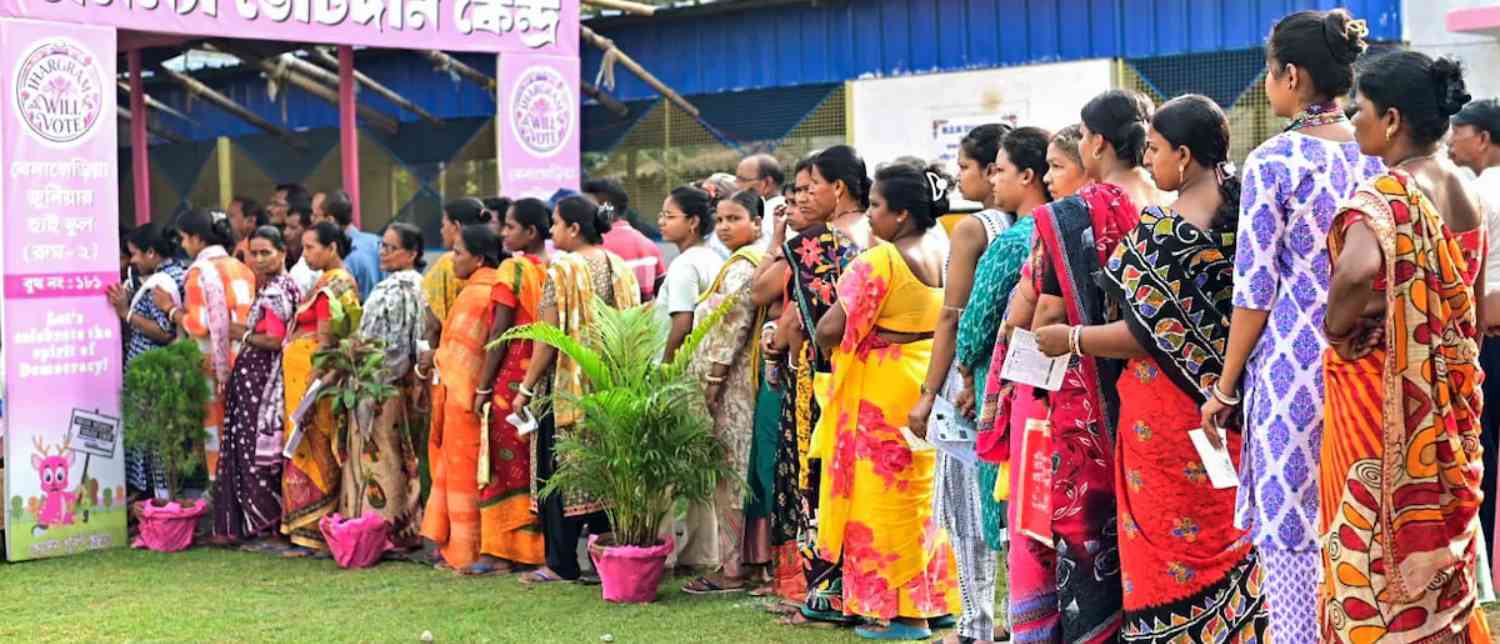
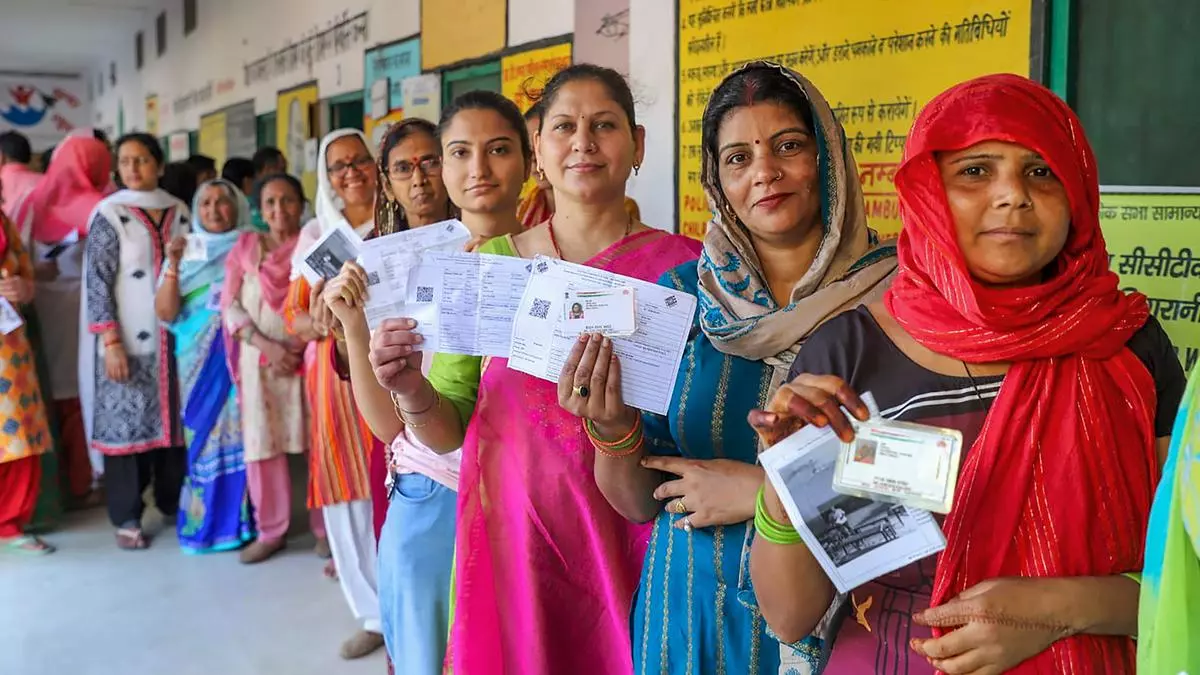
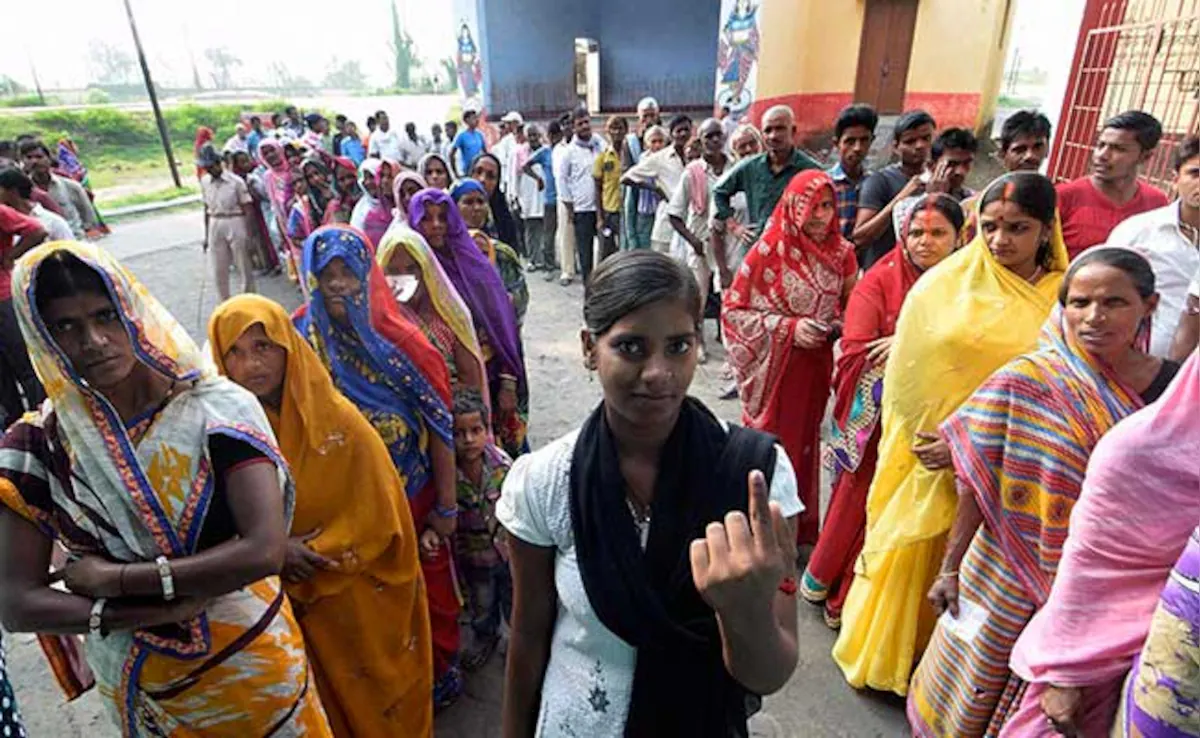
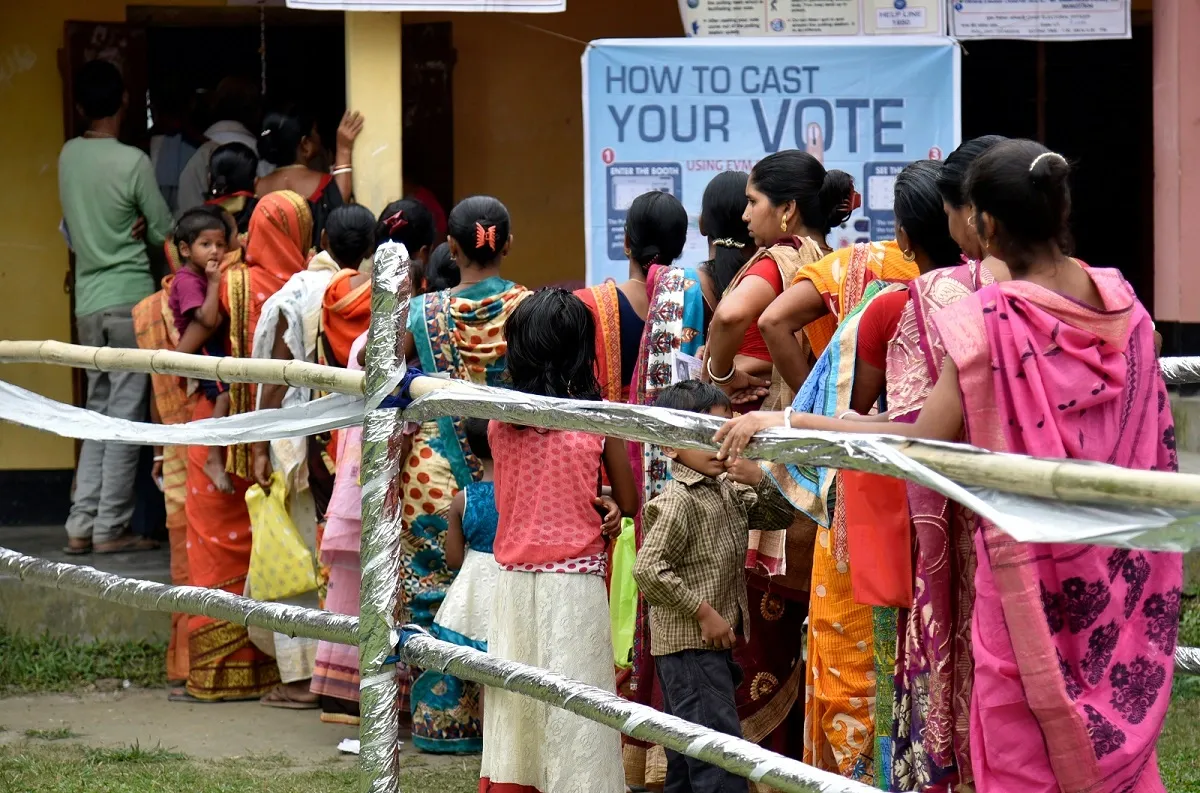
One of the most striking developments highlighted across discussions is the narrowing—and in many cases reversal—of the gender gap in voter turnout. Women are no longer trailing men at polling booths; in several states, they are outvoting them. This surge is not incidental. It is the outcome of years of improved voter registration, targeted mobilisation campaigns, and the expansion of welfare schemes that directly touch women’s lives.
Women voters are no longer passive recipients of political messaging. Instead, they are active evaluators. Issues such as inflation, access to healthcare, education for children, and household welfare are shaping their decisions in ways that are both practical and deeply political.
Importantly, women are increasingly voting independently of traditional family or community influences. This shift—from collective to individual political agency—marks a critical turning point. It suggests that women voters are not merely an extension of male voting patterns but constitute a distinct and influential electoral bloc.
Welfare Politics and the Feminisation of Electoral Strategy
Political parties have noticed—and adapted. Across states, welfare schemes targeted at women have become central to campaign strategies. Direct cash transfers, subsidised cooking gas, free bus travel, healthcare benefits, and financial assistance programs are no longer peripheral promises; they are front and centre.
Women voters are responding strongly to policies that offer tangible, immediate benefits. These are not abstract ideological commitments but concrete interventions that ease daily burdens.
However, this dynamic raises a critical question: is this empowerment or transactional politics?
The answer lies somewhere in between. On one hand, welfare schemes have undeniably improved women’s quality of life, increased financial inclusion, and enhanced their visibility as political stakeholders. On the other hand, the growing competition among parties to outbid each other in offering “doles” risks reducing women’s political engagement to a calculus of benefits.
Yet, dismissing this as mere populism would be reductive. For millions of women, especially in rural and economically vulnerable communities, these schemes represent access, dignity, and autonomy. The ability to receive money directly, travel independently, or secure healthcare is inherently political—it shifts power within households and communities.
West Bengal: A Case Study in Political Realignment
The evolving dynamics of women’s voting behaviour are perhaps most vividly illustrated in the context of West Bengal’s assembly elections. The contest for women’s votes has intensified to the point of reshaping traditional political strongholds.
For years, women formed a crucial support base for the incumbent leadership, largely due to targeted welfare schemes and grassroots outreach. However, the emergence of competitive promises—particularly higher financial assistance—has begun to alter this equation.
The Bharatiya Janata Party’s strategy of offering increased monetary benefits to women voters represents a direct challenge to established loyalties. This is not just about policy; it is about perception. When competing parties present comparable or superior benefits, the assumption of a “fixed” women’s vote bank begins to crumble.
What emerges is a more fluid and discerning electorate. Women voters are not bound by long-term allegiance; they are willing to reassess and realign based on evolving priorities. This introduces an element of unpredictability into elections, making women’s votes one of the most contested—and decisive—factors.
Representation: The Gap Between Participation and Power
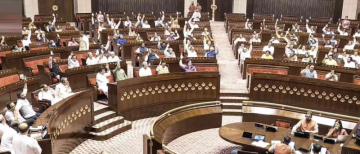
While women’s participation as voters has surged, their representation in political institutions remains disproportionately low. There is a persistent gap between the number of women who vote and the number who hold office.
Despite incremental improvements, women continue to be underrepresented in state assemblies and Parliament. Candidate selection remains skewed, with political parties often hesitant to field women in winnable constituencies. Even when women do contest, they frequently face structural challenges—ranging from limited financial resources to entrenched gender biases.
This disparity highlights how systemic barriers—patriarchal norms, lack of political networks, and limited access to campaign financing—continue to hinder women’s advancement in formal politics.
This creates a paradox: women are powerful as voters but marginal as lawmakers.
Beyond Numbers: The Changing Nature of Political Engagement
What makes the current moment particularly significant is not just the increase in women’s participation, but the transformation in how they engage with politics.
Women voters are increasingly issue-driven. They are prioritising governance over rhetoric, delivery over promises, and accountability over identity politics. This shift is forcing political parties to recalibrate their messaging.
Moreover, women are becoming more visible in grassroots political activities—whether through self-help groups, local governance bodies, or community advocacy initiatives. These platforms serve as training grounds for leadership, gradually bridging the gap between participation and representation.
The ripple effects are profound. As women assert their voices, they are reshaping policy priorities. Issues like sanitation, healthcare, education, and social welfare—often dismissed as “soft” concerns—are gaining prominence in political discourse.
The Risk of Instrumentalisation
However, this transformation is not without its challenges. There is a growing risk that women’s political agency could be instrumentalised. When political parties focus predominantly on welfare schemes without addressing deeper structural inequalities, they risk reducing women’s empowerment to a transactional relationship.
True empowerment requires more than financial assistance. It demands representation, voice, and the ability to influence decision-making processes. Without these, the gains achieved through increased voter participation may remain incomplete.
Furthermore, the emphasis on welfare-driven politics can sometimes overshadow critical issues such as gender-based violence, employment opportunities, and access to education. These are complex challenges that require sustained policy interventions, not just electoral promises.
A New Electoral Grammar
What we are witnessing is the emergence of a new electoral grammar—one in which women are not peripheral participants but central protagonists. Their votes are shaping campaign strategies, influencing policy priorities, and redefining political narratives.
This shift is compelling political parties to move beyond traditional identity-based appeals. Instead, they must engage with the everyday realities of women’s lives. The result is a more grounded and, potentially, more responsive form of politics.
Yet, the journey is far from complete. The challenge lies in translating electoral influence into institutional power. Until women are adequately represented in decision-making bodies, the full potential of this transformation will remain unrealised.
The Road Ahead
The rise of women voters in India is one of the most significant political developments of our time. It signals a move towards a more inclusive and participatory democracy. But it also raises critical questions about the nature of political engagement, the limits of welfare-driven strategies, and the persistent barriers to representation.
For political parties, the message is clear: women voters cannot be taken for granted. They are informed, assertive, and willing to change their allegiance. Winning their trust requires more than promises—it requires performance.
For policymakers, the focus must shift towards creating pathways for women’s leadership. This includes ensuring fair representation, addressing structural barriers, and fostering environments where women can thrive as political actors.
And for society at large, this moment offers an opportunity to rethink long-standing assumptions about gender and power. The narrative of women as passive participants is no longer tenable. They are shaping the future of Indian democracy—one vote at a time.
In the end, the story of women in India’s elections is not just about numbers or policies. It is about agency. It is about millions of women stepping into the political arena with clarity, confidence, and conviction. And as they do, they are not just reshaping elections—they are redefining democracy itself.
With inputs from agencies
Image Source: Multiple agencies
© Copyright 2026. All Rights Reserved. Powered by Vygr Media.